You know Oxfords, with a smoothly sharp exterior, sole resembling a violin’s curved back, and worryingly expensive! Well, this isn’t one of those. It’s a Desi Oxford.
August 1, 2026
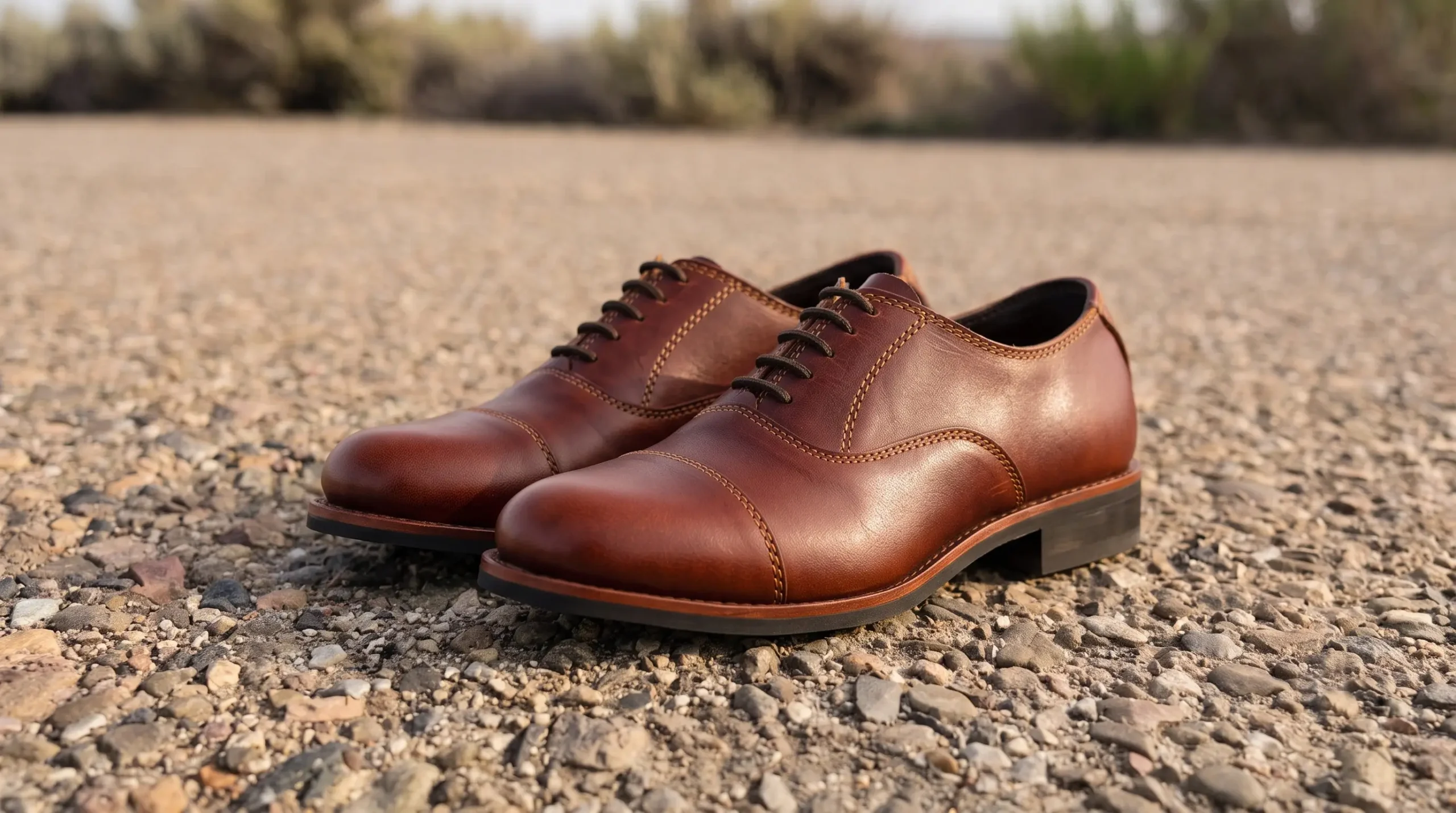
Our shoemakers have earned global recognition in an extraordinary time: emerging, surviving, thriving, and continuing to enrich the local artisans and their shoemaking artistry after decades of service as an “unrecognized” back-end.
Most shoemakers earned such recognition by answering to occidental’s notion of what is proper and desirable: cough, Bridlen’s Founders line, cough. Craft & Glory choose not to tailor their shoes accordingly.
They have simply attempted to make a shoe that is so clear about what it is for and favours practicality. Its Duty Line does not glamorize Oxford the way makers often do in (and above) this price range.
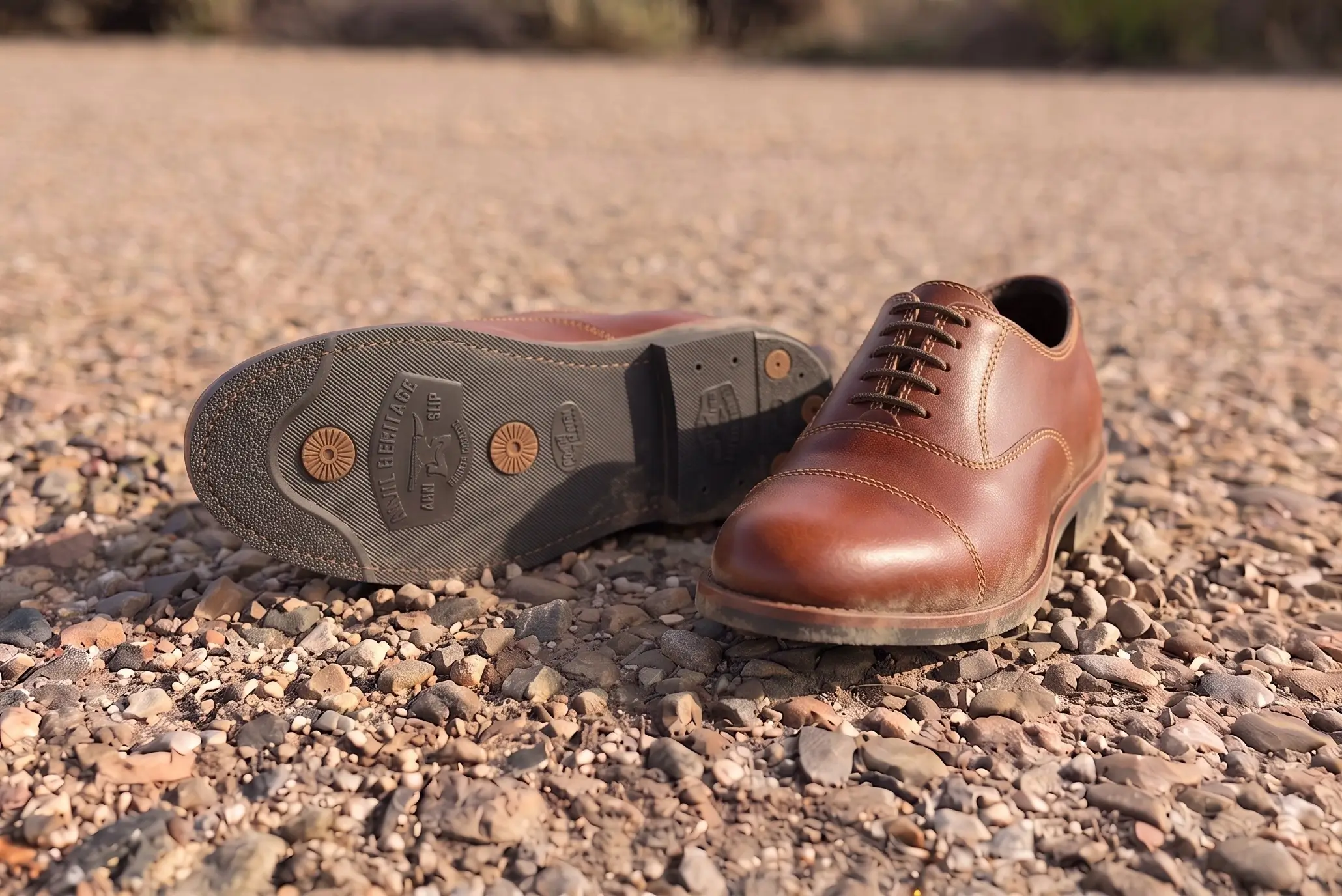
The full-grain buffalo leather upper is planted to a rubber outsole through modern-day Goodyear-welting on a last that is anything but sleek.
It is not the last word in sophistication or something that people (or I) would stop and stare at, but its authenticity as a durable and usable formal shoe transcends the fear of making a costly misstep.
I value such freedom and confidence that I won’t mind putting thick winter socks to fill its volume, which is a bit too much for my narrow foot.
It’s not an article delineating a box-fresh purchase. The Duty Oxford (Saddle tan) was sent to me by C&G back in early 2024. This reading reflects my takeaways in the intervening two years.
The Buffalo Leather Upper
In a full-grain state, it makes a very hard-wearing casing but a little casual for an Oxford.
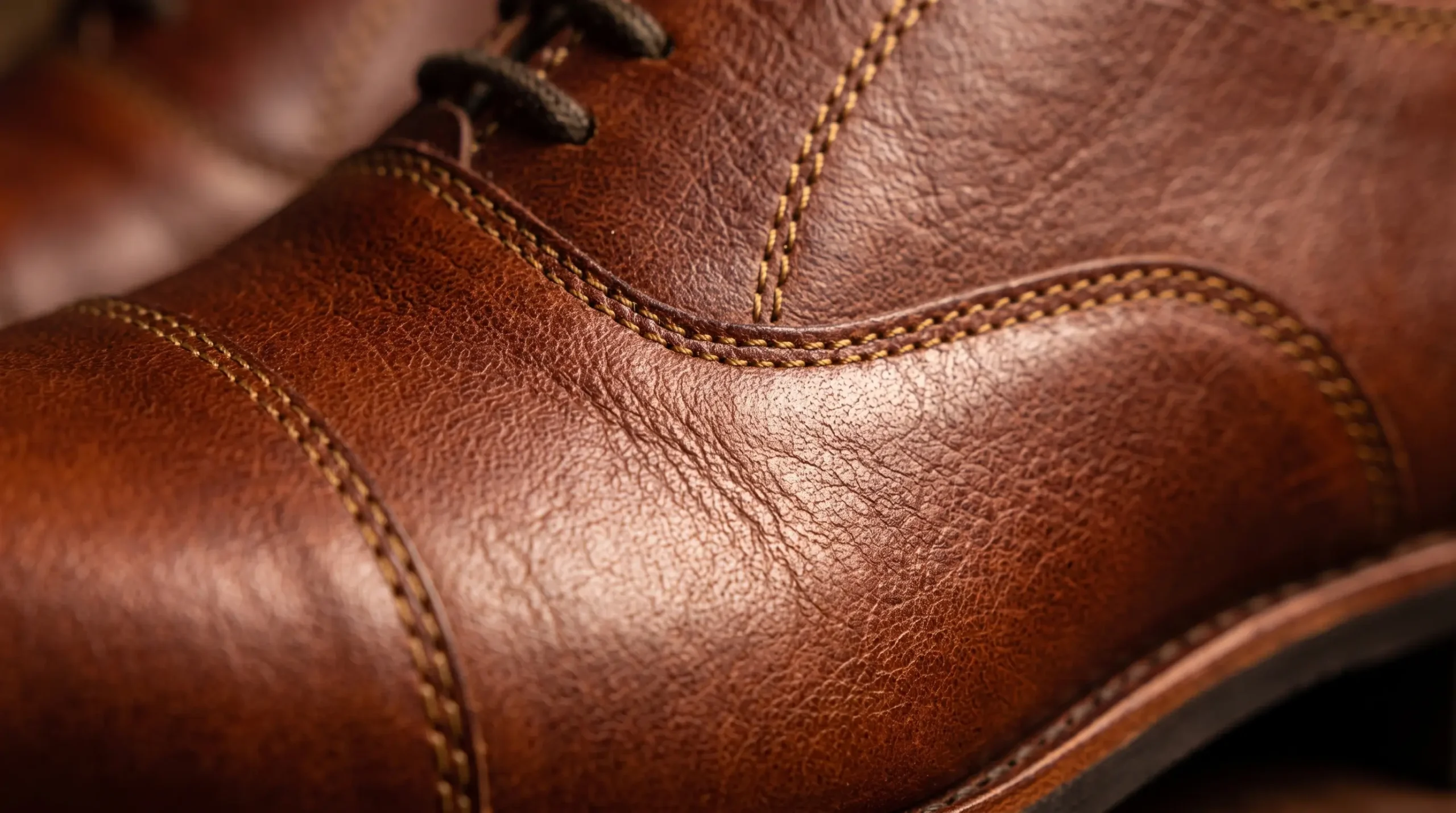
To almost everyone whom I showed my collection, the Duty Oxford felt out of place like a worn and cheap item in surroundings awash in Calf leather shoes.
This is probably, at least in part, because of its accommodating shape. But the off-site is also partly a result of the Buffalo leather coarse grain and earthy finish. Buffalo leather is not usual for Oxford because it can’t be worked to a sleek shape, to some extent.
Makers either opt for more pliable but costly calf leather or sanded buffalo leather, especially those aiming for an even finish and a reasonable price.
Full-grain buffalo leather is a very durable option, betraying the Oxford style’s dressiness in a very subtle way, particularly due to the way it develops with wear.
Is buffalo leather good for formals?
Its sourcing, finishing, and fate explain why buffalo leather is not Oxford-friendly.
I may digress for a moment, as we need to understand the principles of what makes something smart or casual — its smoothness, its texture, its shine — and then apply those to what is offered in the Duty Oxford.
Craft & Glory shoes and boots are made from the hide of water buffalo. It is often claimed to be similar to bison leather, but not on every ground. Water buffalo leather is as strong, but it sags and loses its form quite hideously.
Bison are cold-weather animals; thus, they have smaller, tightly clustered hair follicles (which yield a deep, fine-grain structure after tanning).
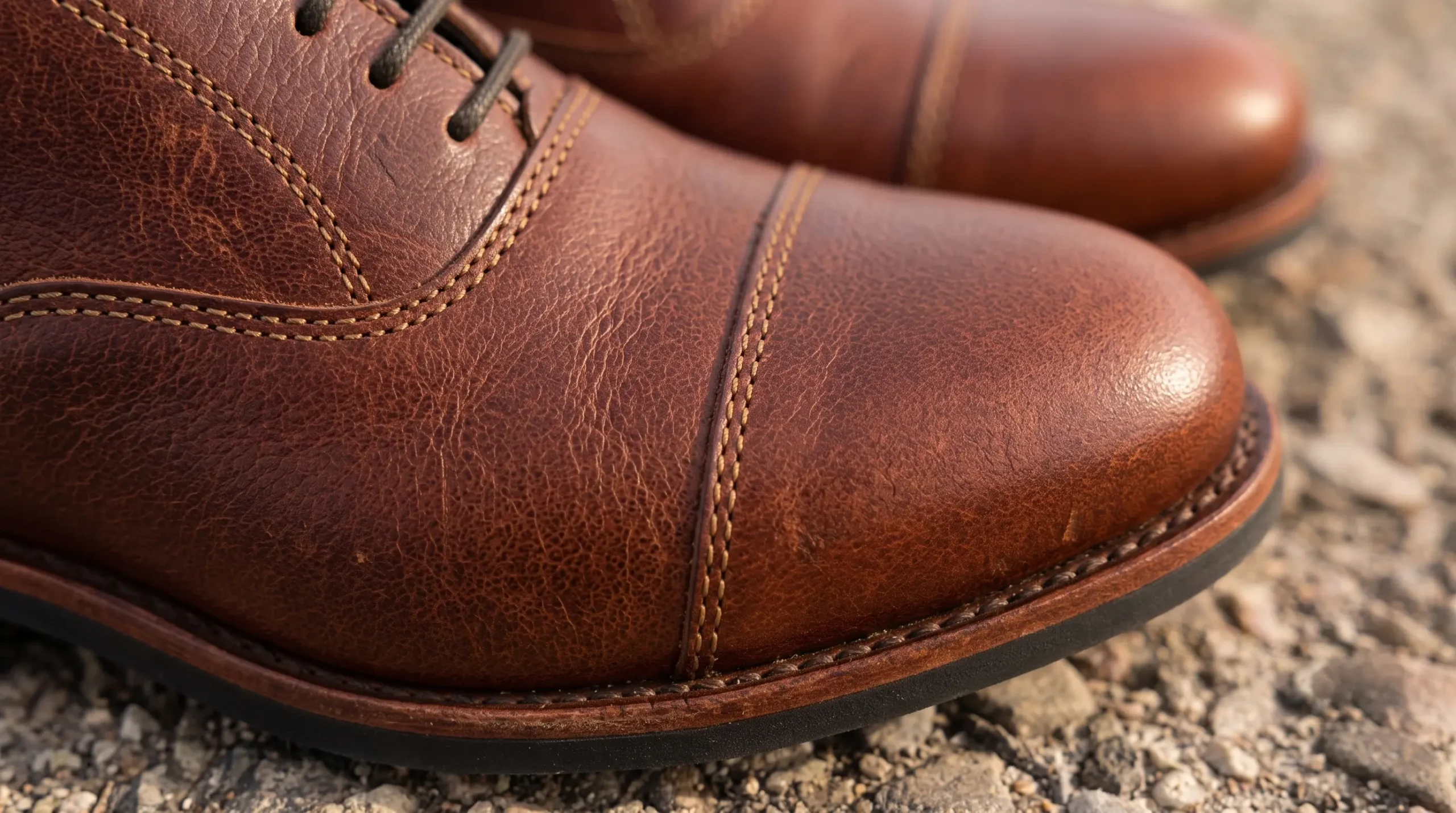
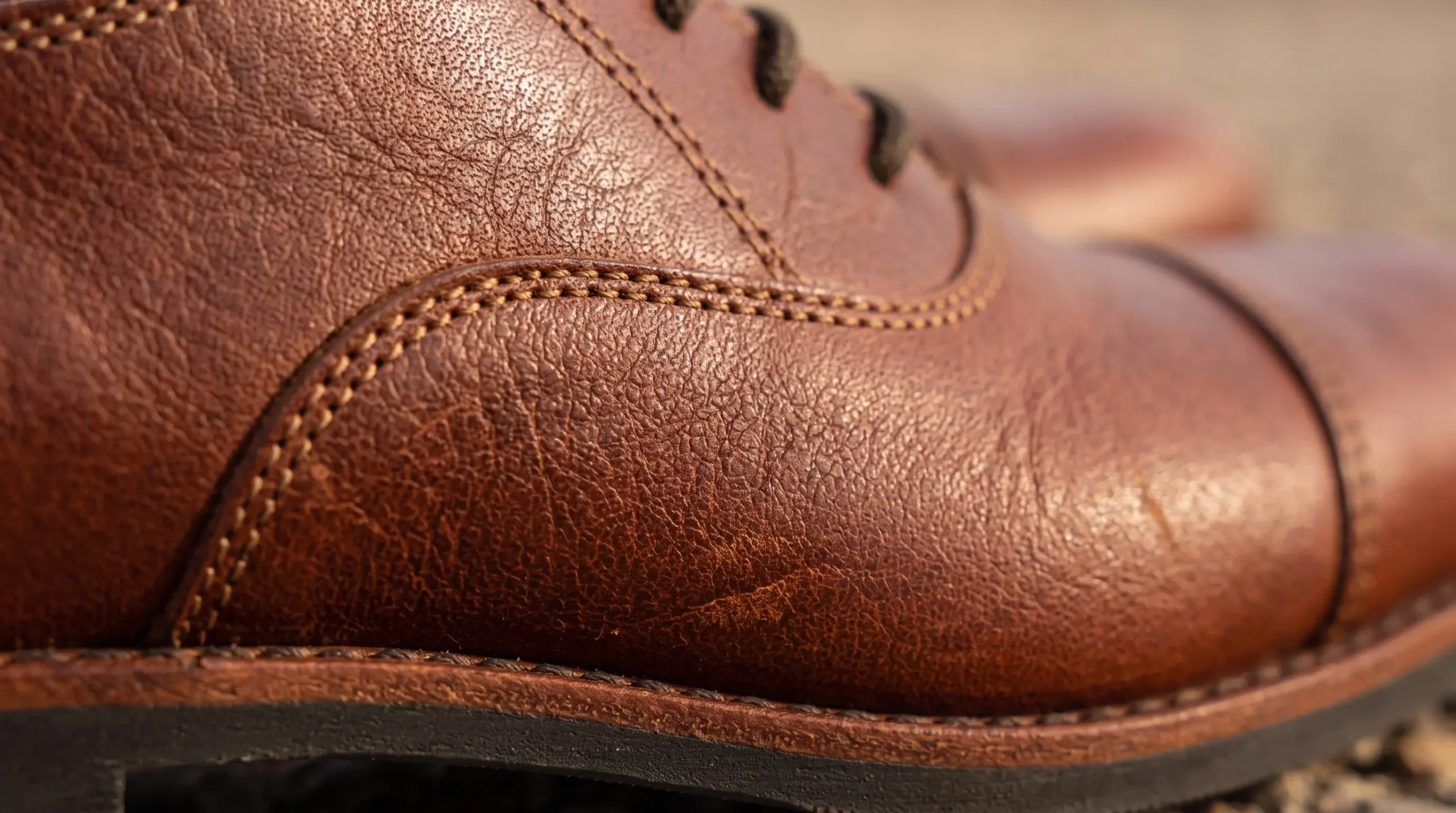
A water buffalo’s tropical, warm habitat causes them to have much larger and more spread-out hair follicles, which reflect in the leather as an open, rugged, and coarse grain structure (highly visible).
This lack of smoothness makes a big difference to formality. The oils and waxes with which this particular buffalo leather is finished take it even further from smartness.
The oil & wax stuffing (an industrial term) is done to make it weather-resistant, and it does produce that very sought-after pull-up effect.
However, such finishings keep this buffalo leather from achieving that high-clean shine that proper care & polish treatment would otherwise yield.
It is very difficult to form a smooth, glass-like surface using wax and polish on a skin that naturally possesses deep and open pores.
That loose collagen matrix is the reason why buffalo leather has surprisingly poor elastic recovery despite having incredibly high tensile strength.
They have to abstain from using large pattern pieces and line the upper with rigid leather to avoid exasperating sloppy distortion.
Those arrangements, unfortunately, make the shoe heavy and busy-looking. The Duty line is a set of very durable Oxfords that are not trying to be elegant — a horizontal variation rather than a vertical one.
What does buffalo leather promise?
It promises durability and care-free to some extent, thereby good value for money.
The calf leather Oxfords, which I’m benchmarking these Duty Oxfords against, are double the price. Price is always a factor, and I want shoes to be cheaper and more accessible.
What you lose by being at the Duty Oxford price is a leather that arrests the eye, and I think, for many people, that’s okay. That’s okay for many if the leather of their shoes lasts out rather than stands out.
Craft & Glory is a strong brand and carries the financial stamina to import exotic leathers. But their buyers come in because of the value point, and they opt for native sourcing to retain that value.
And in the middle of formal clothing’s declining phase, working from home, and a surge in office smart-casual rules, an Oxford with a coarse appearance might blend in.
Materials Under the Hood
From lining to insole: Everything is stout and on steroids.
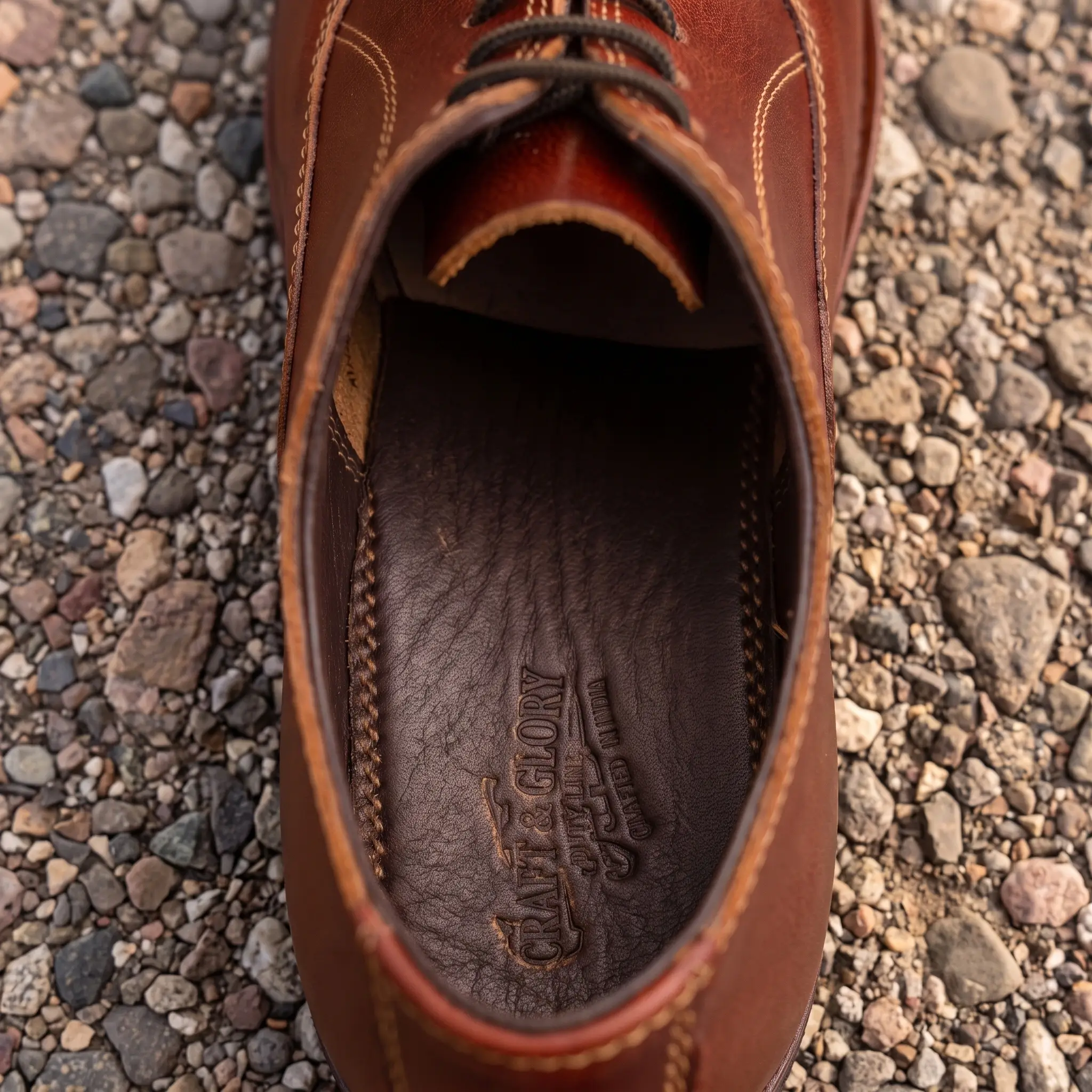
A 1.4 mm leather lining — that’s the thickness of two stacked credit cards. A 2 mm EVA sock liner upon a 4 mm veg-tanned leather insert.
After the hushed mass of standard Goodyear construction, the stack continues with a 4 mm leather insole and a 5 mm rubber outsole.
That all forms a stack height of roughly 1.6 cm, which is similar to standing on a stack of two of the latest iPhones. Such generosity is rare and indeed enhances the durability and adds to the weight of the shoe.
The effect of added weight is mentioned thoroughly later in this writing. Thickness is one of many elements that explain the quality of a sole unit. The tanning method and type of leather are other factors one should care about.
With regard to the tanning method, the important thing is to have a gradual, slow approach, which normally comes standard with veg-tanned leather. The slow tanning absorption does not affect the fiber structure of the hide, which eventually yields a durable and structurally rigid leather.
That’s what we get in the foundation of the Duty Oxford, and thereby that mass of leather underneath is something that breathes, absorbs sweat, and molds to the wearer’s anatomy.
The patrons of Bridlen & BLKBRD might notice the lack of compactness here. But responsiveness isn’t an acutely notice-able limitation, so it’s not a dealbreaker at all.
The Goodyear-Welted Soles
While the integrity is compromised, they somehow inspire confidence.
Goodyear-welting offers the best balance of quality and efficiency in mechanized shoemaking. In this process, a strip of leather (the “welt”) is stitched to both the upper and the insole, and then stitched separately to the outsole—yielding a water-resistant and resolable sole unit.
There’s a separate article on Goodyear-welting covering different aspects of this method. Every maker has a choice to be either a purist or a pragmatist. Craft & Glory, in general, and the Duty Oxford, in particular, is battling a few problems with selling at a price.
One is that it restricts them from executing nuances, and their Goodyear welt relies heavily upon functional benefits. In terms of quality, the biggest hitch is the excessive use of adhesives.
The welt is stitched to a canvas rib, which is glued to the insole — an insole that is thick enough to yield a channel to stitch the welt (a traditional method that produces a sole unit that feels integrated into the structure of the boot).
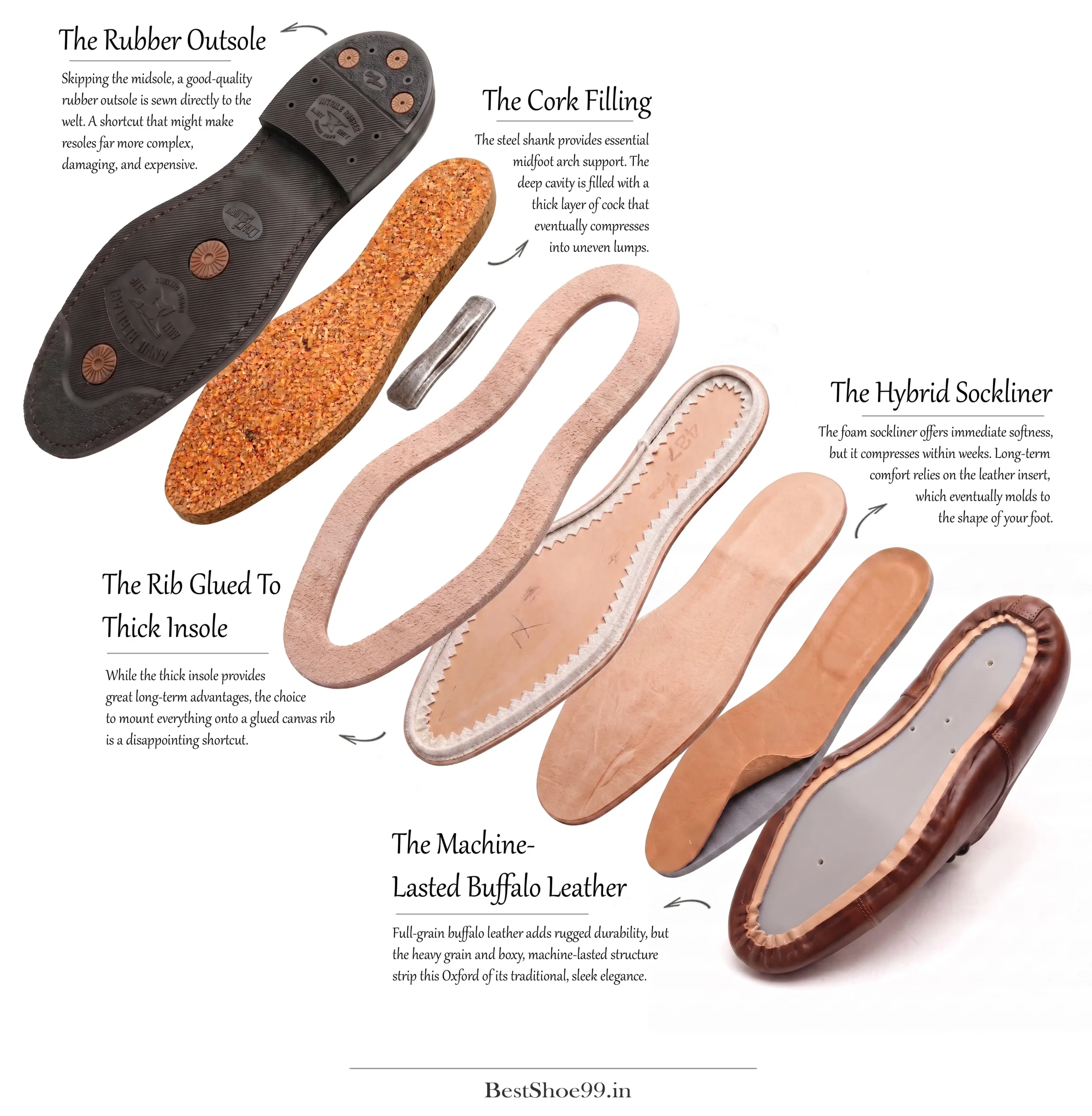
In the Duty Oxford, though, the entire structural integrity now relies on a strip of glue holding canvas to leather. A thicker layer of cork is required to create a flat base because of the extra depth the canvas rib causes.
That deep well of cork underneath compresses, whereas a thinner layer of cork puts the pressure point on the leather insole, which disperses, not compresses. There is a limit to how much “sinking” is ergonomic.
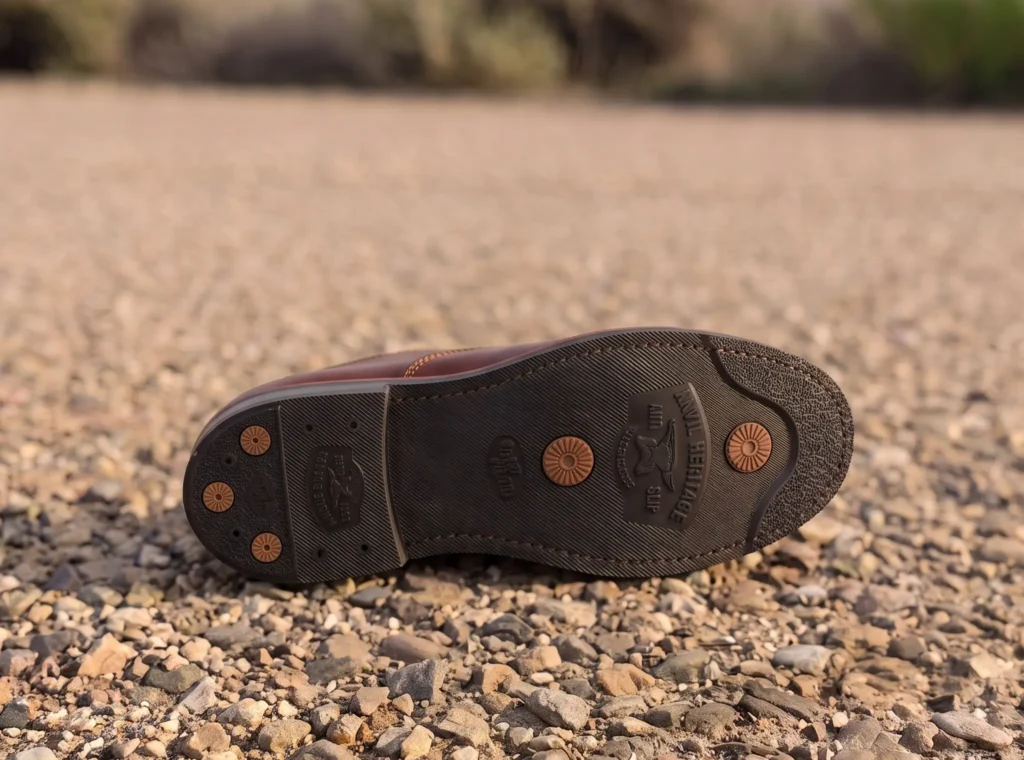
Generally, we are left with little else to differentiate after the gemming and cork thickness. But not here. On the Duty Oxford, in an urge to set the lowest price for a welted shoe, the maker stitched the rubber outsole directly to the welt without any midsole.
The threads running over the rubber sole’s lugs, making the lockstitch the first thing exposed to the ground, are very painful to comprehend. The makers chose to stay quiet when I asked them about this.
Honestly, I don’t understand who would be happy with this sort of Goodyear-welted sole for that kind of money. Eliminating a layer of leather might make the break-in time a week shorter, but that flexibility should not come at the cost of reliability.
Those who have ever had a welted pair worn to the need-resoling stage know how easy it is to replace the sole of a pair that has a midsole — any cobbler can peel off the worn rubber outsole and glue a new one onto a preserved midsole.
For my Duty Oxfords, however, resoling starts by cutting the welt stitches, pulling the rubber off (which might take some chunks of cork with it), and stitching a new sole back to the welt.
Such a resoling procedure, I reckon, will wear down the welt much faster. It’s just sloppily designed. Buy something real. If you are capable of splurging ₹9,250 for a pair of formals, buy a Bridlen Blake or a BLKBRD welted pair (for ₹2,000 more), and I’m sure you’ll be happier.
How is the construction elsewhere?
Not as offensive, thankfully. The unsightly stitching is because one can’t go finer on buffalo leather.
When we buy a calf leather Oxford, we’re buying precision, consistency, and elegance. Even if the maker is ready to put in the effort, such construction traits are not possible on buffalo leather’s coarser fiber structure.
The dense fiber structure of calfskin leather prevents tearing under a higher stitch density. Because of its loose and coarse fibers, the buffalo leather will rip or “zipper” open under any attempt to achieve a high stitch density.
Wide stitch spacing is standard with buffalo leather, and the thicker threads used for thicker leather might work on a rugged boot, but that look is too heavy for an Oxford, which conceptually should be understated.
The layers making up the uppers are achieved through the same mass-producer mindset. Deviating from time-consuming “floating construction” — floating because the lining and the upper are stitched together — the Duty Oxford interior is glued using adhesives.
Fettering buffalo leather breathability; that synthetic barrier makes the shoe feel noticeably hotter. To a continental reader, I might seem a bit too demanding for a ₹10k shoe. That is partly true, however.
Partly because I have to be forgiving with materials, but not with the craftsmanship, knowing how much high-level shoemaking typically costs in our country.
The Design & Shape
They somehow saved it from looking too big and aggressive, but shaped it to “fit” the majority of people.
And I don’t think anyone would mind that balancing act between design and shape. I cannot hate their attempt to deal with the typical tension that D2C makers face when designing a mass-market Goodyear-welted shoe, as long as it doesn’t ask the user to compromise on either form or function.
A well-proportioned cap-toe ends just before the shoe begins to flex at the ball of the foot. Here, on the Duty Oxford, it extends further back towards the laces, covering a large portion of the toe box.
This size cap-toe squeezes the vamp and makes the shoe look front-heavy, which might make wide or large feet look smaller and more compact.
While it advocates the Duty Oxford’s rugged & utilitarian concept, the big cap-toe creases heavily, ruining the crisp look a cap-toe is supposed to maintain.
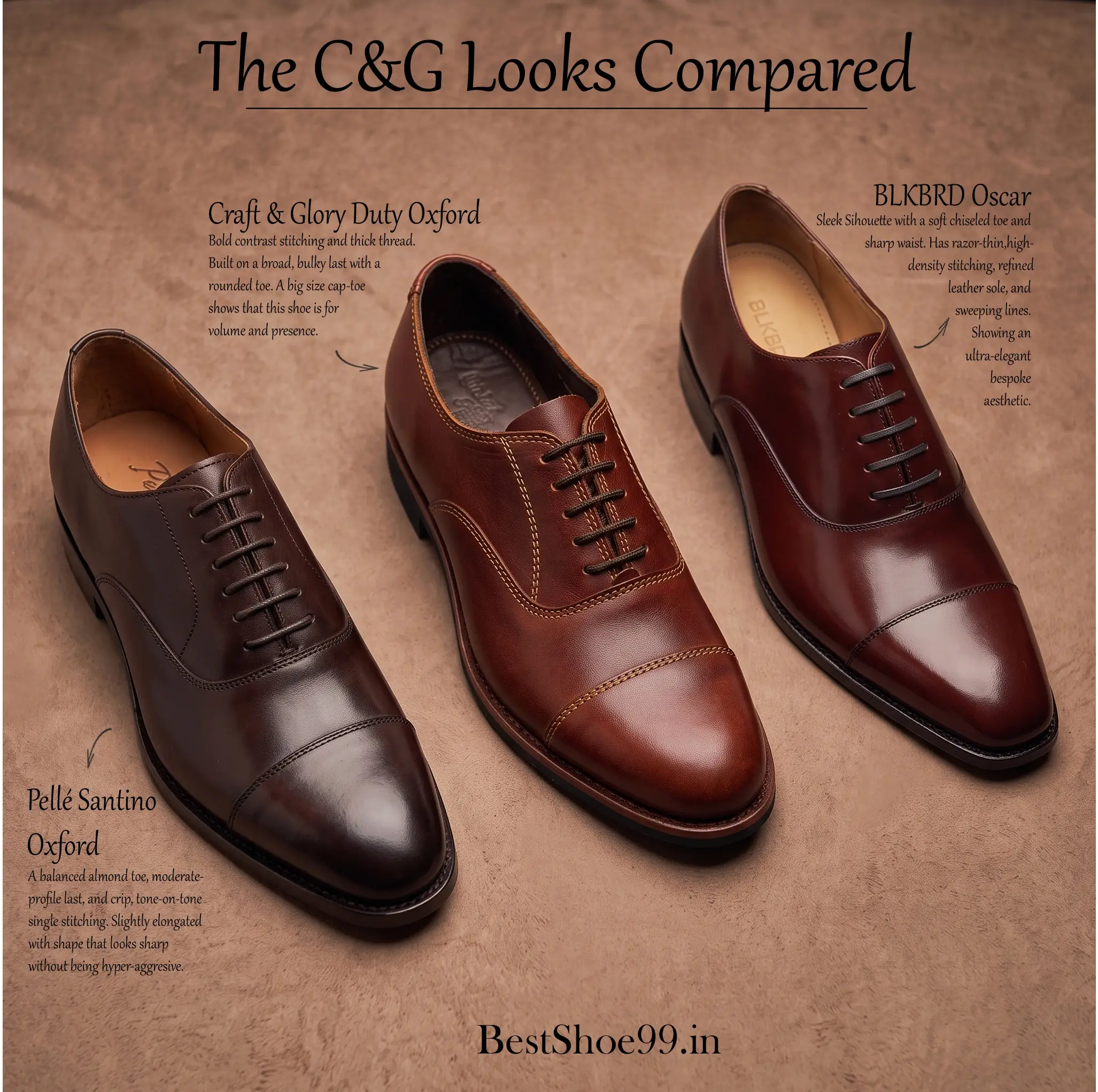
The middle section kind of offsets the unsightly anti-Oxford front. The five-eyelet facing gives the squeezed vamp some area to breathe.
The effect of a very spacious and forgiving volume is that that coveted, nearly parallel closure at the top is likely achievable, no matter how difficult your feet are for an Oxford.
The most beautiful part of this shoe is the stitch line where the quarters meet the vamp, curving elegantly backwards in a shape resembling a swan’s neck. This curved, sweeping seam keeps the vast volume of the shoe from erecting a tall wall of leather on the side.
A very rugged, thick stitching is done to secure the two halves of the quarters at the heel. It is nice to have a reliable joint under this area, as it takes an immense amount of stress and might split under pressure otherwise.
Because that seam might look too heavy on an Oxford, a backstay is attached to hide it. Is that an elegant addition? Debatable, I guess!
Is there anything to like about them?
They are very honest about how Duty Oxford looks — and that’s rare!
It felt pessimistic to have such heavy thoughts up there about the way the Duty Oxford is shaped & designed, when I am well aware that Craft & Glory’s creations are not destined for sinuous elegance.
Most of the time, the shoe does not look like what the pictures showcase (a separate piece on this dilemma coming soon). That is not the case with the Duty Oxford, surprisingly!
They are not trying to trick buyers, either by words or through images. The block-like utilitarianism woven into its shape & design is a deliberate approach that Craft & Glory takes great pride in.
This shoe is optimized for sheer volume and presence. I’m not making a case against the Duty Oxford’s shape & design.
I agree that my opinion, particularly on this shape & design element, comes from a disappointment that stems from the fact that I cannot help but benchmark the Duty Oxford against the Bridlen & BLKBRD Oxfords I have.
The Fit, Comfort, & How It Ages
Endure the weight & room, reap the longevity.
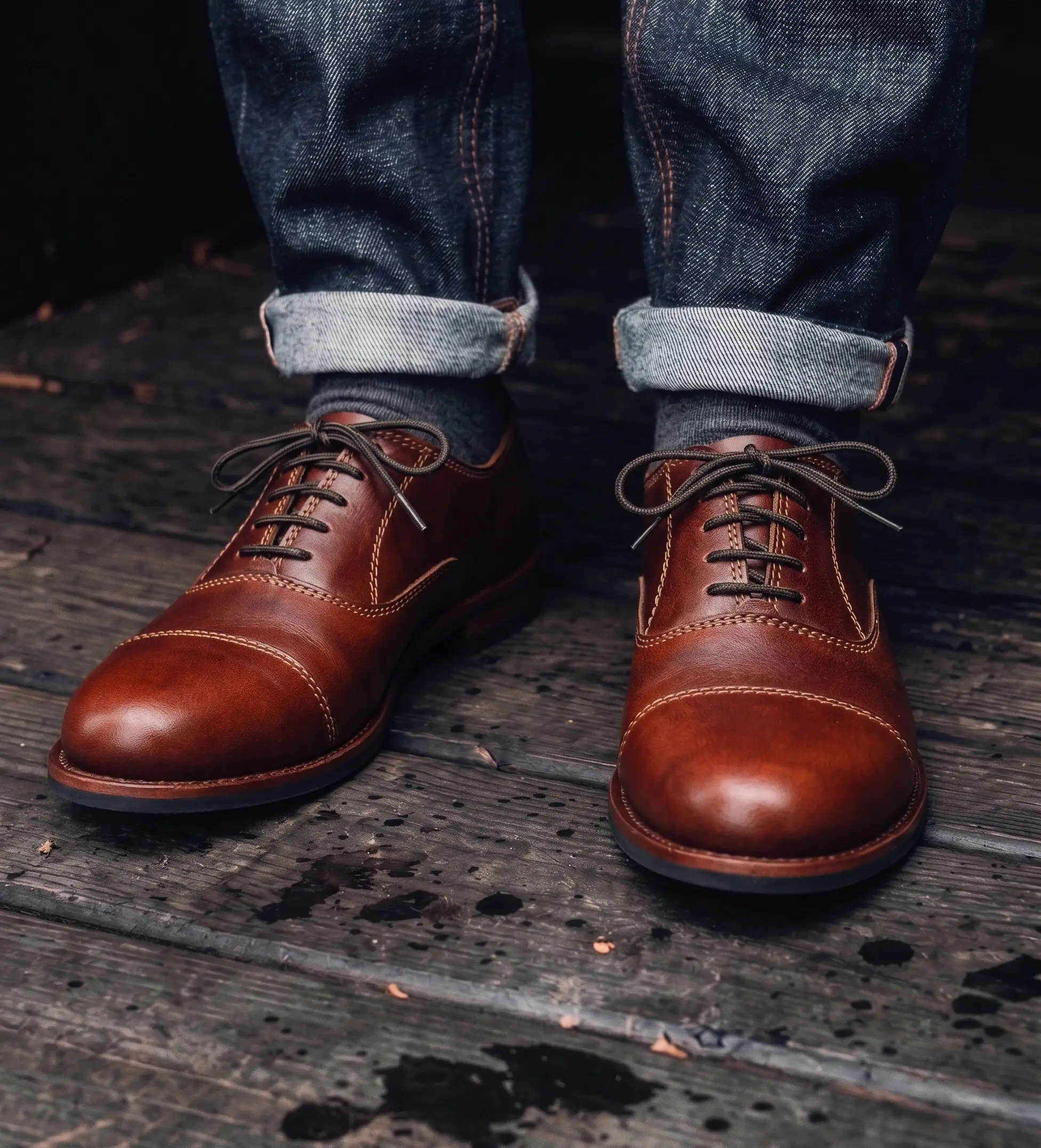
I don’t think anyone would complain about the way this shoe fits, except when a football-boot-like clutch is desired.
I took my regular shoe size — 7 UK, 41 EU — and apart from having a too-spacious front, which always happens with me, they fit very well.
Because the heel clutch is spot-on, sizing down is likely a bad idea. Thick winter socks take up the volume while remaining breathable.
A little extra toe room isn’t a bad thing if the heel is held tightly in the back and the ankle is held tightly around the opening of the shoe.
The suede piece in the back played a big role in making this rather spacious Oxford work for my low-volume feet.
The rough fibers of the suede create the friction needed to cancel any heel movement; otherwise, breaking in this stiff leather would be a very discouraging, or rather painful, experience.
Because I need to pull the laces tight to clamp down on that extra vertical space, I have somewhat achieved a completely closed lacing channel from day one.
Of course, all these fit-related takeaways are personal and depend on your feet, but they will hopefully help get a sense of what the shape is like.
I strongly believe the Duty line Oxford is crafted to accommodate wider, fuller feet, and everyone else is bound to find a way to fill the extra volume.
How Comfortable Are They?
It’s not in softness but in structure, as you’ll never fully get rid of that stiffness.
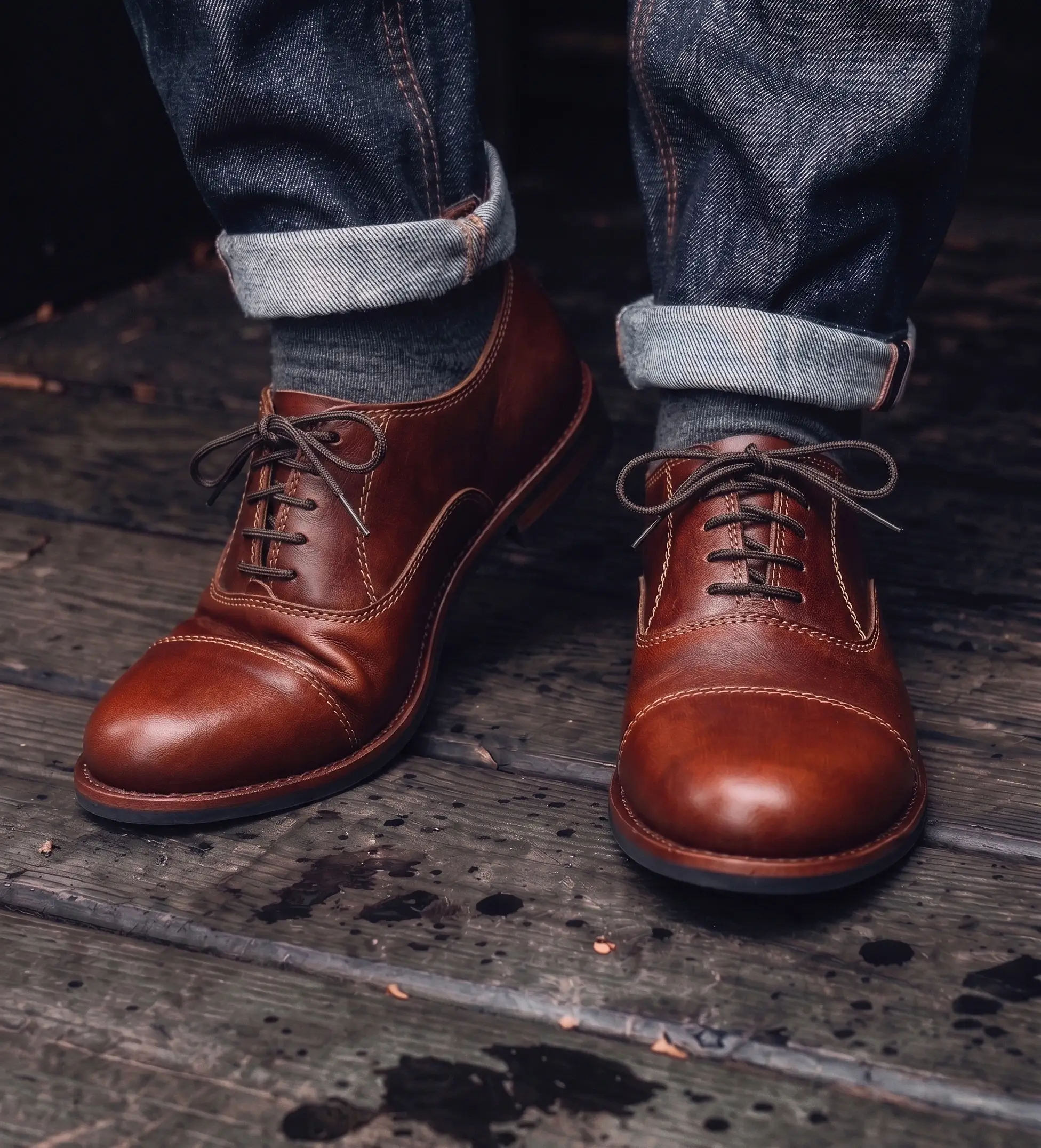
I have discussed the fitting attributes explicitly to give you an idea of this Oxford’s shape. However, “comfort” is always going to be a little more personal and subjective.
Anyone who tells you a single, objective definition of comfort is selling something. I’ve been wearing these Craft & Glory Duty line Oxfords quite a lot ever since I got them in early 2024.
Through my experience with them so far, I can provide insight into how this shoe will likely deliver on various ideas of comfort. The break-in, however, is a common phase that forces your feet to fight the shoe. How blister-full the initial wear will be depends on the quality of the fit.
It would be pain-free if the shoe fits well, but a tight, firm hug or a wooden-splint-like feeling around the foot is an inevitable sensation.
Wearing them for 30 minutes at a time — more than once — around the house for a week, and most of these pressure points will go away as the leather stretches.
The softness and mold-to-your-foot features are often promised to appear after a bit of wear. On the Duty Oxford, however, those serenities take a while to develop and, quite honestly, will never achieve that calfskin-like softness.
This does not mean one can’t derive an enjoyable feel from this shoe, as softness doesn’t necessarily work comprehensively.
Part of the pleasure of these stiff leathers, underneath and around, is the feel of the material — the thick, protective leather brushing over the skin.
I am not making a case for this shoe, but explaining its rather practical form of comfort, where it will grip, but let you move too.
My pair is molded and lived-in. My foot is not pushing against its thick walls, yet I can feel it and feel the reassurance.
How Pleased Am I with The Duty Oxford?
I don’t care too much about what happens to them — and, now, I value that lack of preciousness.
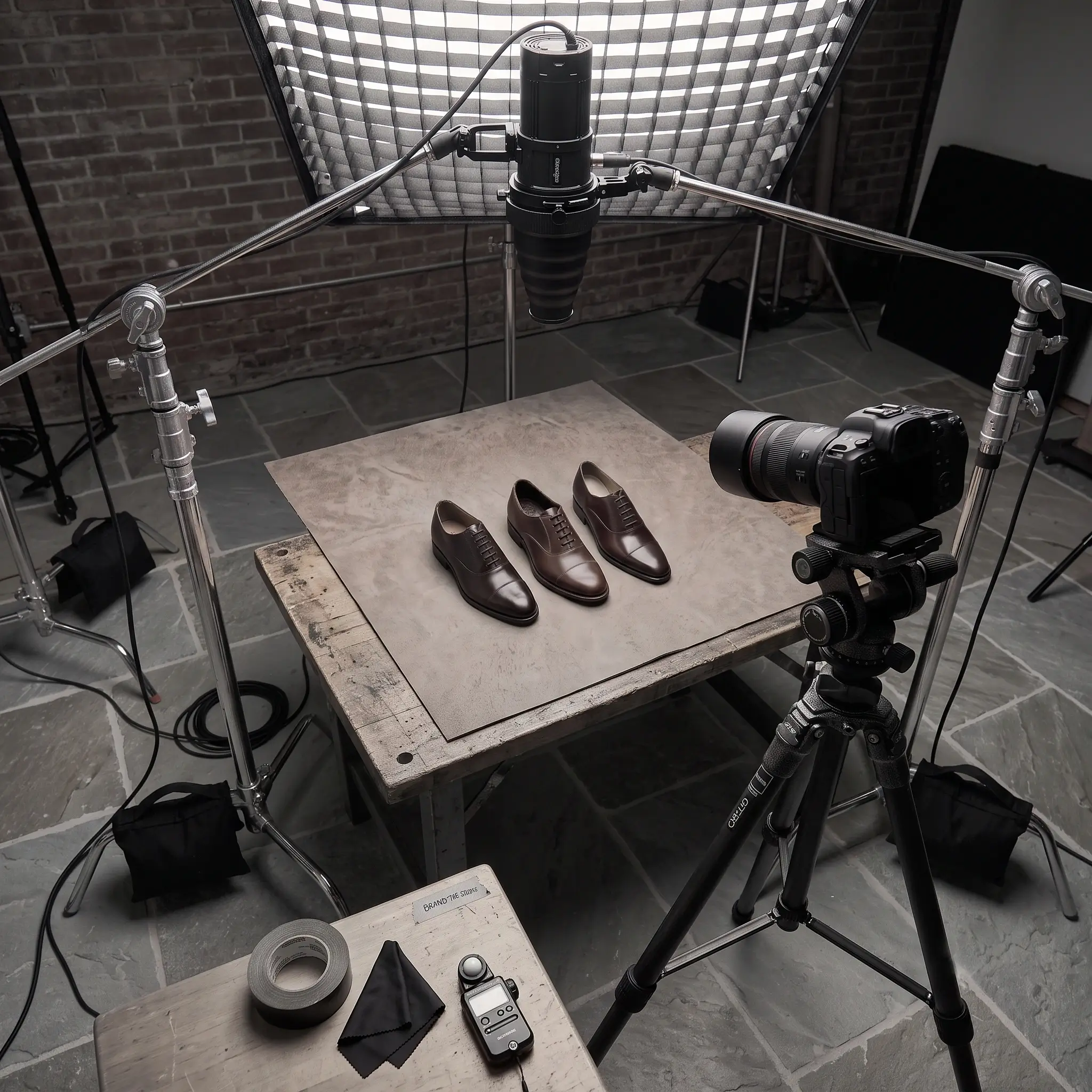
I got a pair of Oxfords (The Austerity) from Bridlen’s Founders 25 Collection 15 months ago.
A closed-channel, Goodyear-welted Oxford with Weinheimer box calf uppers, J&FJ Baker oak-bark-tanned leather outsole, wooden-pegged beveled waist, and brass toe plates — in short, it is a truly luxurious item of formal wear which I have never worn.
All of these premium elements are precisely what stopped me from wearing them.
I almost wore them to my best friend’s wedding last December, but after weighing the weather, the scuff risks to the box calf leather, and the carpet-to-concrete ratio for those closed-channel soles, prudence won out.
In a conversation with Permanent Style‘s Simon Crompton, Tony Gaziano, a renowned bespoke shoemaker, validated this paradox and said, “I think bespoke shoes are so expensive these days that, ultimately, you want to create something that is ornamental. Something that is so good that you don’t want to put it on your feet — that’s the only way you can justify the price.“
Cut to the Craft & Glory Duty line, Oxford. They don’t evoke such emotion; in fact, they relieve you from it. That lack of anxiety makes these ruggedly welted shoes worth tending towards.
I have synthetic leather Oxfords that have a similar laxity, and calfskin ones that are purely opulent, but nothing combines both in this way.
I use them intensively, so while they might not be on par with the likes of Bridlen or BLKBRD in terms of looks, but can be brought back up to a shine if desired.
They have no delicate proportions, leather depth, or silhouette to just sit and watch. Still, there’s huge satisfaction in having a pair that incites use. They fall on the utility end rather than what’s at the top of a universal scale of greatness.
For too long, we (critics) have thought of great classic shoes solely in terms of their material exoticism, anatomical shapes, and construction refinement.
These are all wonderful attributes that frame our notion of what a shoe can be. But maybe we need to think of greatness in terms of how well shoes play their role.
If a pair is robust enough for lived-in, everyday wear for years, yet beautiful enough to look neat without being overly ornamental, isn’t that just as great? I think so.
Is There a Better, Similarly-Priced Option?
They stay alive without much care. I haven’t yet found a pair that does exactly that.
I think the core preference for a shoe culminates from parameters: durability, presentability, and comfort. Every dress shoe is blind to at least these three parameters. Describing a shoe on any other parameter is pretentious or professional deformation.
Dress shoes, mostly of inferior quality, often pitch their blend as the most harmonious.
Good shoemakers, however, come with a bit more clarity — not just through their shoes, but by talking on Instagram or their own website about the decisions they make and the ratio of those ingredients they seek in their craft.
Craft & Glory, in general, and the Duty Oxford, in particular, lean heavily on durability, are mild on comfort, and are soft on presentability.
I don’t think any other Indian shoemaker is following that priority order to a similar degree. At this price, I can recommend makers that emphasize either comfort or presentability. Let’s start with presentability first.
Bridlen Blake Line
It outdoes every sub-₹10k shoe, first and foremost, in elegance.
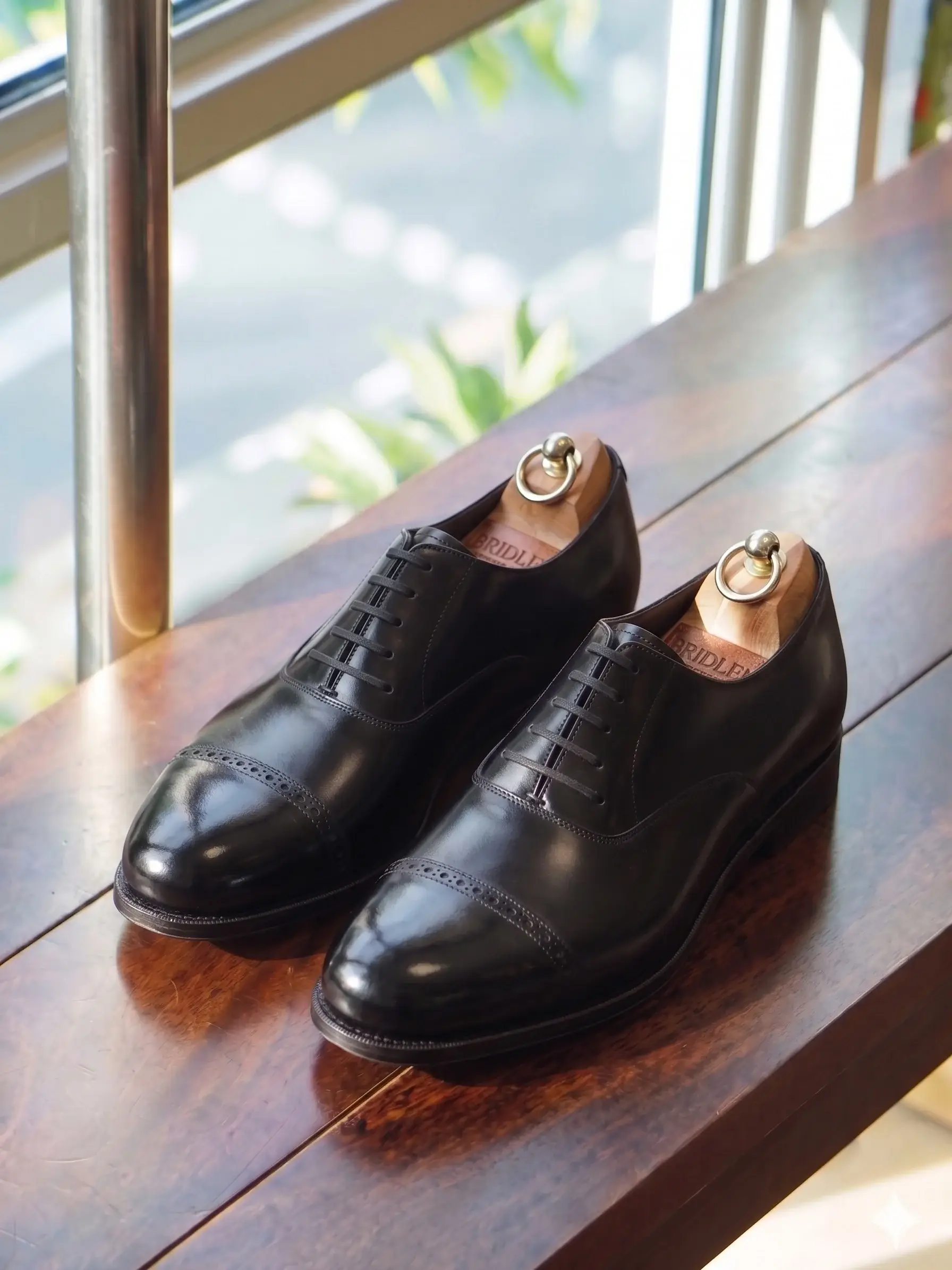
Comfort keeps you standing and durability saves you money, but elegance is what gives a dress shoe its purpose. While the former two are for yourself, elegance is for your presence, which is the core purpose of formal wear.
If it’s just for comfort, a Hawai chappal is just as durable and comfortable all day — I can’t see anyone wearing anything else again.
“It is truly a way of SHOWING,” notes Amanda Jane Valentine, celebrity fashion consultant. Where most dress shoes in the sub-₹10k category are about “keeping up with the group and fitting in,” Bridlen Blake shoes are about standing apart without leaving authenticity.
They look flattering through thoughtful design work and leather quality. Blake-stitched, but with materials on par with the likes of a flagship Korosko or standard welted BLKBRD.
They have developed this entry-level line with great experience, and that’s why the shoe feels so complete, rather than a work in progress.
I have covered my experience with my Bridlen Blake shoes previously here, but I will say this: if aesthetics are your goal, 9,000 rupees won’t get you anything finer.
Bata Formal Shoes
Comfort in a very familiar form — predictability in the very best sense of the word.
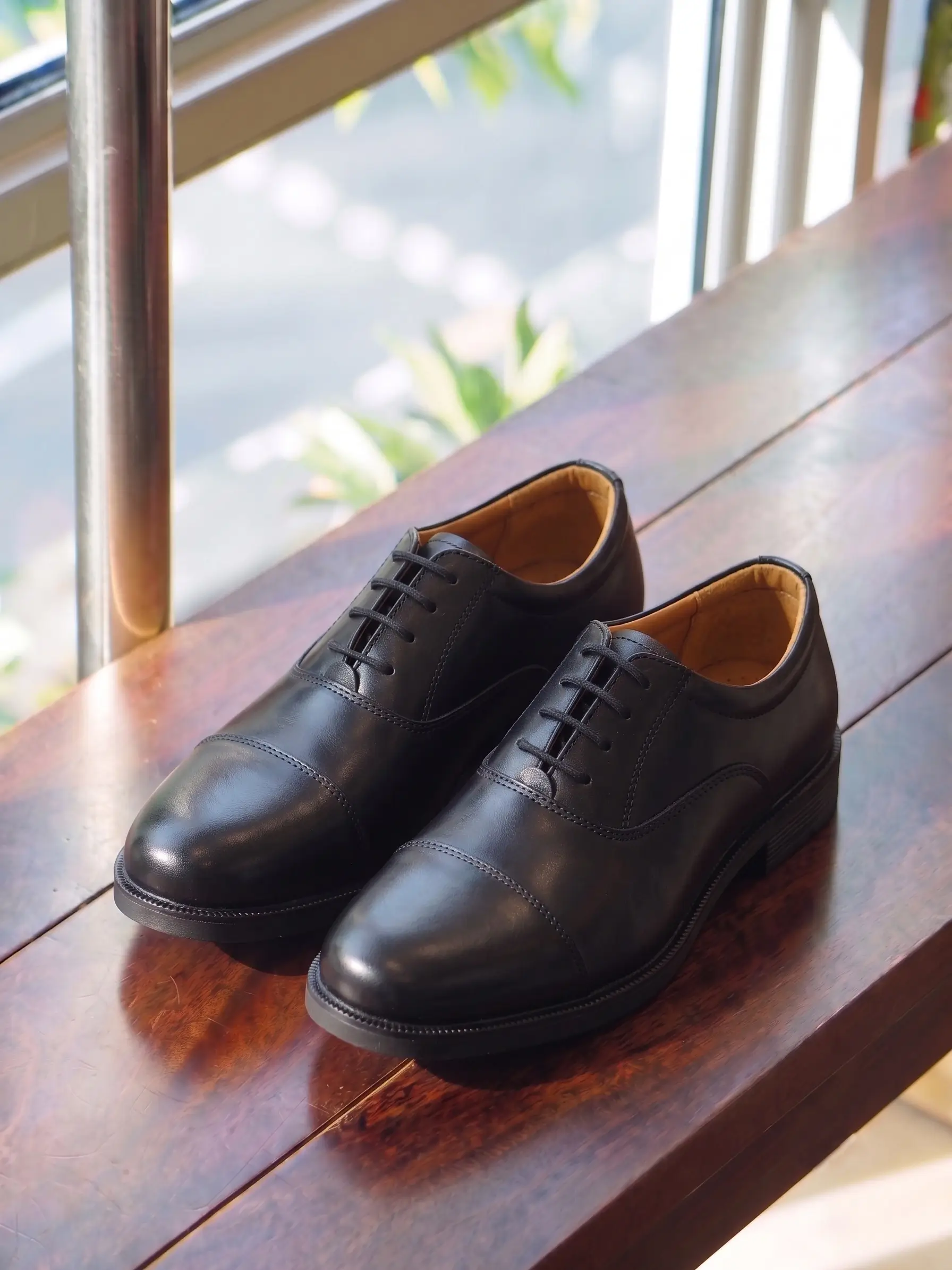
This is the big one that has been lost to the internet. Fit Anxiety: That’s one consistency I can draw from my online shoemaker pact. Whether it’s with Bridlen or Pelle Santino, they all give me anxiety regarding fit.
That kind of predictability might be best exemplified by the people (who can do a lot more than just fetch you a size) at a Bata store — an experience and assurance hard to replicate online.
This retail experience is different; it’s real and took decades to achieve. A Bata store is where the products live and breathe, and where they have genuinely evolved through interactions with customers.
Apart from convenience — being able to see the material in person, try on different sizes, and not wait around for a delivery at home — their formal shoes have their place.
The instant gratification of a cemented construction and a foam-dominant sole unit is what most of us are familiar with. The structure-driven comfort of a Goodyear-welted, full-grain leather shoe is better suited for all-day standing jobs.
However, sitting at a desk for 6 to 8 hours, walking brief distances between meeting rooms, and taking a short commute is a typical office routine that favors Bata’s softness-driven comfort.
You Might Also Like


How can we improve BestShoe99? Got feedback?