This reading reflects on a shoe that has more influence than shoes ten times better.
November 15, 2026
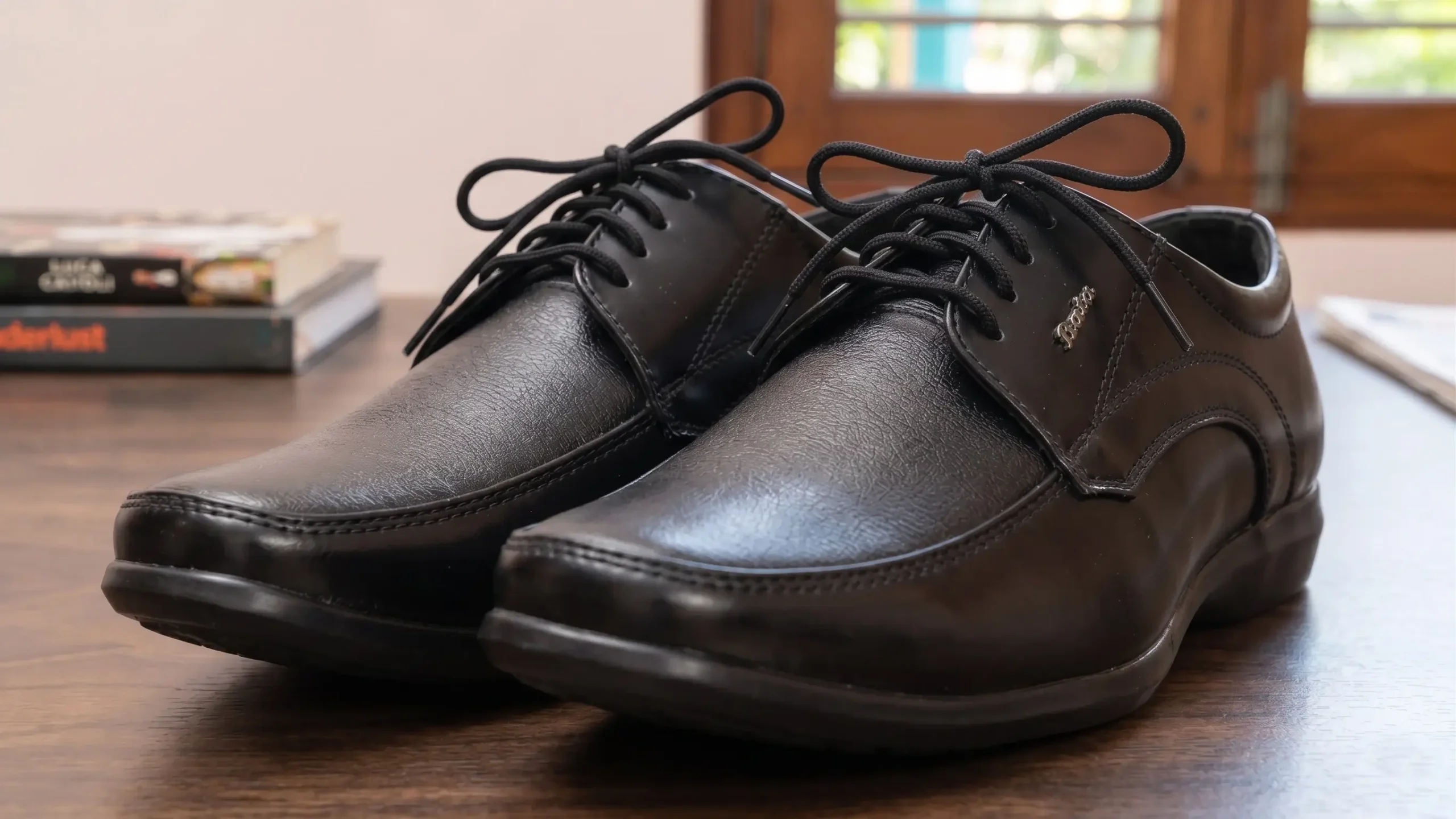
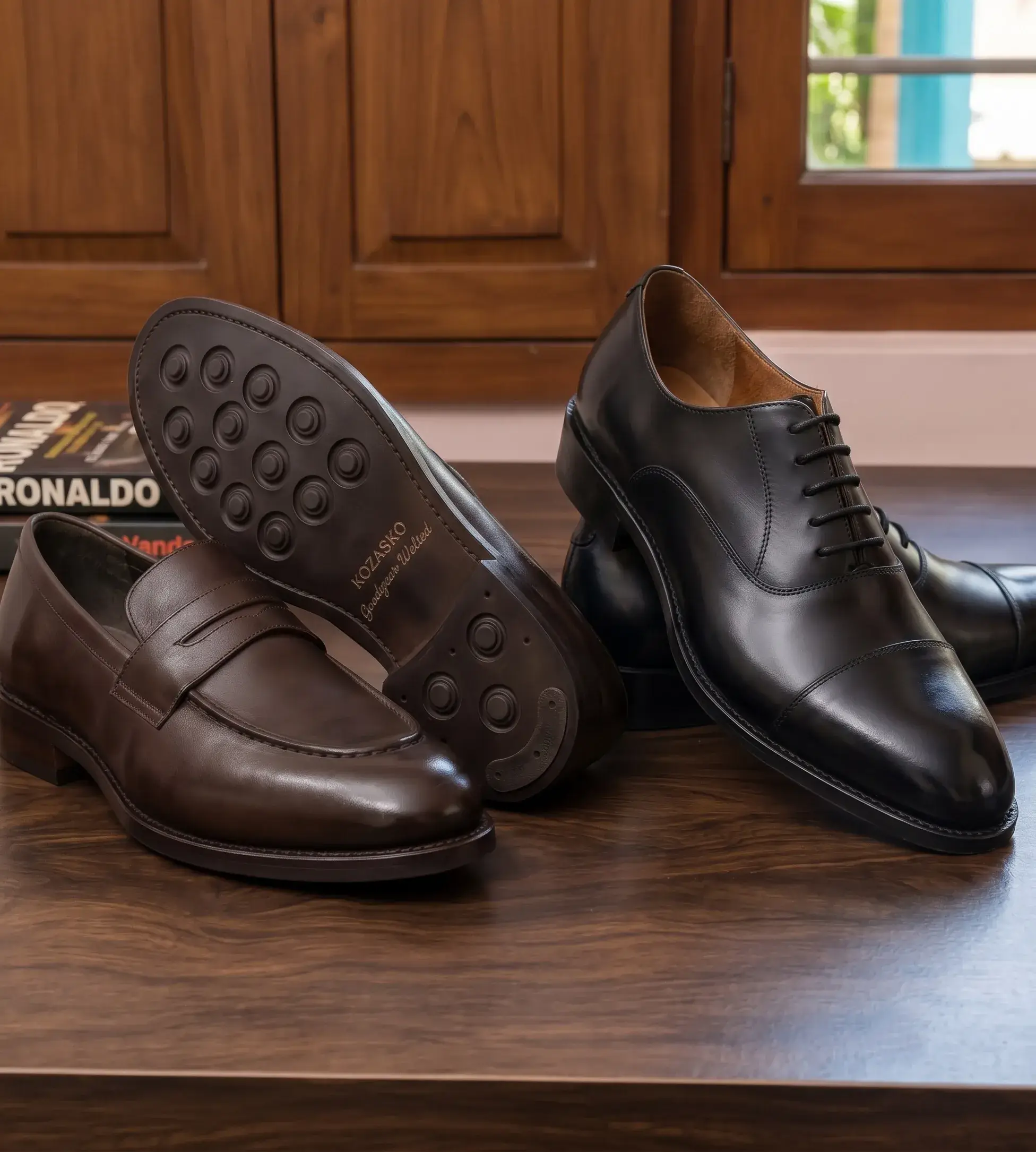
“Stands the test of time.” People misuse or overuse that distinction. That saying suits something people keep valuing despite the constant arrival of newer things.
There is so much new to explore in the Indian shoemaking domain that I suspect there is nothing that’ll stand the test of time. Or maybe I don’t want to consider the Derby shoes from Bata.
The story of Bata, and their popular Derby, becomes as important to my dad as it is to the nation’s professional class, begins, in a way, before I was born.
Such pairs are not covered conventionally. Partly because there is an implied inferiority about a mass-produced cemented shoe. The quietness is also partly a result of a lack of an analytical framework that shoe critics use.
But I cannot dismiss a pair that serves a massive, practical purpose for millions of daily commuters who prioritize accessibility, lightweight design, and low upfront cost.
Overlooking this pair is like ignoring a large audience, where sartorial choices are mainly driven by the necessity of dressing for the office.
I am not reviewing these shoes. This reading is about reflecting on a shoe that has more influence than shoes ten times better.
How’s the Shoe?
I won’t pretend or temper the criticism. The quality is bad. But the price and in-store experience make up for it.
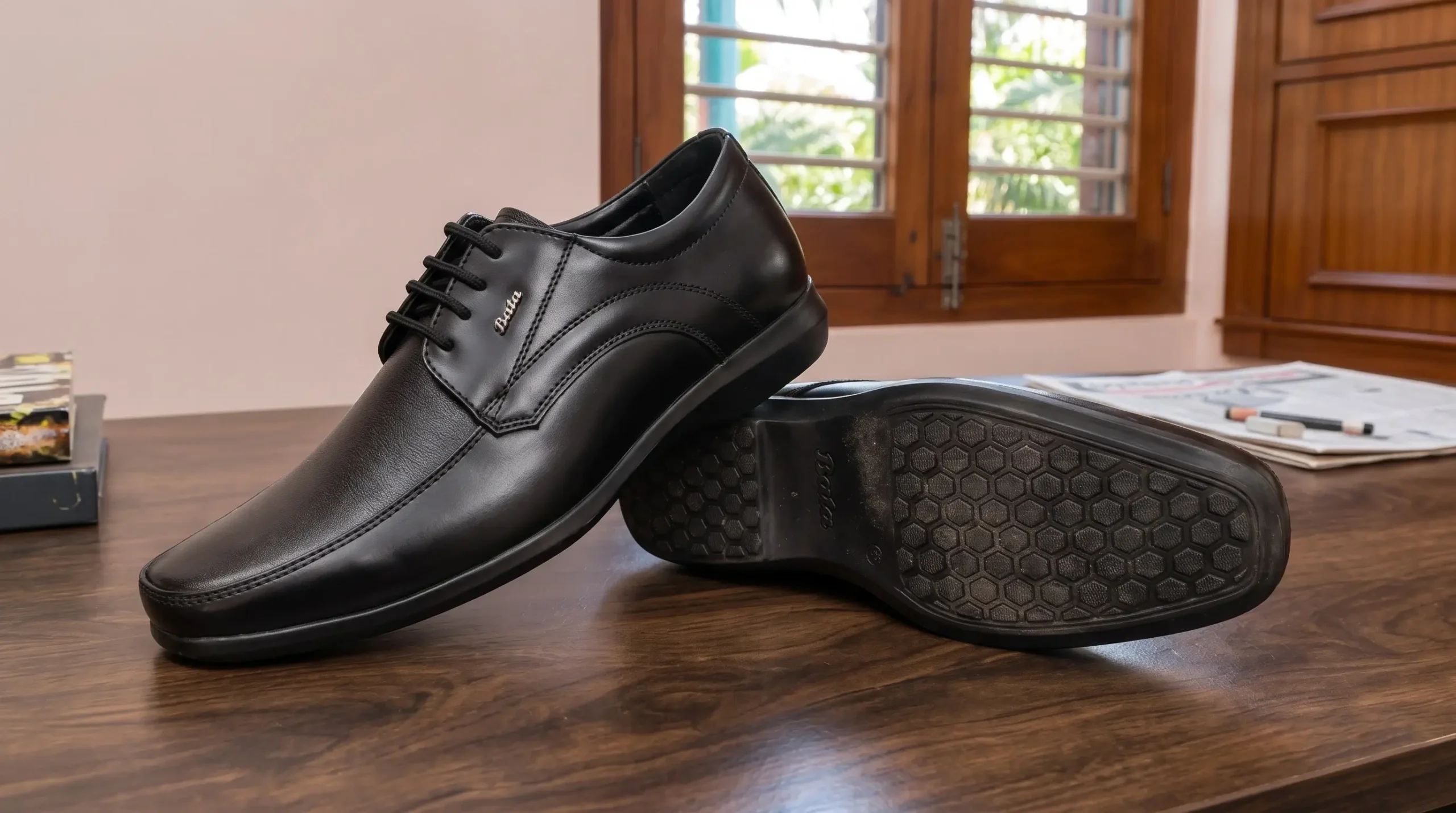
In shoe criticism, Goodyear-welted pairs are often evaluated against cheaper cemented alternatives. Bata’s Derby is just the sort of shoe that gets cast in the latter role.
It has nothing that a shoe snob or construction purist would admire. The features that are deemed good quality give a better shoe, no doubt about that. But that sometimes works against it.
The point is discussed in detail further in this reading. Let’s start with the upper.
The PU Synthetic Upper
It neither looks, lasts, is maintained, nor feels like leather.
Polyurethane leather is polyurethane-coated polyester-cotton fabric to create a leather-like surface.
The problem with PU leather is that it is engineered to reproduce the appearance of leather rather than to replicate the way leather behaves.
Even that appearance deteriorates with use and age, peeling away from its backing. The flexibility depends on the base layer, which is often relatively rigid.
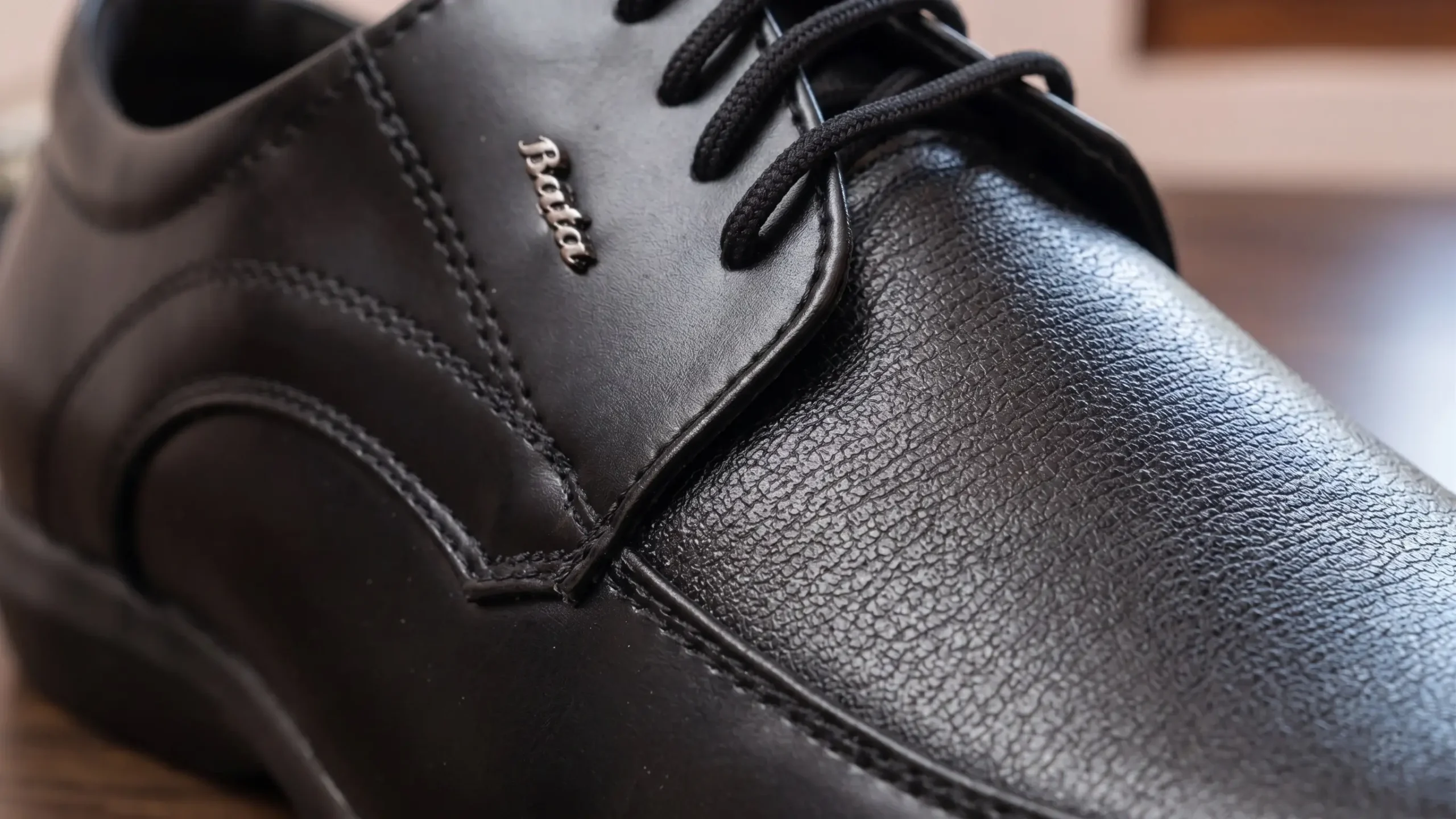
As a result, the PU coating may crack at the shoe’s flex points within weeks. It is less breathable because the polymer coating restricts the movement of air through the shoe upper.
The polyurethane coating is relatively non-absorbent, so ordinary shoe creams and waxes cannot interact with it in the same way they do with leathers.
Buffing may produce some shine, but it won’t necessarily restore the surface. This synthetic upper isn’t worth the trouble of looking after too carefully.
And because it isn’t naturally rigid like leather, your foot doesn’t have to work against the material. These are, in essence, the two arguments in favour of PU leather.
Sounds flattery, but once you have a wardrobe of well-made tough leather shoes, you would be happy if a shoe is soft and less attention-seeking.
And for many, the PU leather’s shortcomings become a more tolerable trade-off as good-quality leather shoes become increasingly expensive.
The Inner Lining & Footbed
Great step-in feel, but that dies soon.
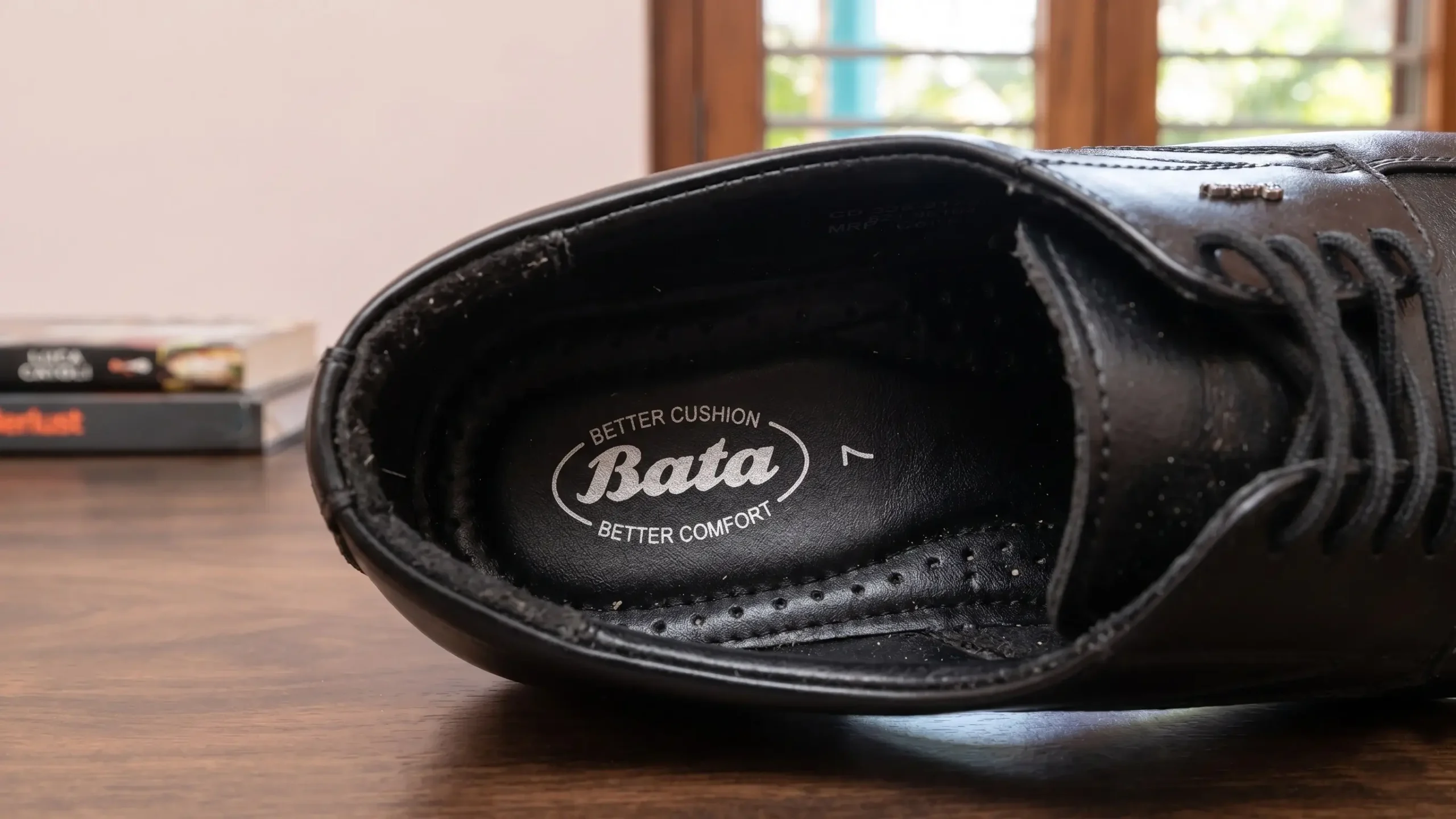
It’s a fully lined derby but with different materials. That’s a standard practice with mass-produced synthetic formal shoes.
It is called “split lining,” and it is done because the front and rear of the foot experience completely different mechanical forces, moisture levels, and visual exposure.
The rear section—the opening of the shoe, the sides of the heel, and lace-facing walls—is lined with paper-thin PU synthetic leather.
It helps you slip into the shoe easily without bunching, but the key reason is to make the interior of the shoe look neat, like a dress shoe.
The forward section—toe and sides of the forefoot—is lined with cotton drill and canvas primarily for moisture absorption.
As the upper is made from PU synthetic leather, if the shoe were fully lined with such synthetic, non-breathable material, sweat would puddle around the toe.
Along with moisture absorption, a fabric lining enables the vamp’s sharp flexes without cracking.
Adhesives—used to secure the toe puff between the lining and the upper—stick far better to porous fabric than to slick synthetic sheets.
These two linings are overlapped and flat-stitched at their intersection. You can feel that joint even through a thick winter sock. The internal setup works really well.
In fact, I have seen pairs with completely intact lining visible through the vanished vamp. The shoe has a cellulose-board insole and a padded layer above it.
It is primarily a structural component and works as a stable base for the shoe.
Such an insole does not offer any impact absorption; thus, the comfort depends on the lining, padding above the board, construction beneath it, and the geometry of the shoe.
The shoe has a foam sockliner with a layer of PU synthetic. The out-of-the-box plush feel deteriorates quickly and eventually (at most 6 months of use) becomes noticeably flat and lifeless.
The PU Outsole
The microcellular foam structure is very comfortable and will go further than what is assumed.
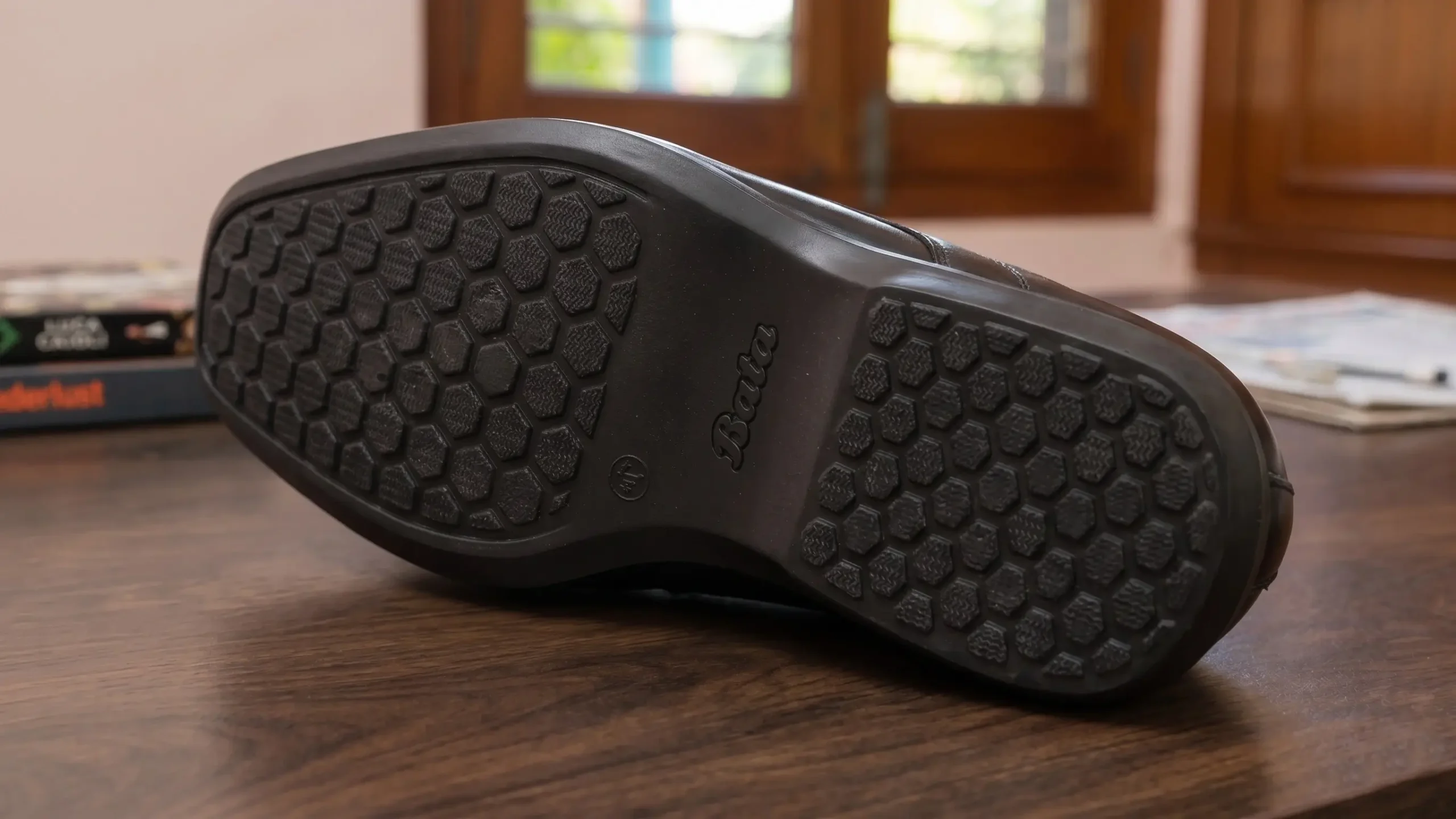
It is soft and solid, but I confess I (and many critics) have barely admired it. Polyurethane’s key property as regards shoemaking is its dual-texture density.
It is made by reacting polyols and diisocyanates, which creates a microcellular foam structure with a solid, smooth, and abrasion-resistant exterior and an interior core consisting of millions of microscopic air pockets.
This sole acts like an integrated cushion rather than a solid slab. It’s half the weight of a standard rubber or dense PVC sole, which makes a real difference when you’re on your feet for eight to ten hours a day.
Other advantages are that one shouldn’t need to endure painful rubbing or pressure while waiting for the sole to soften; PU sole is flexible and may require little to no break-in time.
Now the drawbacks. The biggest is its water-related degradation. Water breaks down the chemical bonds in this material. Even warm, humid storage can trigger that process.
Regardless of how much wear it has, a crumbling or powdery material around the sole is an inevitable event.
The Construction
The sole is formed directly onto the shoe upper.
The sole is attached to the upper by a method called direct injection. Very common in running shoes, it forms a joint that is very capable for the money.
This—this direct injection process—is a very rich topic, and it would be weird if I dedicated 1000 words to talking just about this. Glossing over a little bit of it, I’ll briefly tell you what’s happening here.
Polyurethane is not melted plastic. It is created through an exothermic (generating carbon dioxide, which creates millions of microscopic closed air cells) chemical reaction between polyol and diisocyanate.
The sole is synthesized directly onto the shoe, driving the expanding polymer deep into the pores of the upper material.
The outsole and upper become a single fused unit without requiring solvent cement or stitching.
I have worn a lot of fancy, expensive shoes in the course of my job, but none get the sole’s construction as Bata did. In nearly all cases, this sole construction outlived the upper.
How’s the Construction Elsewhere?
It’s solid, but not elegant. A bit unfair to complain, though!
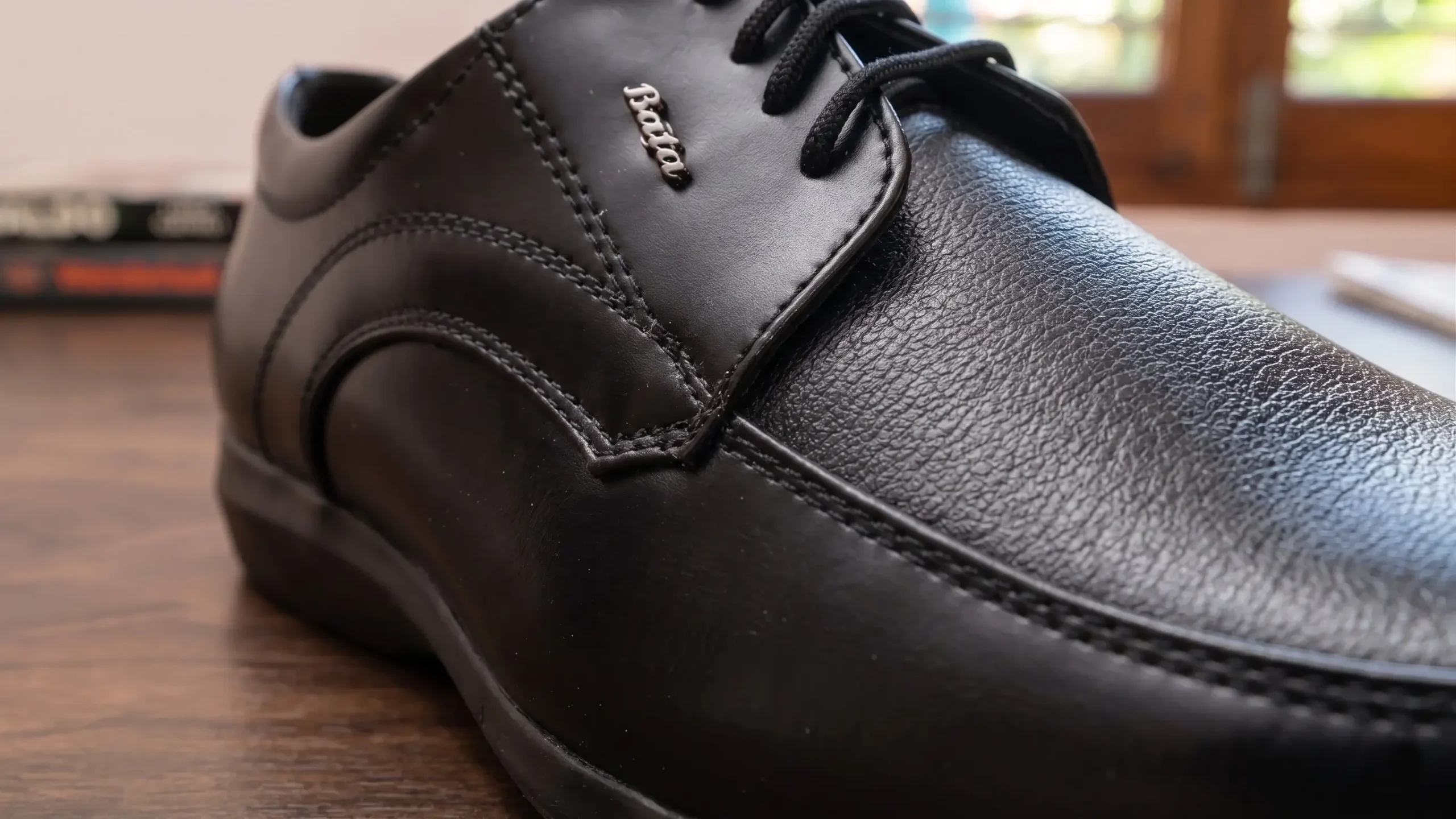
This is the section where it gives away its commercial manufacturing. That’s okay if something can be done better by a machine or hand-making it doesn’t make a significant difference.
Hydraulic die-cutting yields multiple pattern pieces in a single stroke—a completely sensible choice here, as hand-clicking synthetic leather is pointless when the sheet is completely uniform with no hide grain or flaws to navigate.
The tongue is cut as an extension of the vamp to eliminate an extra assembly step. They put a non-woven thermoplastic toe puff; therefore, poor skiving immediately telegraphs through the upper.
Even when skived properly, the toe puff can show through thin synthetic PU as a distinct horizontal line across the vamp.
The chemical sheet heel counter never softens to conform to anatomical variations. The heel (with such heel counters) cannot spring back or be reformed once crushed.
The double row of stitching looks promising, which, in my opinion, is unnecessary for a synthetic leather.
Those wide-spaced stitches are functional, but they work against a sleek silhouette. A high stitch density is prone to structural risk in this case.
Natural leather is a dense 3D weave of fibers; when punctured, the fibers shift around the hole rather than breaking, maintaining structural integrity.
Every stitch is a hole in the fabric backing of PU leather. They have to keep the stitches farther apart to have broad “bridges” of solid material between each hole.
PU leather does not stretch over the last as leather does; thus, this shoe comes with flat pieces to match the last’s 3D volume almost identically right after closing. Overall, the make is decent for the price, but it is not winning me over on elegance.
The Fit
The ease of finding a perfect fit has rather changed my perception of some aspects.
I think when shoemakers are doing remote fittings—mostly direct-to-consumer, online-only makers—they err on the safe side.
That’s one consistency I can draw from my online shoe purchases over the years.
Some have stayed conservative with the shape and design, while others have dedicated teams to help customers achieve a better fit.
In many ways, that’s understandable because, as some shoemakers say, you have to “fit the mind as well as the foot”.
People vary in how they like shoes to fit, but they don’t necessarily realize how they’re different. And even if they do, they’ve probably never been able to communicate it.
Another thing is we expect a lot from an expensive pair. No unpleasant surprises regarding sizing. It becomes harder to tolerate uncertainty when we buy big-price pairs.
Shops are merely a useful way to achieve a satisfying fit. Every shoemaker wants that; very few achieve it. Bata’s shoe line-up hasn’t always appealed to my classic tastes. But their fitting experience always has.
Nothing makes you value an in-store try-on quite like a week wasted on online size exchanges. I cannot make a complete case against remote fitting since getting a Welted pair in the current Indian market is through a handful of online-only makers.
But the convenience to be able to see material in person, try on different sizes, having someone to fetch you a right fit, and not wait around for a delivery can not be taken for granted.
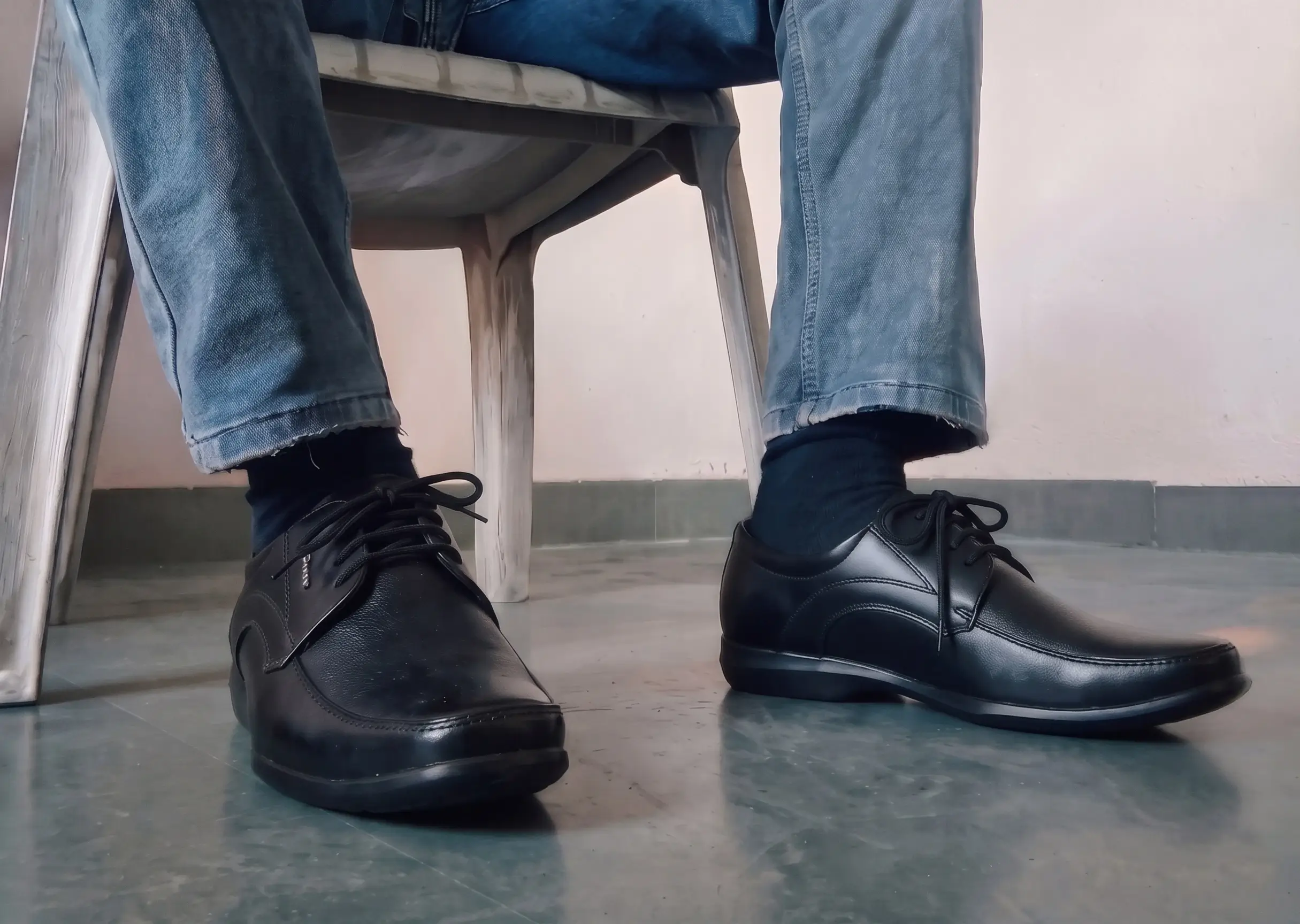
I bought this Derby in UK 7, and it is very impressive. The fit is almost as good as my best pairs. While the shoe has the volume to accommodate a rather large foot, the shoe fit my narrow feet surprisingly well.
I get a very snug and supportive midfoot hold without pulling the laces too tight. It is not firm or restrictive in any area, but that does not mean it is free-flowing.
The Derby style might have made some difference to how good the fit is, though I had some very uncomfortable Derby shoes as well.
The Durability Verdict
Cosmetic wear vs. functional death: The subjective longevity.
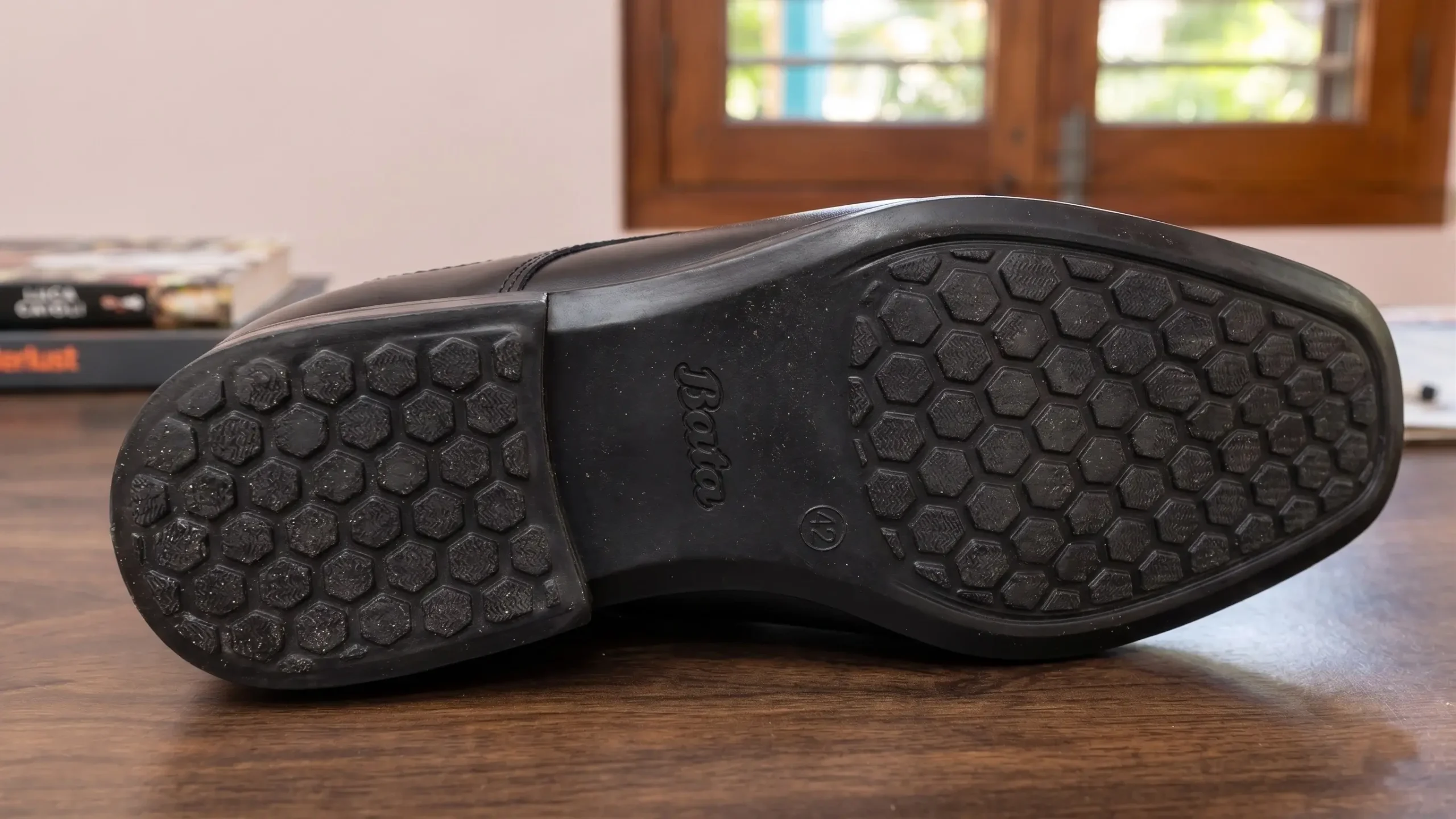
It depends on what a dress shoe means to you. With an expensive pair, the purpose certainly isn’t just function. Professionals, enthusiasts, or image-conscious wearers put them on.
For them, the shoe is deemed dead the moment the leather cracks, the finish flakes, or the creasing looks sloppy. However, that accounts for only a sliver of the demographic—most purchases are function-led.
Most people don’t connect with a shoe enthusiastically; thus, cosmetic flaws are not seen as damage. They consider a pair dead when it fails its core mechanical duties—sole splits, upper separates, or the stitching bursts open.
I have seen people from every background wearing Bata—college kids to senior executives. That ubiquity is precisely why you can’t box the brand into one specific audience.
And because it serves different identities and functions, its durability is defined by the wearer’s tolerance threshold (and not the material’s absolute breaking point).
I’ll walk you through a progressive timeline of wear, so you can map your standards onto my observations.
Day 0 is the absolute peak. Degradation starts on stride one.
A mass-manufactured shoe doesn’t have the luxury of customer patience—patience to break them in, condition them, and buff them with wax.
For that reason, such shoes are engineered to sell off the shelf, not to age gracefully. The polymer coating is glossy, the finish is crisp, and the silhouette is sharp.
Those features that make the shoe an irresistible buy on day 1 would never look that good again.
Those synthetic uppers start showing sharp, irreversible micro-creases the very first day I flex my foot. Think of it like the smooth topcoat fracturing.
A month of use brings out the first signs of wear, and the cellulose board.
From the third week, the sharp factory finish breaks across the vamp, followed by sharp, permanent whitish-on-grey stress lines at the flex points.
The foam cushioning underneath was not as forgiving, and I started to feel the cellulose insole board in the rear section.
You can’t keep the topcoat from peeling by month three.
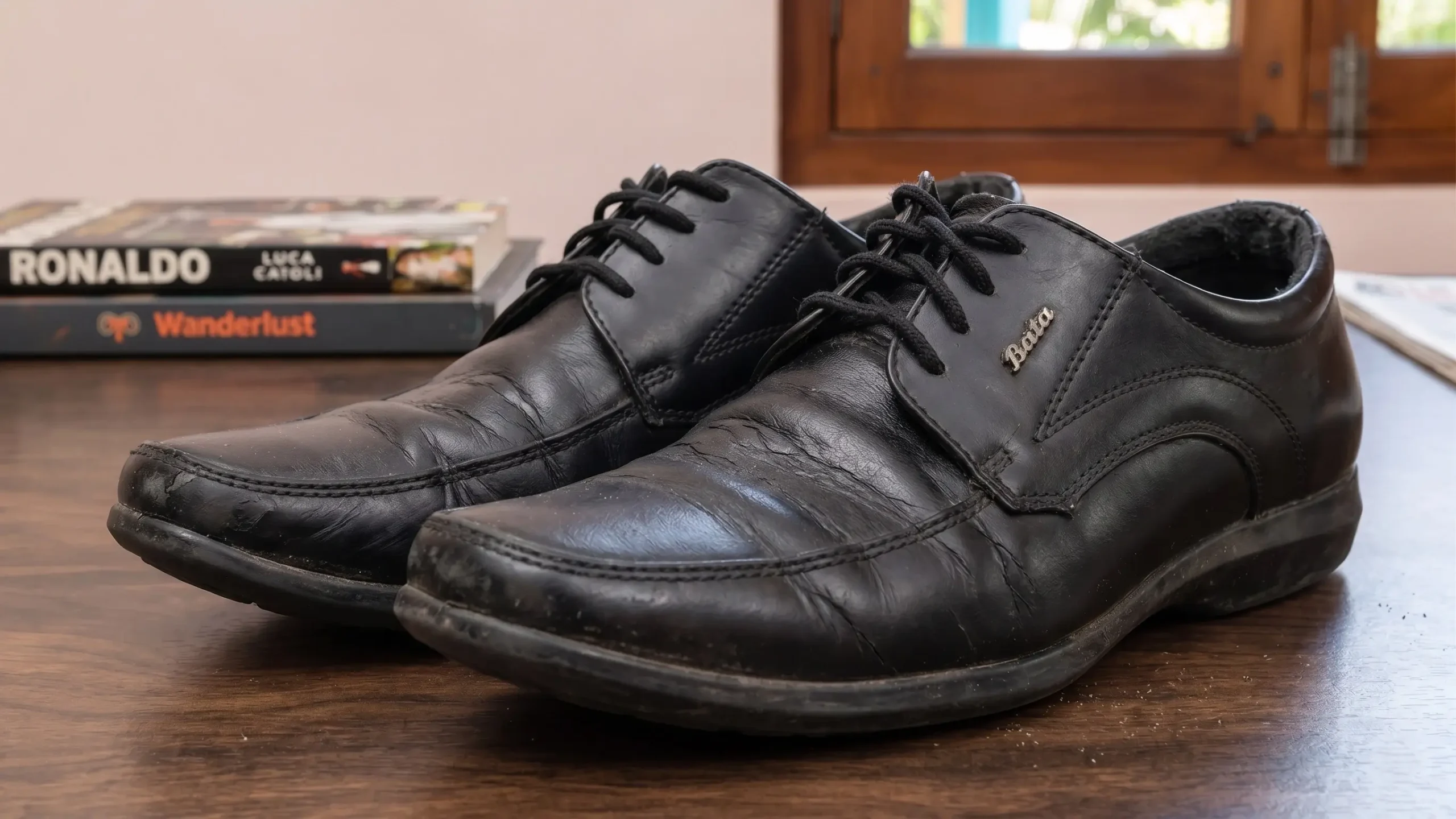
After roughly three months of decent wear, the top layer starts peeling and flakes at the crease ridges. That’s quite logical because it’s a surface coating rather than deep-dyed leather.
The surprising thing, however, is how quickly that underfoot cushioning fades, wearing down within four months, leaving me walking on the cellulose board.
Five months later, the dull base material shows through.
The scuffs have become so deep that now it exposes the dull base material beneath. The shoe had become somewhat embarrassing to wear.
I tried, but the shoe polish struggled to blend seamlessly. The uppers have shown no noticeable change since that point.
Seven and a half months later, the first signs of cracking appeared in the sole.
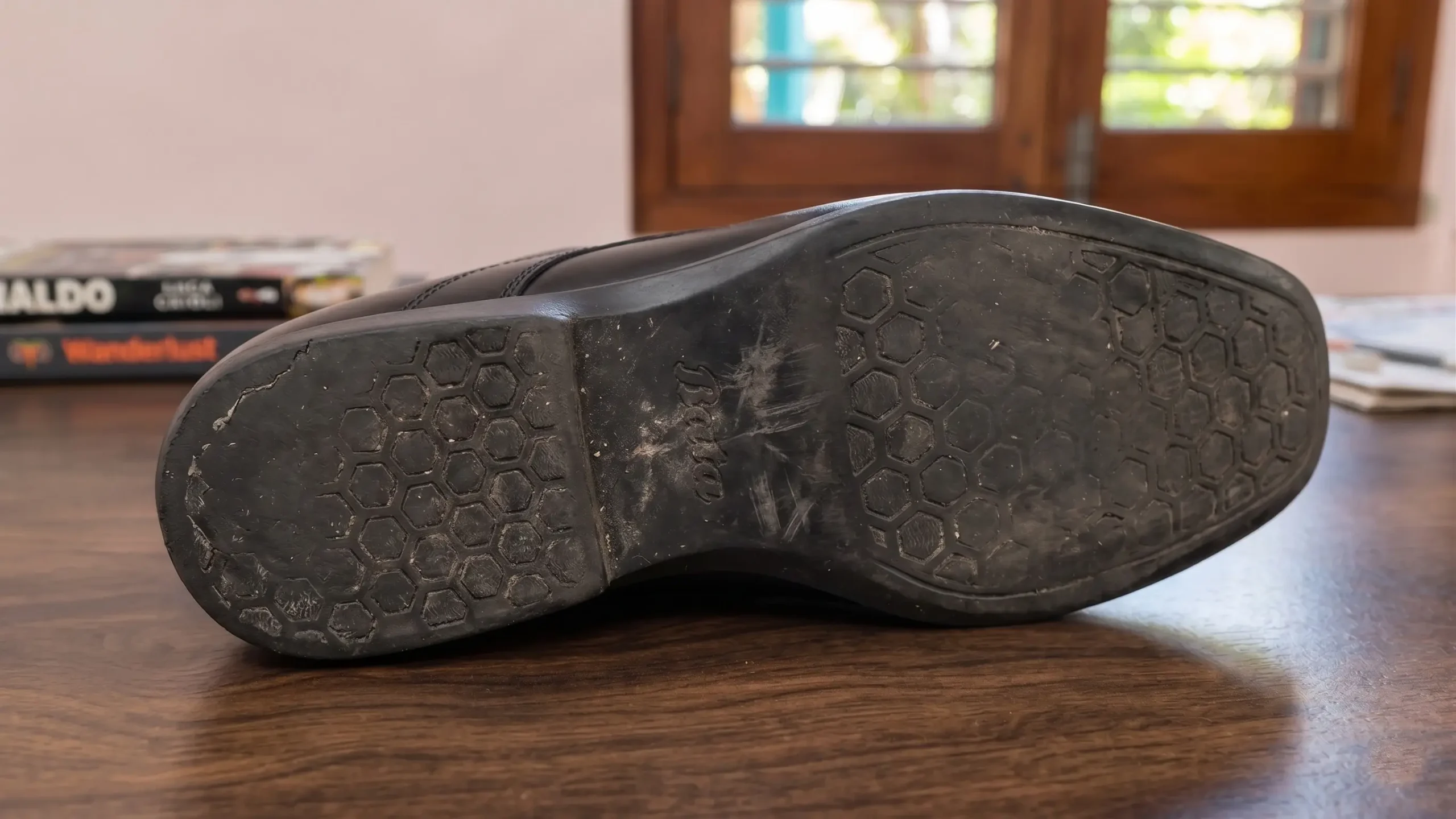
That was accompanied by internal breakdown. The matte texture on the tread begins to smooth out right after the first month, and the toe box begins to curl upward like a rocker over time.
Seven months later, that constant bend turns into a crack. The padding around the opening of the shoe has flattened into a hard, rigid slab, requiring tying the shoes noticeably tighter to maintain an ankle grip.
Nine months later: The shoe gives out.
They probably would have died even sooner, but I cut back on wearing them once the sole cracked a bit.
The hair-thin fracture (appearing right at the ball of the foot) grew across the width of the outsole.
Every step pumps air, dust, and water into the shoe. After nine months, they were truly unwearable.
Who It’s For?
From price-conscious to those who have better shoes to save.
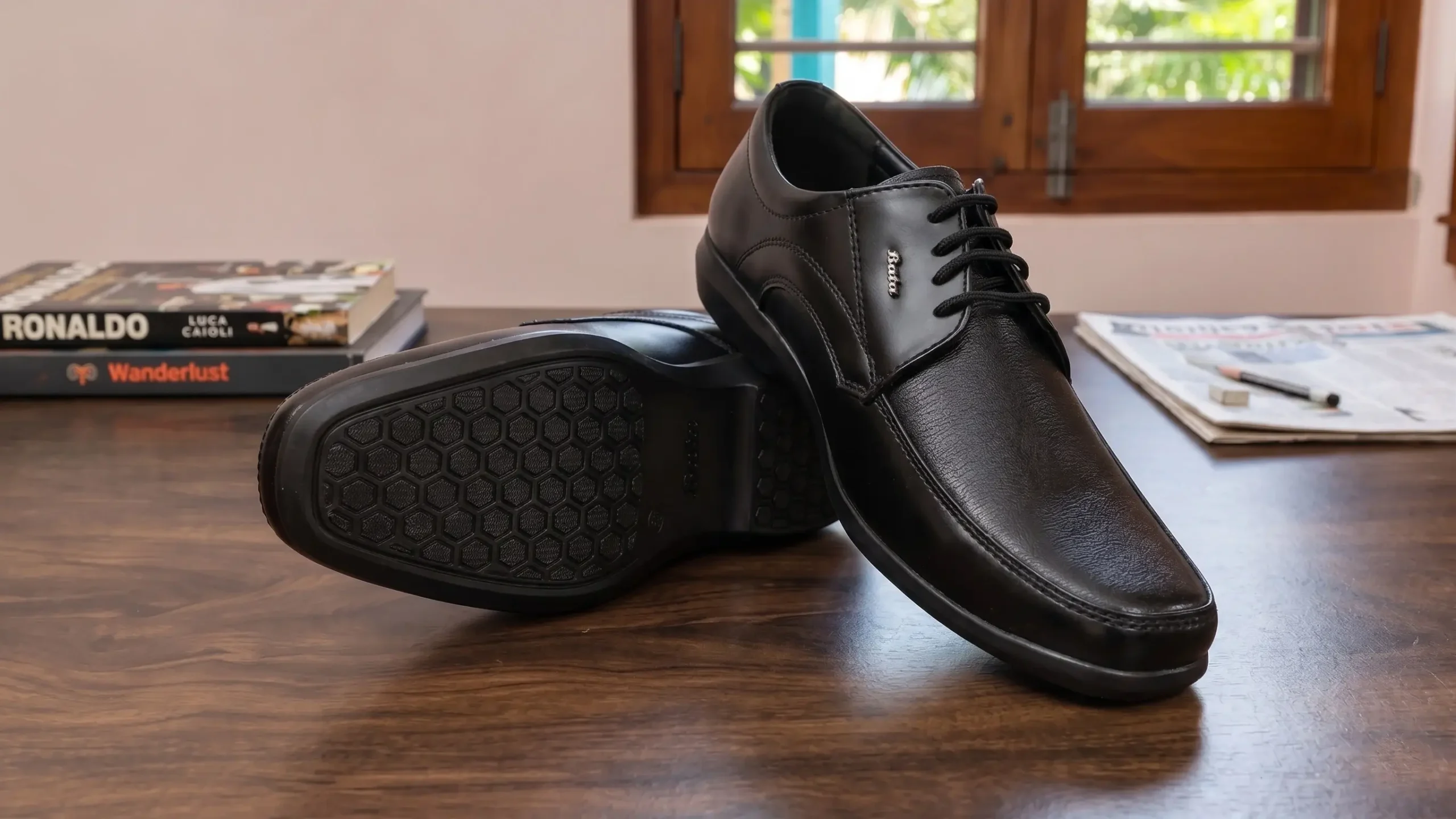
Mass-produced shoes: The very name can put off publications and shoe critics concerned primarily with stitched shoes.
Going by what that literature would have us believe, it seems like one might be doing his best to live with such shoes. It is not like that. One can enjoy these shoes.
I’ve had it for one year; my dad is bonded with one. Although I’ve criticized them for everything from material to construction, the Bata Derby shoes have done enough right to conquer as standard footwear.
I’m not saying that you can’t do better (in all ways) with better-quality Goodyear-welted shoes. But Bata has some energy, zero pretense, and is understood enough that no one questions seeing it in a boardroom, a classroom, or on a factory floor.
It does not feel solid, but affordable and comfortable. And in a world dominated by intricacies, that matters. No matter how much we critics urge people to invest in Welted pairs, most budgets aren’t yet ready for that.
I always advise buying the best you can afford, and this Bata shoe is the best (a little) money could buy. Bata has streamlined the manufacturing of components and processes for so many years that they can turn out shoes for a very low price.
Those who cannot stretch their budget to Welted shoes are perhaps the most obvious audience for these. They make just as much sense for someone who can afford stitched pairs but not have the occasion to wear a formal shoe regularly.
A Welted leather shoe’s high cost, maintenance burden, and stiff long break-in period never justify sitting unused in a closet.
I don’t know what you’d make of this, but this Bata Derby makes sense for someone who owns several pairs of high-end shoes, perhaps made from delicate leathers, and doesn’t necessarily need to expose them to every situation.
The Bata Derby can serve as a practical substitute for expensive footwear when the circumstances don’t warrant wearing your best shoes.
Is There a Better Alternative?
Spending just a touch more makes a world of difference.
As I have mentioned, Bata has streamlined the manufacturing of these shoes over the years, so they can turn out such shoes for a very good price.
If you want an easy life and don’t want to spend slightly more, I think Bata is an excellent choice. But put in another ₹1,000, and it’ll buy you the real leather.
And because of the direct-to-consumer model, stitched soles aren’t too far out of reach as well.
Woodland Derby
Distills the essence of everything wonderful about Woodland boots.
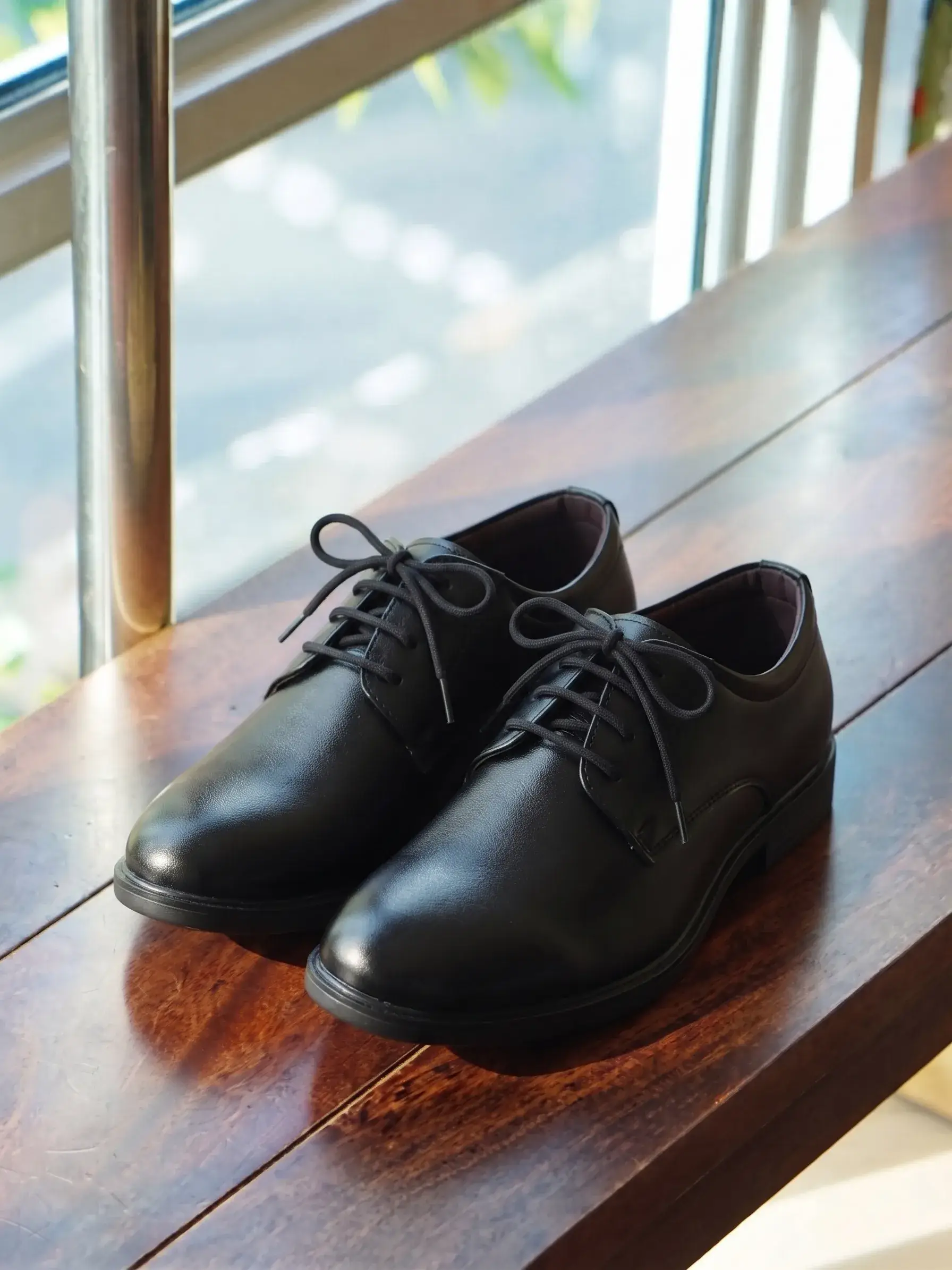
The reason for picking Woodland over Red Tape is the thickness of the leather.
The derbies from both makers are interchangeable, but the one from Woodland holds up better because the leather quality is significantly better.
Having worn and written about their boots, lacing up their derby immediately reveals they share the same DNA, and you can feel the solid rubber sole underfoot.
You can buy them anywhere, but to truly shine as an alternative to Bata—you really have to scour the web to keep the price jump within that ₹1,000 sweet spot.
Seeandwear Derby
Better quality at the cost of the convenience of a store.
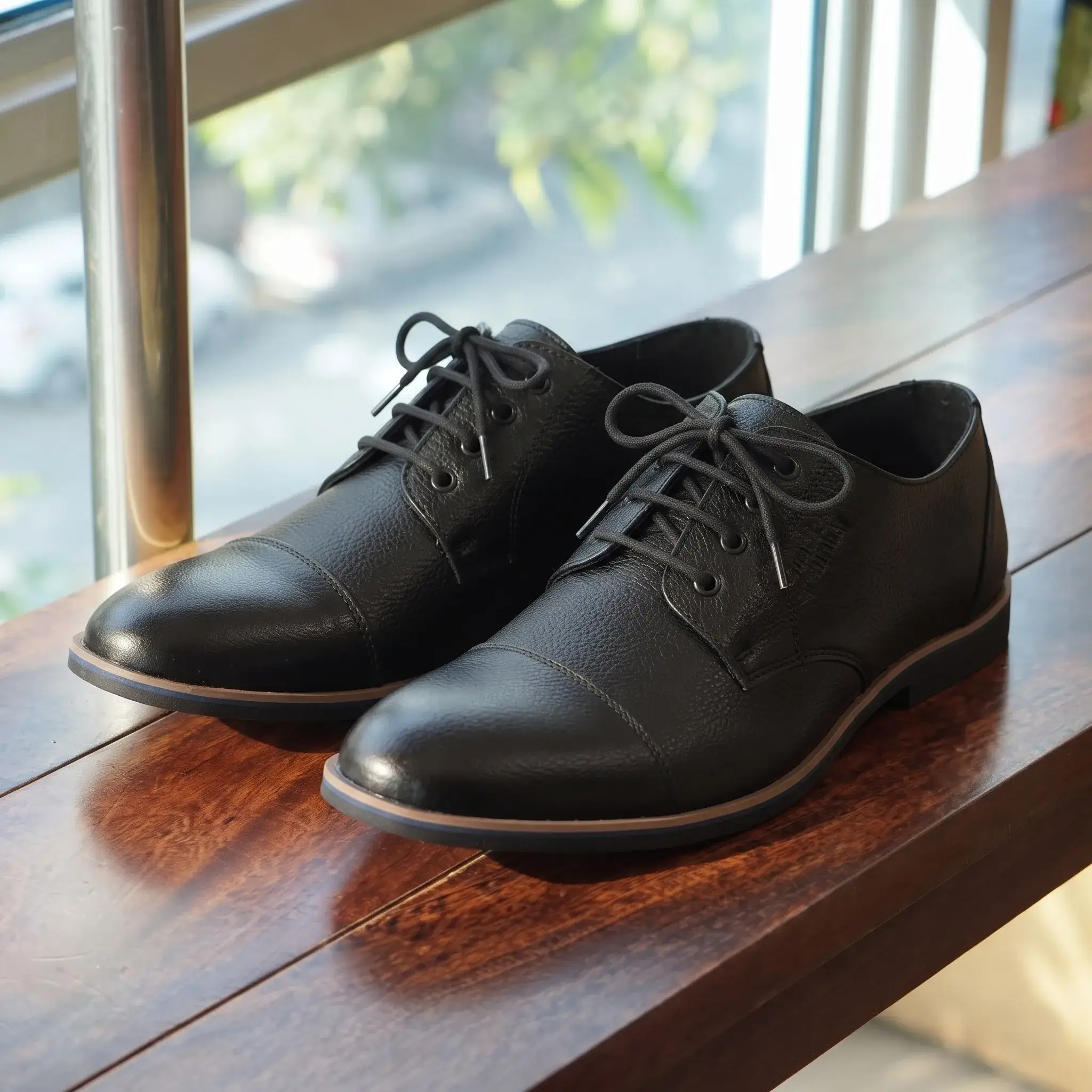
If you can sideline the convenience of trying and buying a shoe, you get the qualities of a ₹4,000 Bata Derby for much less money.
Direct-to-consumer is responsible for this value. There are other options in this domain, but Seeandwear is the best in this very under-serviced, lower-end of the price spectrum.
It has a top-grain leather upper with the underside serving as the lining, very spacious volume, relatively better shape and design, and surprisingly better stitch density.
The resilient rubber outsole is stitched on, with a single row of stitching, rare for a shoe in this price bracket. A good option if you’re comfortable shopping for shoes online.
You Might Also Like

How can we improve BestShoe99? Got feedback?