They are very well-made. Good quality materials. But they show a very Safe form and refinement.
October 18, 2026
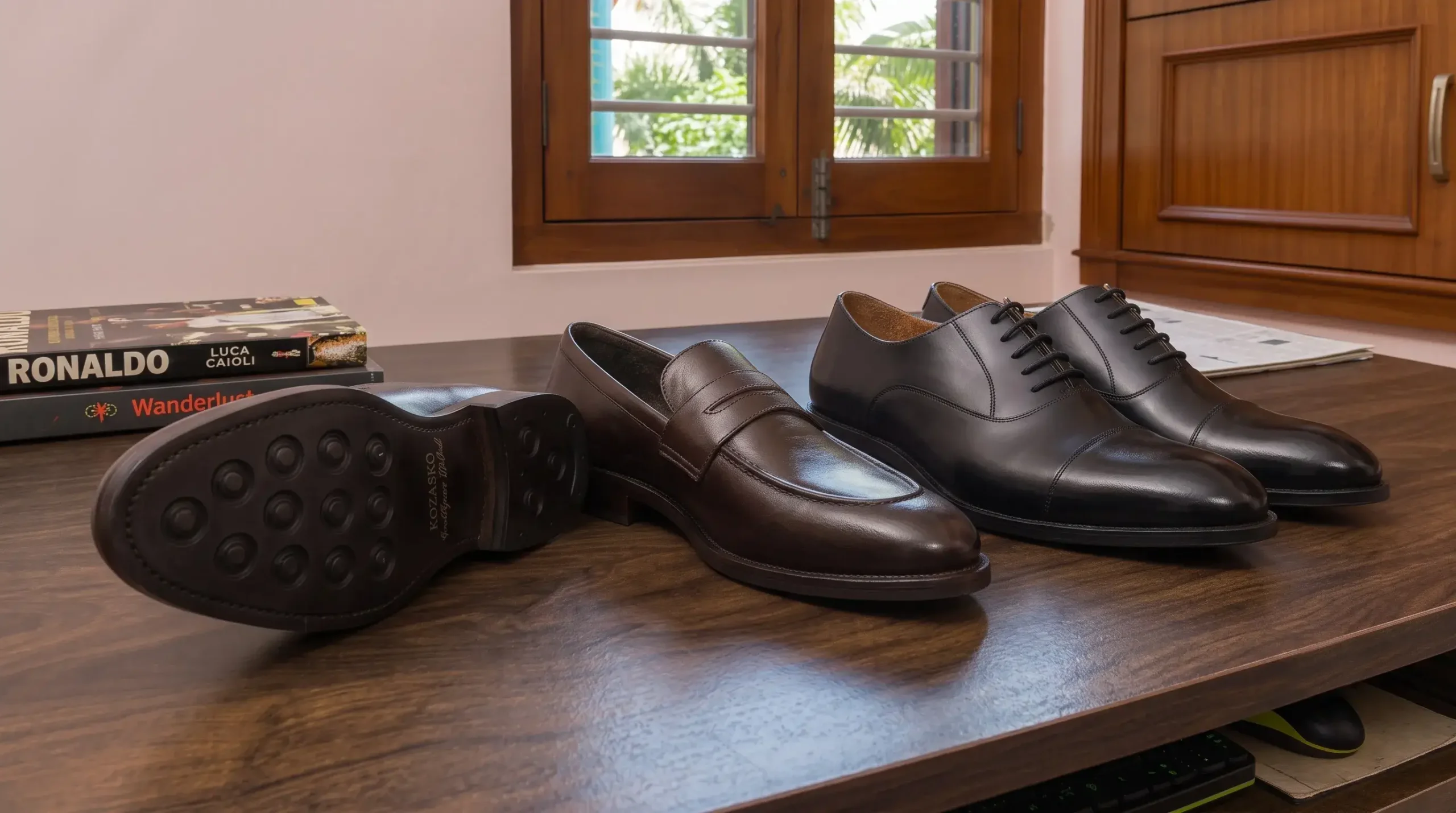
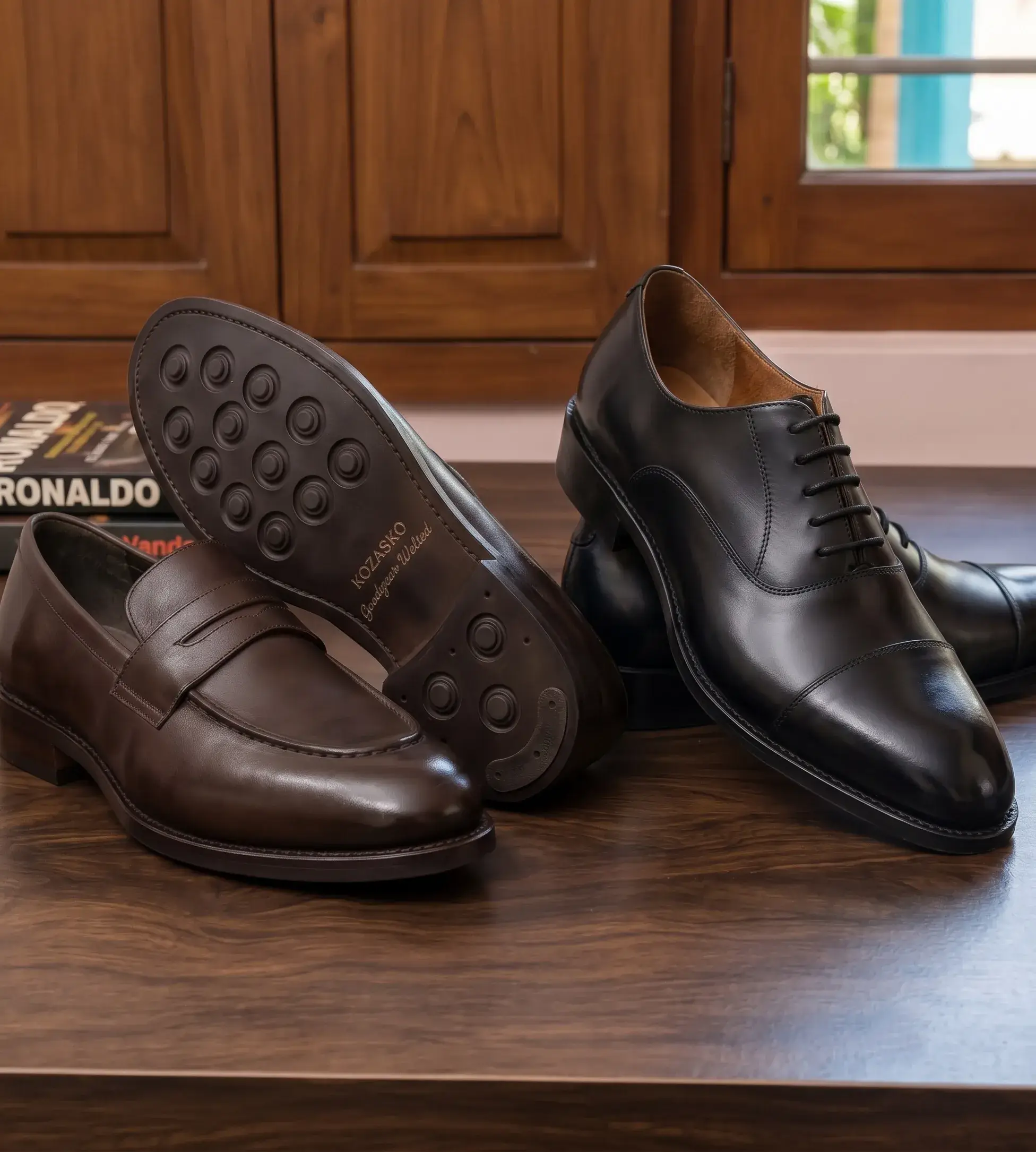
What construction methods, leathers, and quality benchmarks make a pair of shoes worth ₹15,000? I won’t fob you off with platitudes like “that depends on what ₹15,000 means to you”; for most of us, that is a substantial amount of money to spend on shoes.
That money must secure a higher level of quality in terms of longevity and presentability. It is worth evaluating such quality standards to establish context, but the thesis here is the demanding nature.
However you value 15,000, higher expectations are bound to accumulate; that, and the fear of making an expensive mistake. There is pressure on the shoemaker – to justify the unknown.
Their responsibility does not stop at manufacturing, but rather extends to explaining why they’ve done it a certain way, about the decisions they made, and the quality they sought.
This—the communication and justification thing—grew vital as most of the native quality shoemakers are new and do not have the layers of history to flex.
Not just shoemakers; that “justification-through-conversation” paradigm is deeply embedded in the native menswear domain.
Kozasko, a Delhi-based shoemaker, isn’t completely lost in making subjective claims on quality. Instead, they come up with an objective commitment: a comprehensive two-year warranty.
It is easy to show lasted shoe uppers covered in white stitches, or someone hand-clicking an imported leather hide, but nothing demonstrates confidence quite like a maker standing behind their craft.
When asked about what the warranty covers, a Kozasko representative explained: “Everything is covered. Whatever is related to manufacturing.” They added, “If we can’t repair, we will make a new pair.”
Because true durability reveals itself only after months and years of wear—something an unboxing cannot predict—this warranty serves as a genuine competitive advantage.
I’ve had my eye on this maker for a long time. So when Hemant (Kozasko’s founder) very kindly offered me two pairs – an Oxford and a loafer – I jumped at the chance.
Although they arrived a little late in 2025, I’ve worn them to every chance I’ve gotten ever since. Here are my findings to help anyone considering a purchase from Kozasko.
The Leathers
Made from calf leather rigorously engineered for strength, leaving only a whisper of delicacy.
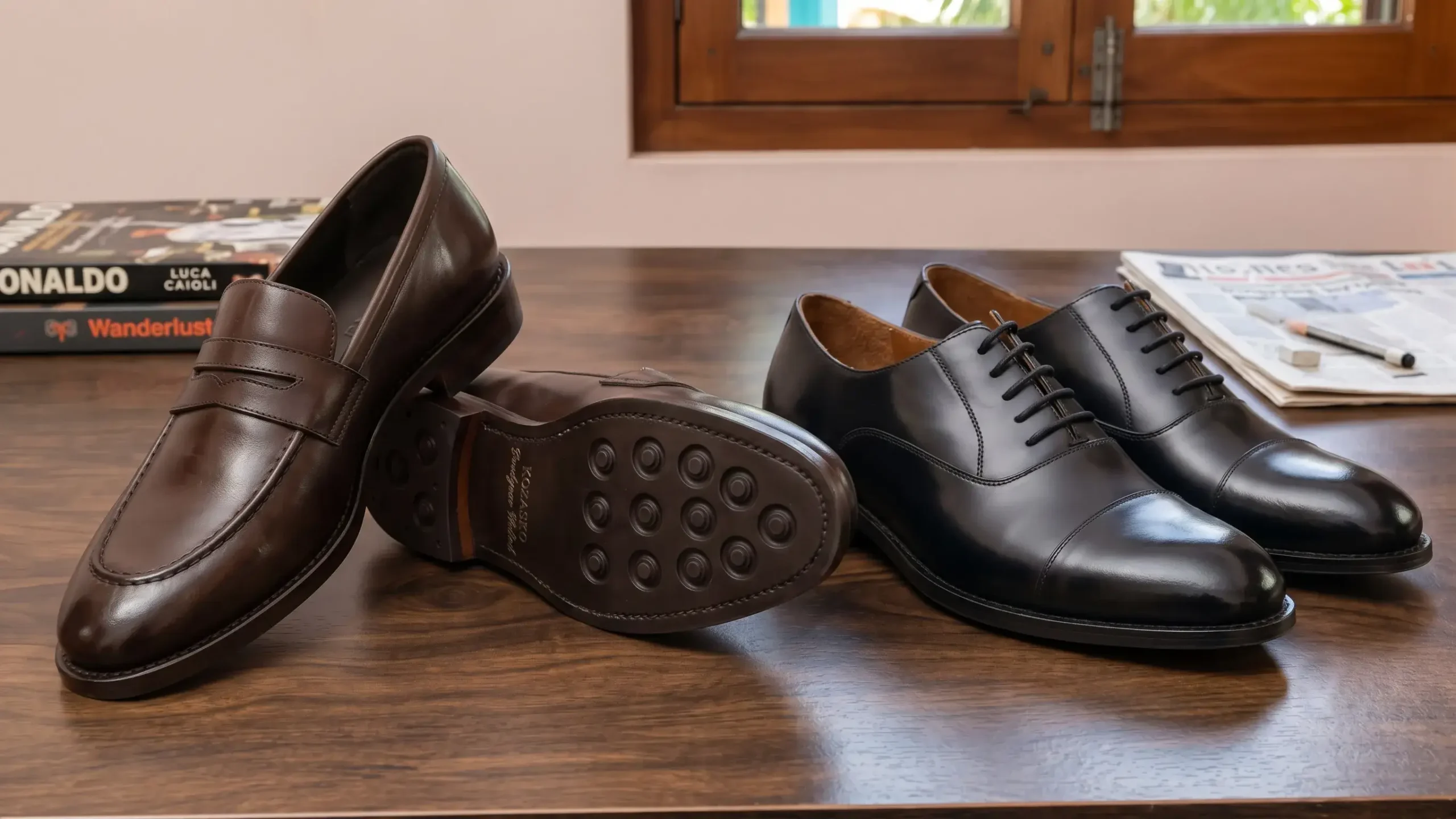
First, I would like to get some “puffery” terms out of the way. They are by no means unimportant, but they tell nothing about the leather’s quality:
- LWG-Gold-Rated Tanneries. The calf leather used for this oxford is sourced from tanneries certified Gold by the Leather Working Group (LWG): a global non-profit organization that audits and certifies (with Gold as the highest rating) leather manufacturers based on their environmental compliance and sustainable practices.
That rating evaluates how the leather was made and not how good the final product is. That rating lost its appeal as tanneries making heavily corrected leather can receive an LWG Gold rating too.
The low impact on the environment is largely rendered meaningless if the leather fails in a month and ends up in a landfill. Durability is the baseline of true sustainability. It might seem cold and clinical, but that information doesn’t hold much sway for me. - Michigan Calf. This is even more misleading. Naming calf after a specific region (I have encountered: Alpine Calf or French Calf) taps into geographic romanticism.
Such custom prefixes are used to make a simple leather type sound curated and elite. The “Michigan” tag does not tell anything about the quality of calf in this oxford.
The calf leather used for these oxfords is decent, though not in the way calf is typically perceived. Calf leather is not a monolithic category—cold-weather and tropical-weather calf vary widely in many characteristics—but they have some core qualities inherent to all of them.
What is Calf Leather?
And how is the calf in this Kozasko Oxford different?
It simply means that the leather came from a calf, as opposed to a full-grown cow. Cow leather is simply not that great. Think about your 18-year-old skin versus 6-year-old skin (no offense, but it’s a reality). Because calves are young, their skin fibers are significantly smaller and more densely packed.
This gives calfskin leather a smooth, compact surface grain with very few visible pores, remarkable tear resistance, uniform but delicate creasing tendencies, and a receptive surface ideal for burnishing and high-gloss polishes.
The strength of these attributes depends first on the way calfskin is treated by the tannery and then upon the way it is used and cared for.
Tanneries refine and guard their formulations like Michelin-star chefs refine and guard their recipes.
Tanneries d’Annonay, for example: Annonay’s heritage formulas and artisanal finishing elevate a fine French calfskin into a legendary Boxcalf.
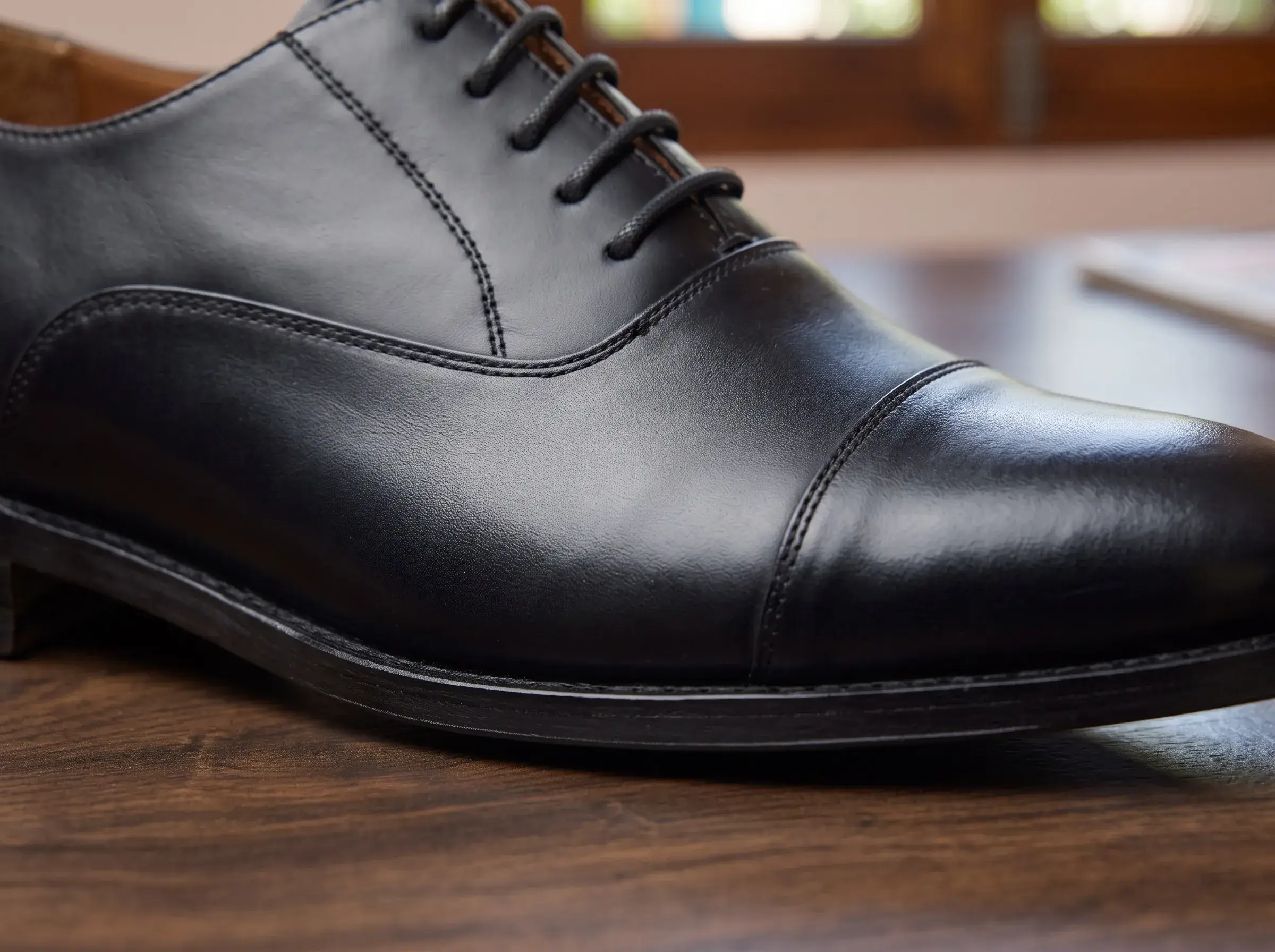
While most tanneries aim to produce calf leather rich in those aforementioned qualities, Sadesa—the global tanning giant behind this Oxford’s calf leather—chases industrial durability, athletic performance, and high-volume consistency.
In the process of attaining this, several classic calf leather characteristics are sacrificed. Most such trade-offs become apparent after some use. The tactile surface feel, however, is immediately noticeable.
Those familiar with calfskin might promptly see that the sealed polymer barrier differs from raw, open-pore calfskin. That protective topcoat causes a slightly plasticky surface feel, due to which the leather folds in wider, slightly stiffer, or rubbery creases.
Using performance-oriented calf leather aligns well with their decision to back the shoes with a 2-year warranty. However, doing so by putting calf leather’s core appeal of strike is short-sighted.
I am not making a case against this leather. In fact, due to that protective top-coat, the leather handles rain, mud, and perspiration without water-spotting or stiffening upon drying.
The problem is that such leathers leave no room for the wearer to interact with it. Polymer-sealed finishes cannot absorb waxes and creams the way aniline calf does, making it virtually impossible to build a high-gloss or mirror shine.
This is why it doesn’t develop a patina or display any aging depth. It is finished with opaque micro-pigments that create absolute color uniformity. All of which means the upper looks the same on day 500 as on day 1.
This leather choice (largely driven by that warranty) didn’t cover those who enjoy treating and caring for good leather to gain depth and patina.
Having written pieces on shoes for 9 years, I’ve learned that anyone comfortable dropping serious money on formal shoes views them seriously and has a fair bit of knowledge about keeping such prized leather pieces in winning condition.
This oxford, unfortunately, underestimates the buyer and is intended for those who, I think, should settle for Craft & Glory buffalo leather boots instead.
About the Leather Used for the Loafers
This one is more receptive. It holds up brilliantly to treatment.
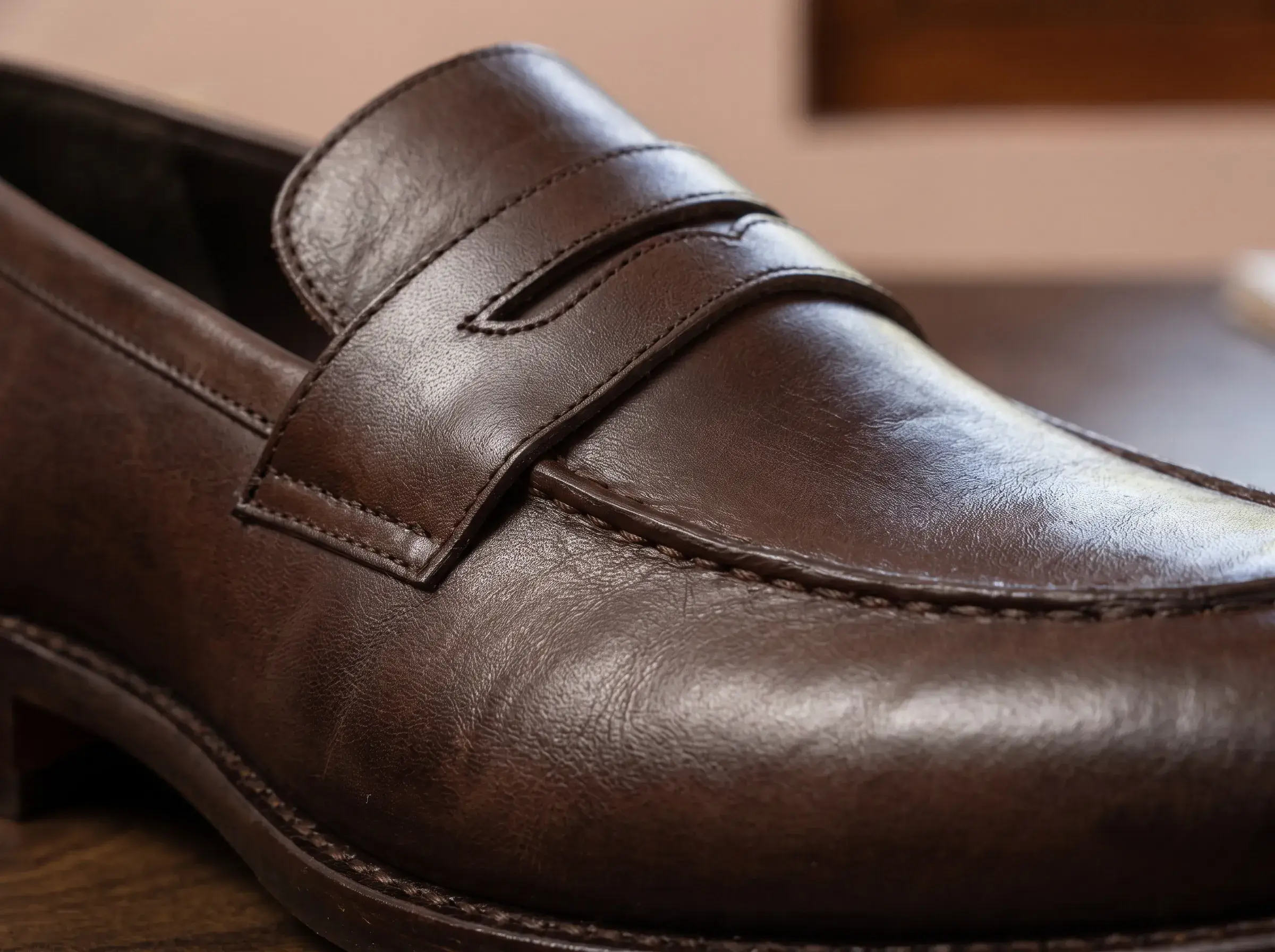
It is not the same story outside, where Kozasko, thankfully, hasn’t messed with all the things elite buyers like about leather. All types of leathers age beautifully if properly looked after.
And it is incredibly frustrating when a good leather is undermined by new surfaces or protective coats. The brown penny loafer from Kozasko is in full-grain crust leather.
The skin that comes from the cow is around three-quarters of an inch thick. That is split into two or three layers, and only the topmost one has grain and inherent strength.
Full-grain leather is the industrial term for that topmost layer. Historically, leather shoes were sold by saying “made of genuine leather”. The influx of new shoemakers reveals a little more by disclosing the layer or grain status.
I admire that level of transparency, but that still isn’t enough: For a subject as complex as leather, I wonder if there is any level of disclosure that is enough.
But the leather’s appearance can be anticipated far more accurately if the maker specifies the animal source. And that, unfortunately, is done only in situations where that animal’s leather is desirable enough in terms of appearance and quality to merit a premium price.
A pair is most likely made from water buffalo leather if the maker chooses to stay muted about its source. Surprisingly, that’s not the case with this loafer.
Even though the website says nothing, a smooth surface and tight grain structure promise good-quality calf leather.
I suspect that would be it. That leather creates a flawless, uniform look with subtle natural sheen, but I think those new to calf leather might find these loafers too fine and delicate.
If you are purely utilitarian and want the function, you can do that much more cheaply; this leather isn’t really about that.
This is for those who cannot live with the way that practical buffalo leather looks. Its worth cannot be based solely on its strength, because this leather can look uncommonly beautiful.
Why is it called “Crust” leather?
An unsealed leather that thrives with good care but is ruined by careless maintenance.
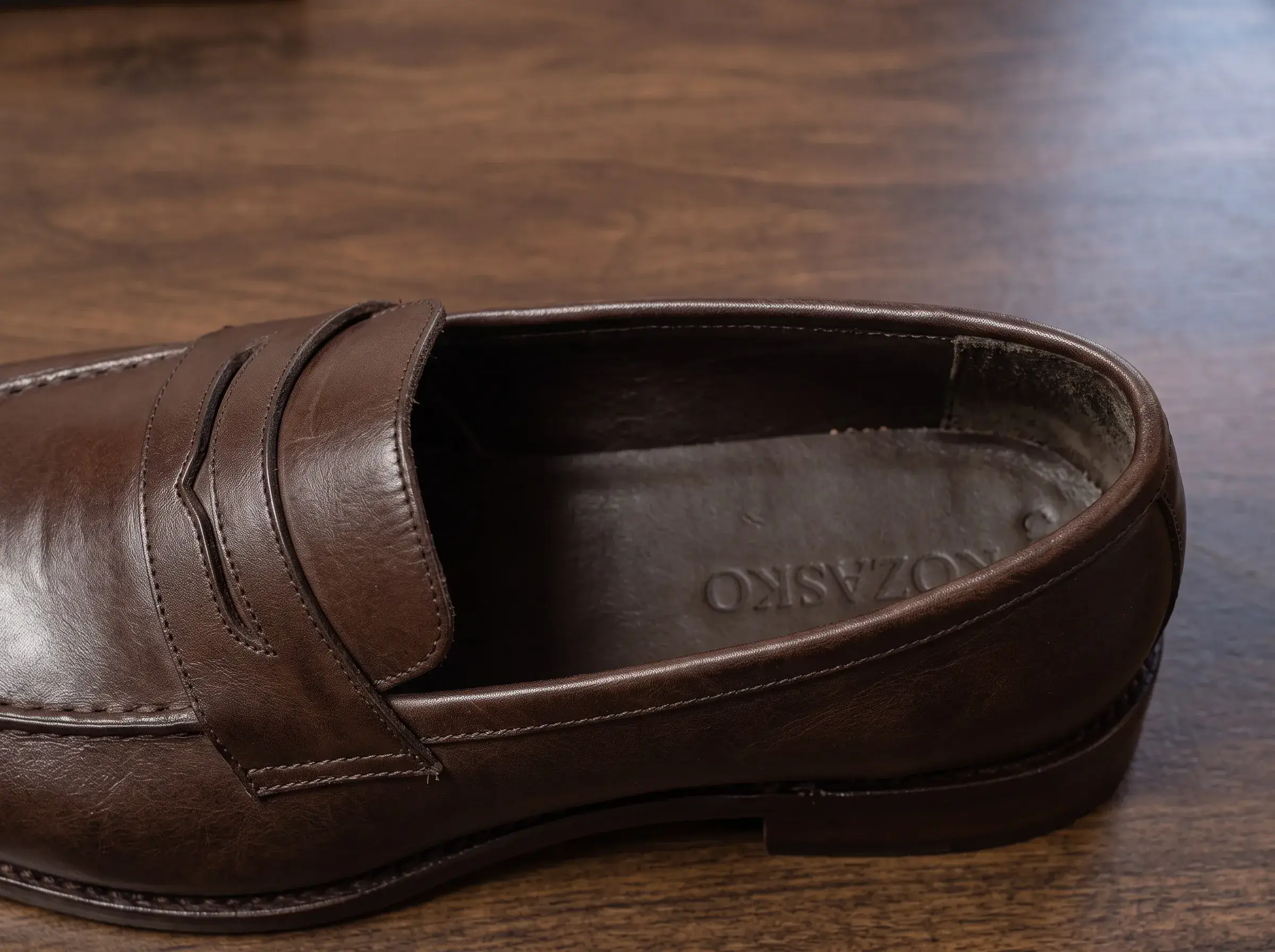
These loafers are made using crust leather. “Crust” leather is tanned and dried, but left undyed at the tannery.
Without acrylic sealers or factory pigments blocking the surface, the hide’s natural capillary network is completely exposed.
That unfinished state makes crust leather behave like a dense sponge, ready to absorb liquids, oils, creams, and waxes deep into the grain fibers. That makes this leather completely different from the Oxford’s “Michigan” calf.
This “Crust” category of leather is not versatile and therefore probably a bad choice for unwary wear; but at the same time, it is very satisfying for enthusiasts who embrace delicate and targeted care—neutral creams, careful layering, and checking the weather forecast before walking out the door.
This leather offers unmatched visual depth, but it is dramatically less forgiving than other leather types.
Does It Have the Same Quality Materials… Inside the Shoe?
Absolutely. Full-leather lining and thick leather insoles turn comfortable, but you won’t sink into them.
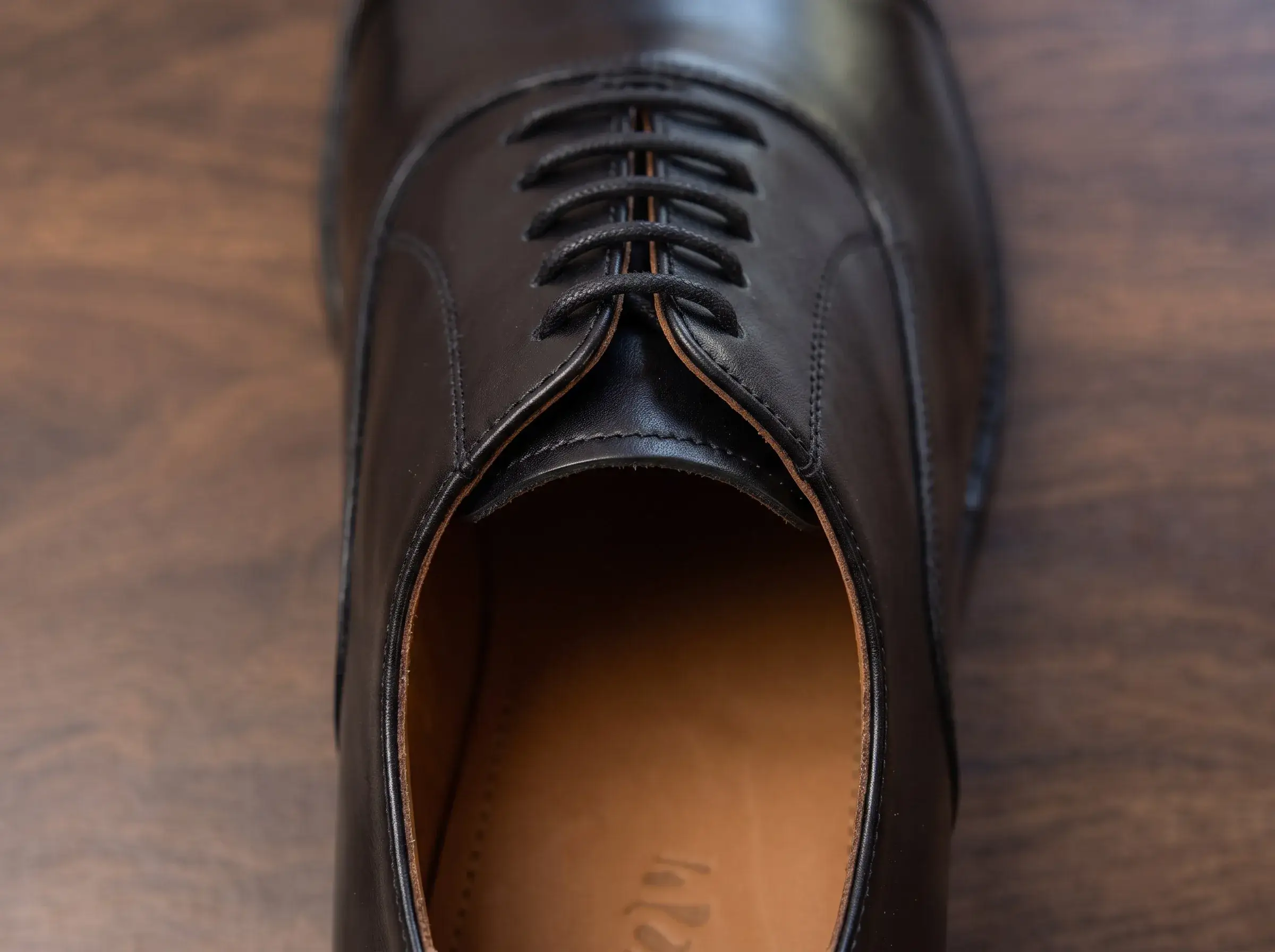
The same materials make up the interior of both shoes. We get veg-tanned, drum-dyed full-leather lining. Instead of heavy metals like chromium, this leather is tanned using natural plant tannins.
That relatively slow method of tanning preserves the natural, open-pore fiber structure of the leather, because of which this lining absorbs sweat and regulates climate far better than most other lining materials.
Veg-tanned leather is far more sensitive to temperature and moisture changes. That sensitivity allows the fiber bundles to shift rather than lock permanently in place.
Because of this, with wear, the leather lining permanently retains the three-dimensional contours of the foot. That molded cabin is very useful in making the loafers fit better with time.
One more thing that might mess with your mind is that it’s a drum-dyed leather lining. I am not a huge fan of dyed leather lining, as that color’s contribution is merely aesthetic and that addition carries some stiffness.
But it’s good that the leather here is drum-dyed because, unlike surface-sprayed leathers, the color will not crack or wear away, exposing a lighter under-layer.
That does not happen with drum-dyed leather because the hides tumble in dye drums until the color penetrates the entire cross-section of the leather.
Tell Me More About That Stiffness…
How Should it be Handled?
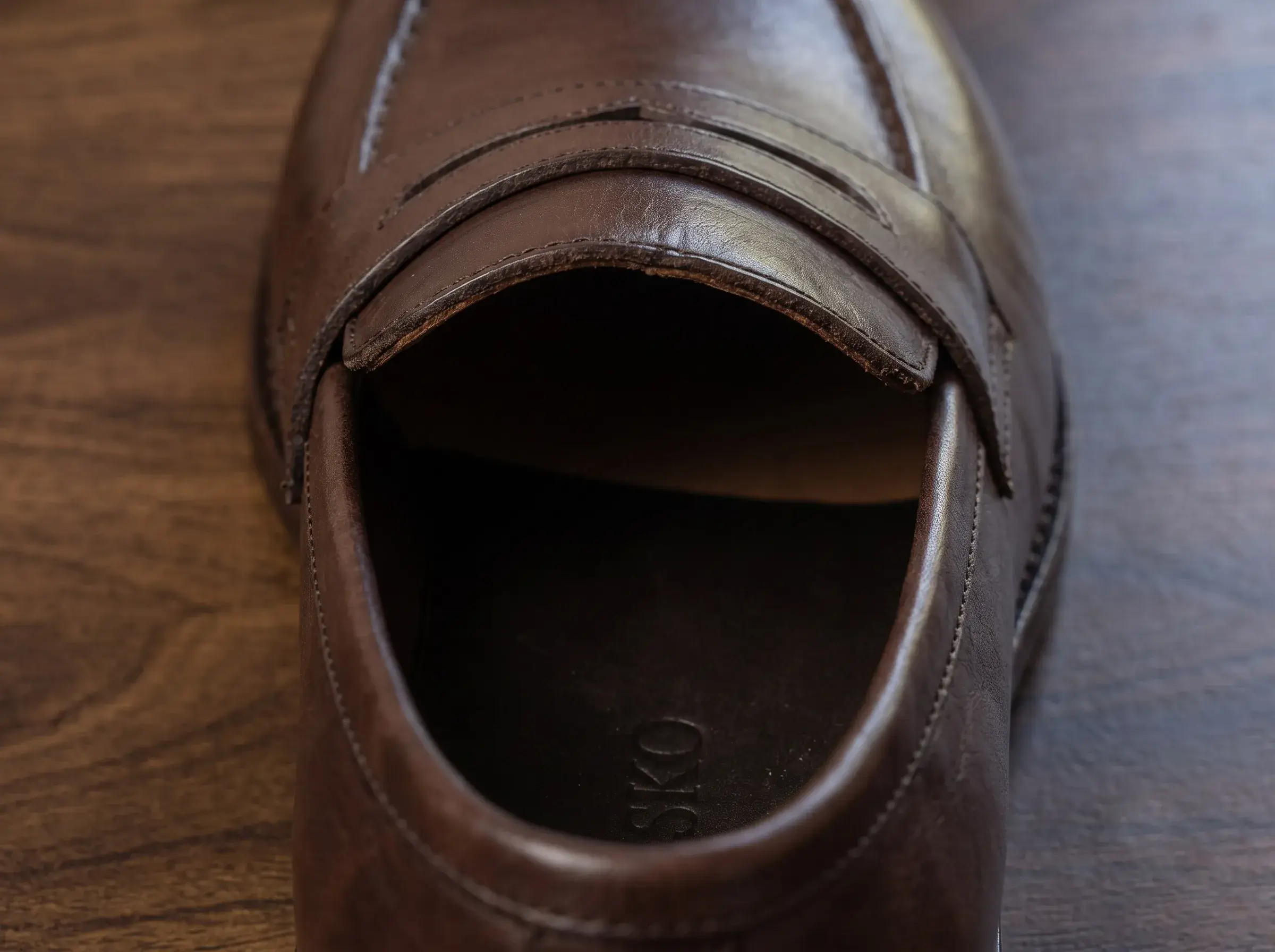
The lining in both the shoes feels very stiff initially due to the chemistry of veg-tanning agents. Those rather large and dense plant-based tannins pack the gaps between fibers with rigid vegetable matter.
That creates a dense, firm structure rather than the tiny mineral salts (used in chrome tanning) that let fibers slide past each other easily.
That leather, as I have mentioned earlier, is temperature- and moisture-sensitive; thus, the stiffness is not a permanent thing.
Contrary to the makers’ cliché that such stiffness vanishes within a week of wear, that depends also on how well the shoe fits.
That stiffness can’t be felt through the images on screen, so take the stiffness of the veg leather lining like crisp, heavy cardstock—firm, springy, and resistant to flopping.
It doesn’t soften completely within weeks; the wearer gets inured to that resistance. It is a thick insole that many people found discouraging to break in.
Why Insole Leather Matters?
How Does a Good-Quality Insole Help Here?
Before the insole, let’s see the insocks: the thing that touches the foot and therefore a very important element in forging a good first impression of the shoe.
Think of it as a cover of the insole. They come in different lengths, materials, and thicknesses. Its primary role is to cover the fasteners and rough bottom leather edges so they do not wear through socks or pinch into feet.
Most welted shoes come with a thin layer of leather sockliners. But these two pairs of Kozasko have taught me that synthetic sockliners don’t necessarily mean lower quality or a poor experience.
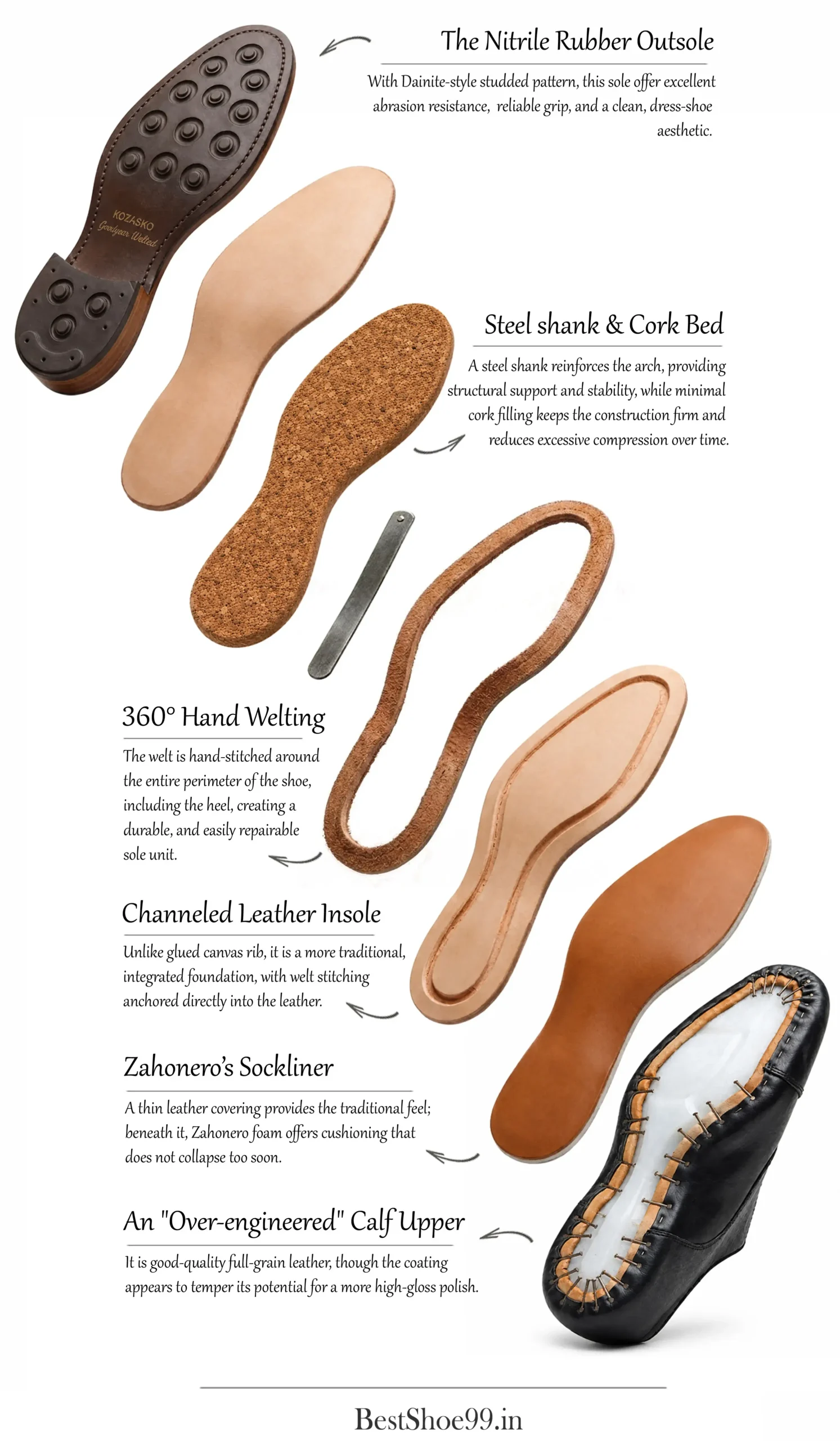
I find this sockliner better, not because of materials, but because of better use of materials. Both shoes feature a specialized foam footbed from the Spanish manufacturer Zoharano.
Unlike solid closed-cell EVA, Zoharano’s open-cell structure allows air circulation while still retaining its rebound and shock absorption over long periods of wear.
Kozasko put synthetic materials in the one area where they might actually work better than any leather substitute. The best thing it does is take the harshness out of breaking in a stiff leather insole by cushioning high-impact heel strikes and pressure points.
The insole: The website says it has a 3.5 mm flexible leather insole. My work is not underwritten by a giant media house that allows me to cut open ₹15,000 shoes to verify the maker’s claims.
But one thing is fair to say: the insole—with a thickness equal to a stack of two five-rupee coins—is anything but flexible. I have shoes with veg-tanned leather insoles of similar thickness, and from that I can say the Kozasko sole unit yields relatively quickly.
That natural articulation is hard to obtain, but the comfort it renders makes it well worth the grind.
I am a big advocate of leather-rich sole units because they generally do not collapse beneath the foot or bottom out against the outsole.
Both Kozaskos took 45 days of wear to deform enough to mirror my foot’s contours, and now, after 18 months of decent use (the loafers), it hardens into a rock-solid, stable support shelf. The insock, however, was completely flattened at the end of the fourth month.
The Hand-welted Soles
This is what many have been after, even at double the price.
I always say the durability of a dress shoe is up to the user, but it is easier to objectify a pair’s wear life when it is executed this way. The soles of both the Kozaskos I have are hand-welted.
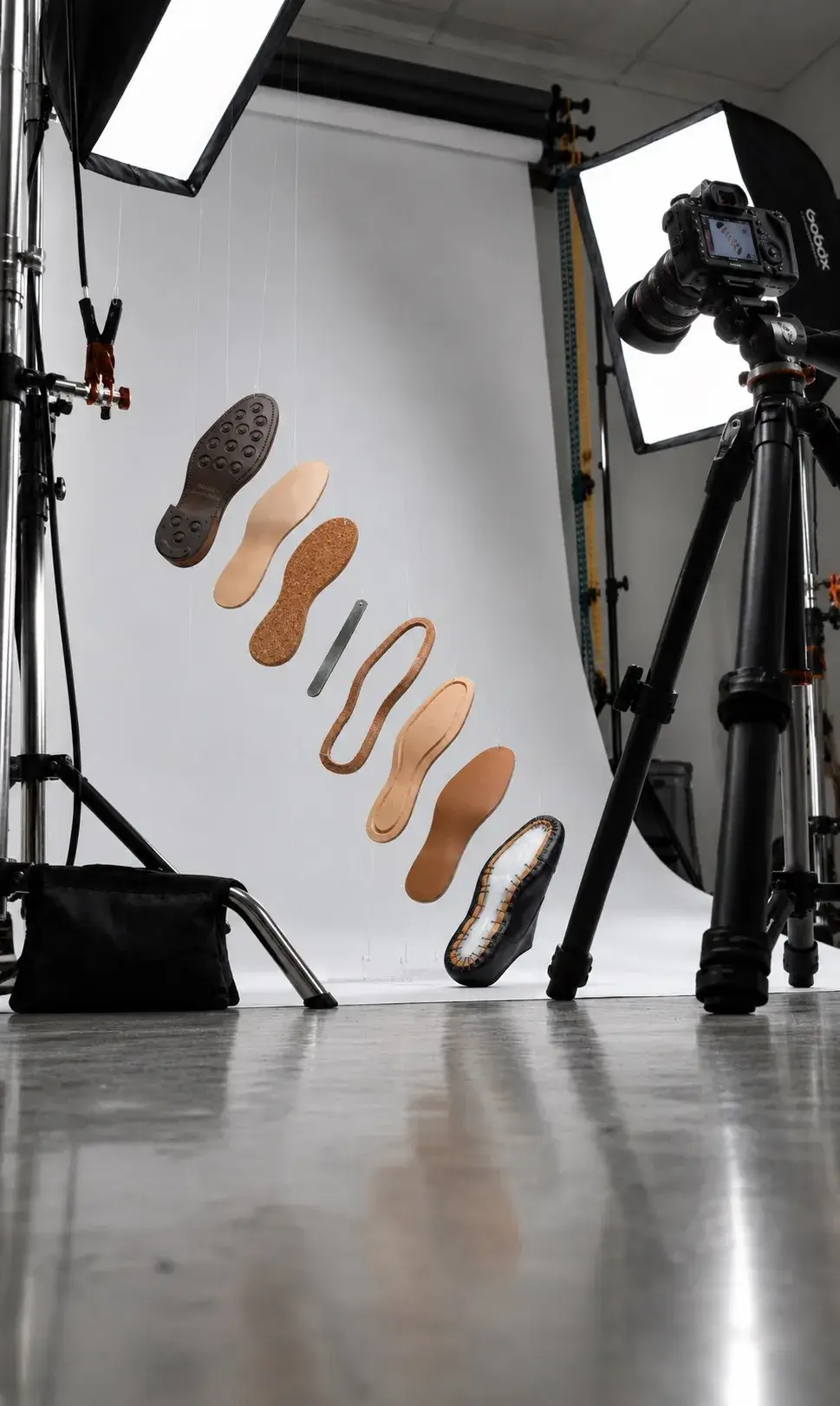
To learn more, you can read a piece dedicated to what Goodyear welting implies. But in brief, a Goodyear welt joins a leather strip (the welt) to the upper and insole with an inner stitch, then secures it to the outsole with a separate outer stitch.
But Goodyear-welted shoes are great if you know where to look. This is probably, at least in part, because that blueprint is aleatoric, allowing boundless interpretation and divergence.
Secondly, modern marketing has established “Goodyear welted” as an absolute stamp of quality. That is why diligence is essential when shopping for welted shoes.
Fortunately, the two Kozaskos are hand-welted with conviction: both pairs are free from smart sacrifices.
Why Pay ₹15,000 When Welted Shoes Start at ₹10,000?
For a more compact, sleek, and beautifully executed welting.
I’m not trying to make a case for the extra money these hand-welted pairs charge over their machine-welted counterparts. In fact, if the execution could be done better by a machine, I don’t mind it being done by a machine.
However, hand-welted shoes have few conspicuous and many subtle benefits. Most of them stem from the non-gemming approach hand-welting mandates.
A channel is carved directly out of a thick leather insole through which the welt, upper, and insole are stitched. A machine requires a consistent, elevated target because a bulky mechanical sewing arm cannot easily enter a carved shallow horizontal slit.
To produce a vertical profile easily and economically at scale, machine-welters glue a 3–4 mm high canvas rib to the insole, which could be relatively thinner and more economical.
The mechanical strength of a machine-welted connection depends on that adhesive bond, whereas in these Kozaskos, everything is integrated directly into the structure of the shoe.
So How Does That Compactness Benefit?
A stronger attachment, forgiving to resole, and the overall feel.
I firmly believe comparing shoes side-by-side or across constructions and materials is the most effective way to understand the pair, see through marketing myths, and authenticate claims.
Responsiveness is the most noticeable positive the hand-welted Kozaskos produce over, say, a machine-welted Craft & Glory oxford. Because the upper, insole, and welt are connected together as one unit, these Kozaskos respond more directly to the movement of the foot.
It bends and breaks in as a cohesive piece rather than distinct layers shearing against each other. This responsive dimension of hand-welted soles is of greatest benefit on the loafers.
It is always better to have a loafer that clearly mirrors the natural movement of the foot. I’ll say more on this later in this reading, but briefly, I have to mention that such a compact sole unit really helps keep the heel cup securely suctioned to the heel.
The next good thing is that hand-welted soles do not produce a depth that requires a lot of cork to fill. That is because they do not carry the vertical profile that a canvas rib develops to facilitate machine welting.
Now, the obvious question is: How does less cork make a better sole unit? It simply means that the foot is sitting on a leather-dominant unit that does not collapse completely, but compresses marginally into a permanent imprint of the foot.
Cork is not a long-term solution for rebound and cushioning because cork can shift and compress. It shifts away from high-pressure zones, leaving hollow pockets directly under the stride.
Eventually, it bottoms out. Resoling videos—the ones from cobblers, not from brands—confirm it. The hot cork paste comes out in brittle chunks, a dry, crumbly mess.
I am not recommending avoiding shoes with a cork-rich footbed, but rather pointing out that thick leather insoles are structured enough to hold the foot’s imprint for long.
Another advantage is that hand-welted pairs are merciful to resole. Because there is no gemming to foil, the cobbler can pull, cut, and scrape away the old outsole without any danger of delaminating the foundation of the shoe.
An upgrade from machine-welted shoes to hand-welted Kozaskos brings in subtle details—nuances that might take one or two years to appear. Therefore, if I were advising a reader, I’d say pay for these nuances if you can, because you need very few welted shoes.
Okay! But How’s Construction Elsewhere?
For ₹15,000, it’s quite decent. Nothing to get excited or to complain about.
I am talking about the seams, the joints, the finishing, and refinement. These are aspects that aren’t talked about much, but make a big difference.
It’s the heel that I find quite neat and beautiful in both the loafer and the oxford. Most similarly priced shoes cover the heel seam with a leather piece.
That saves the effort and time a neat heel seam demands, but actually adds a very unpleasant casual dimension to the shoe. Kozasko took the plunge and executed a plain closed rear seam. That much cleaner vertical line produces a more elegant, uninterrupted silhouette.
For both pairs, the upper stitching is done at 7–8 stitches-per-inch, which is enough to give that neat, refined appearance. The curves look smooth, and that stitching does not attract unwanted attention.
The only issue is that the Oxford lacks sightly pattern-piece intersections. The leather isn’t that thick, but noticeable ridges developed because the leather pieces’ edges aren’t sufficiently skived.
This price point deserves better-managed leather layers. That, fortunately, is not the case with the loafer. The loafer reads as one continuous, coherent surface rather than a collection of pieces.
The Design & Shape
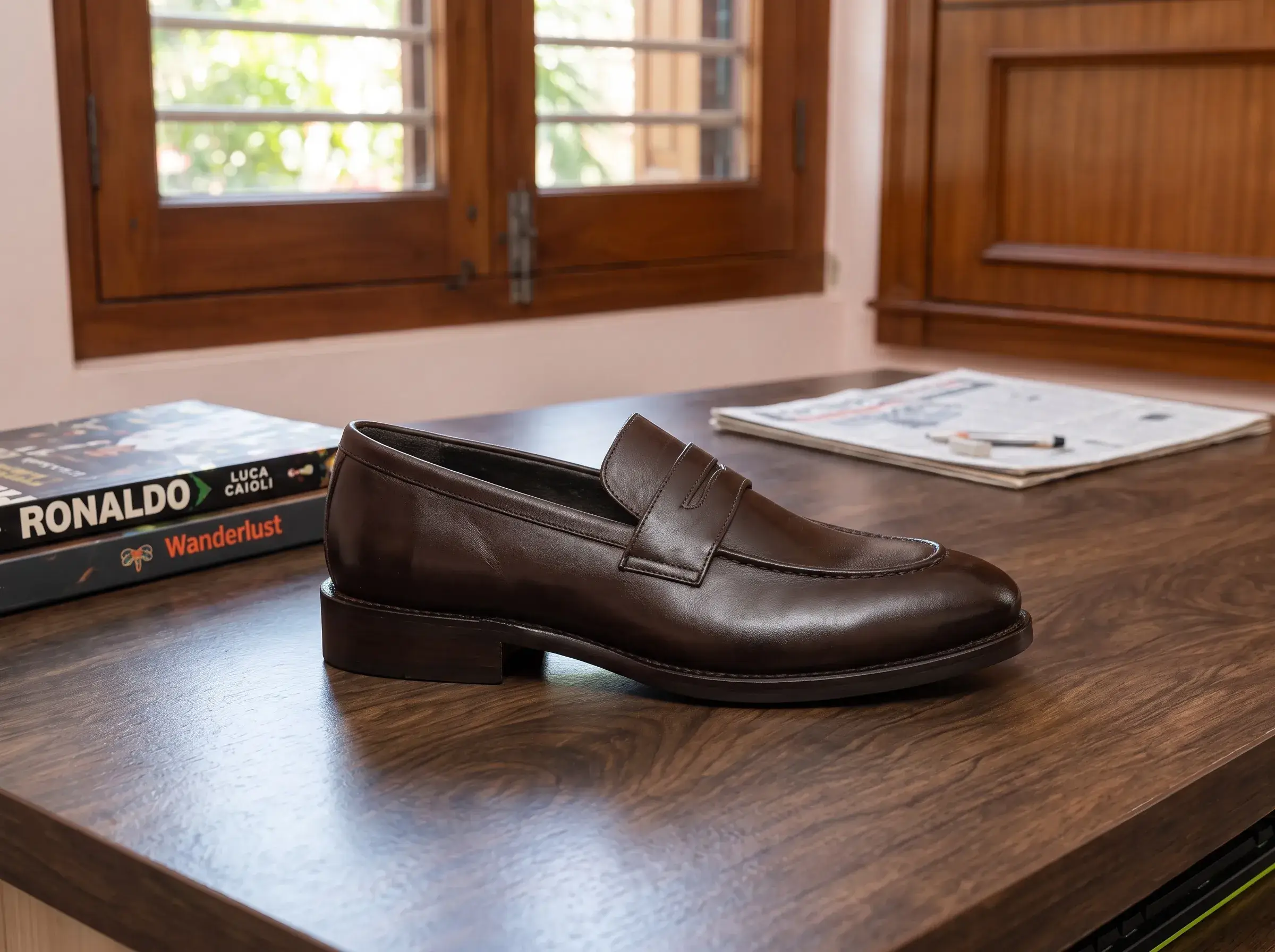
The Oxford played it safe, but we cannot complain. The loafer, however, portrays the ideal penny look.
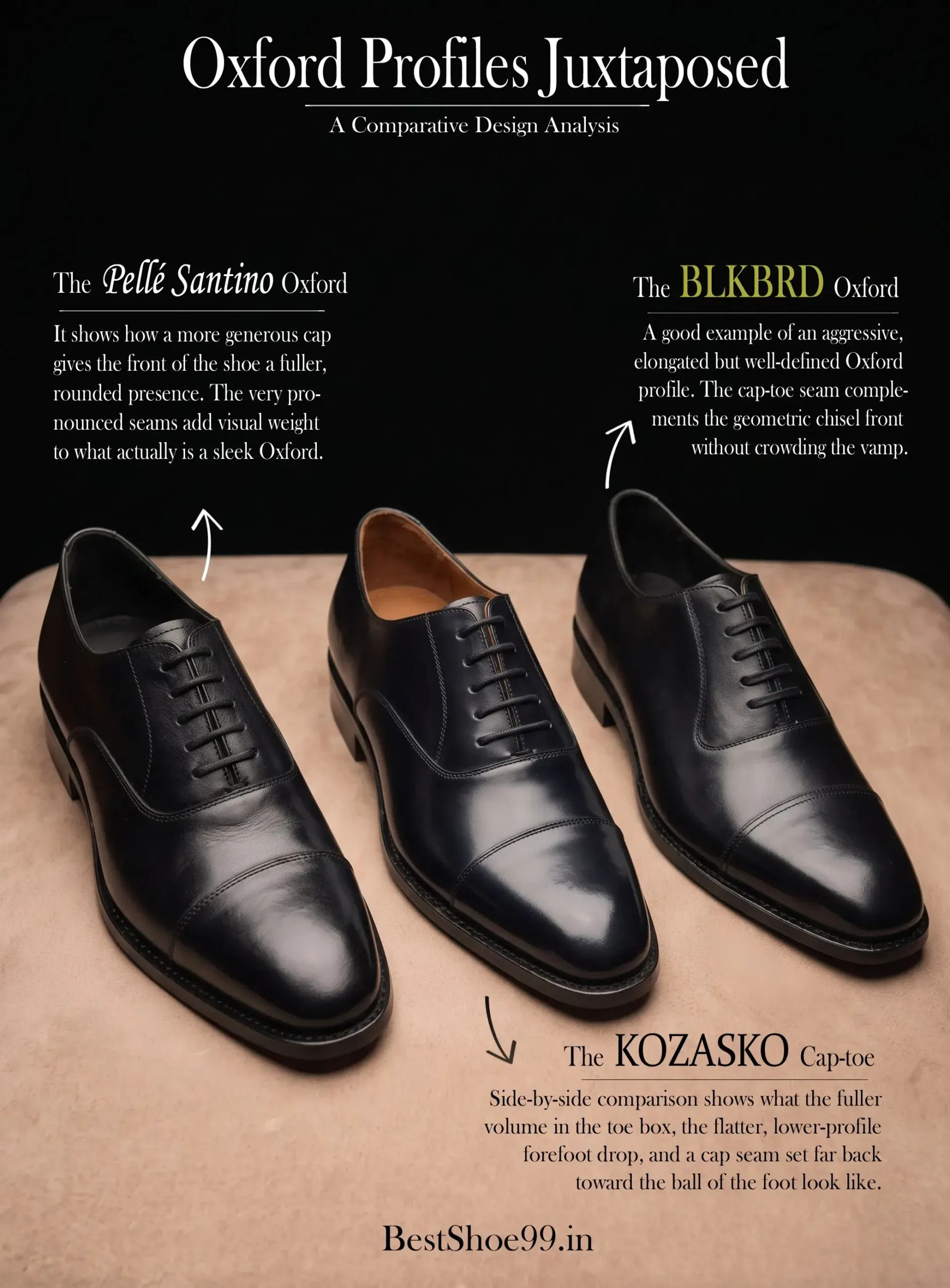
A highly decorated shoe can hide small imperfections, but a cap-toe oxford cannot. Its clean and classic look comes from a restrained design.
Neither construction nor materials; some pairs just feel “right” because of the careful control of, say, where the eyelet facings are stitched, what the proportions of the patterns are, and how they all work together.
The Kozasko Oxford feels substantial and conservative rather than sleek or highly sculpted. This Oxford’s proportions prioritize room and traditional solidity.
A soft almond (not a sharp almond) front is broad and round, making the forefoot comparatively full. It is not dramatically waisted either. None of these design choices are problematic, as this Oxford’s intended aesthetic is accommodating and comfortable.
But it hurts when a ₹15,000 Oxford tries to keep design safe and prioritize accommodation over giving some visual character in return. I cannot question a maker’s design philosophy.
Calling attention to this Oxford’s cap-toe dominance is important. The cap line is fairly prominent. As a result, the cap-toe becomes the first thing you notice—which should otherwise disappear into the overall composition.
This disproportion might look normal in isolation, but the differences in geometry and overall silhouette become much easier to see once you put this Kozasko Oxford beside other Oxfords.
The Loafer Looks Better, Though!
Very close in depicting the character of a classic penny loafer.
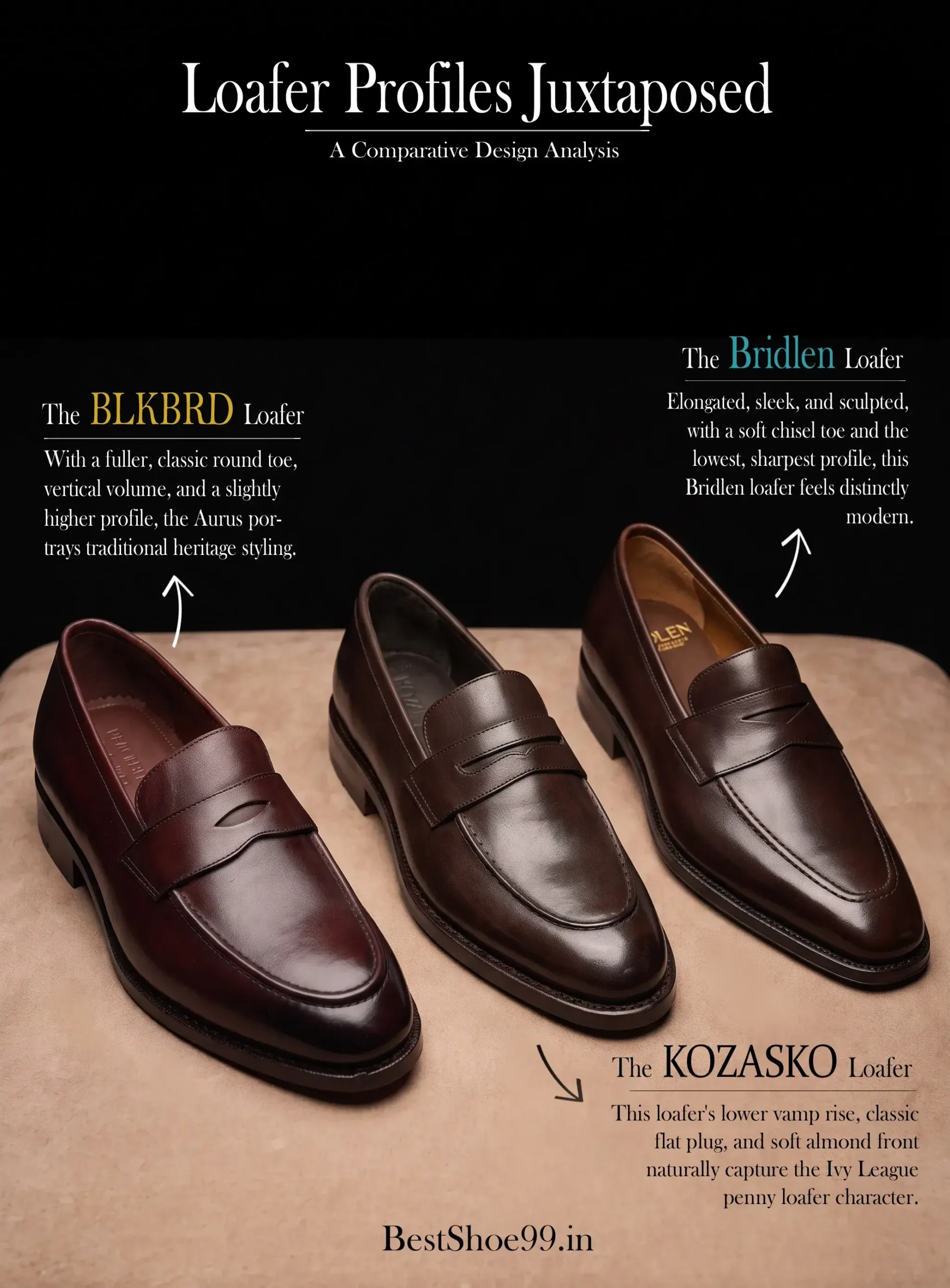
Even though most shoemakers have several lasts, they usually have similar ideas of relative proportion and design. So we are picking between styles rather than design ideas.
The accommodating and fuller design idea might have made a ₹15,000 oxford look too safe and simple, but such design intents suit the character of a classic penny loafer better.
An excessively elongated or sharply tapered loafer can start looking visually stretched or fashion-driven rather than naturally balanced.
A soft-almond toe with noticeable volume in the forefoot does not look bulky because of the smooth and deliberately relaxed curvature.
The waist is not dramatically pinched, and the heel has enough mass to keep the substantial front from overshadowing it.
However, it’s the seamless vamp that gives this loafer a strong visual center. It’s not extremely narrow or aggressive towards the center.
The vamp maintains a fairly generous width as it travels backwards. The perfectly balanced penny strap interrupts the otherwise uninterrupted vamp, but doesn’t overwhelm it.
All these elements and the volume are organized into a coherent shape. This loafer stands out in the sense of having a recognizable, balanced, and composed character. Its appeal is quieter: one of the defining qualities of a good dress loafer.
The Rubber Soles, Surprisingly, Don’t Add Bulk
The high-abrasion nitrile works aesthetically.
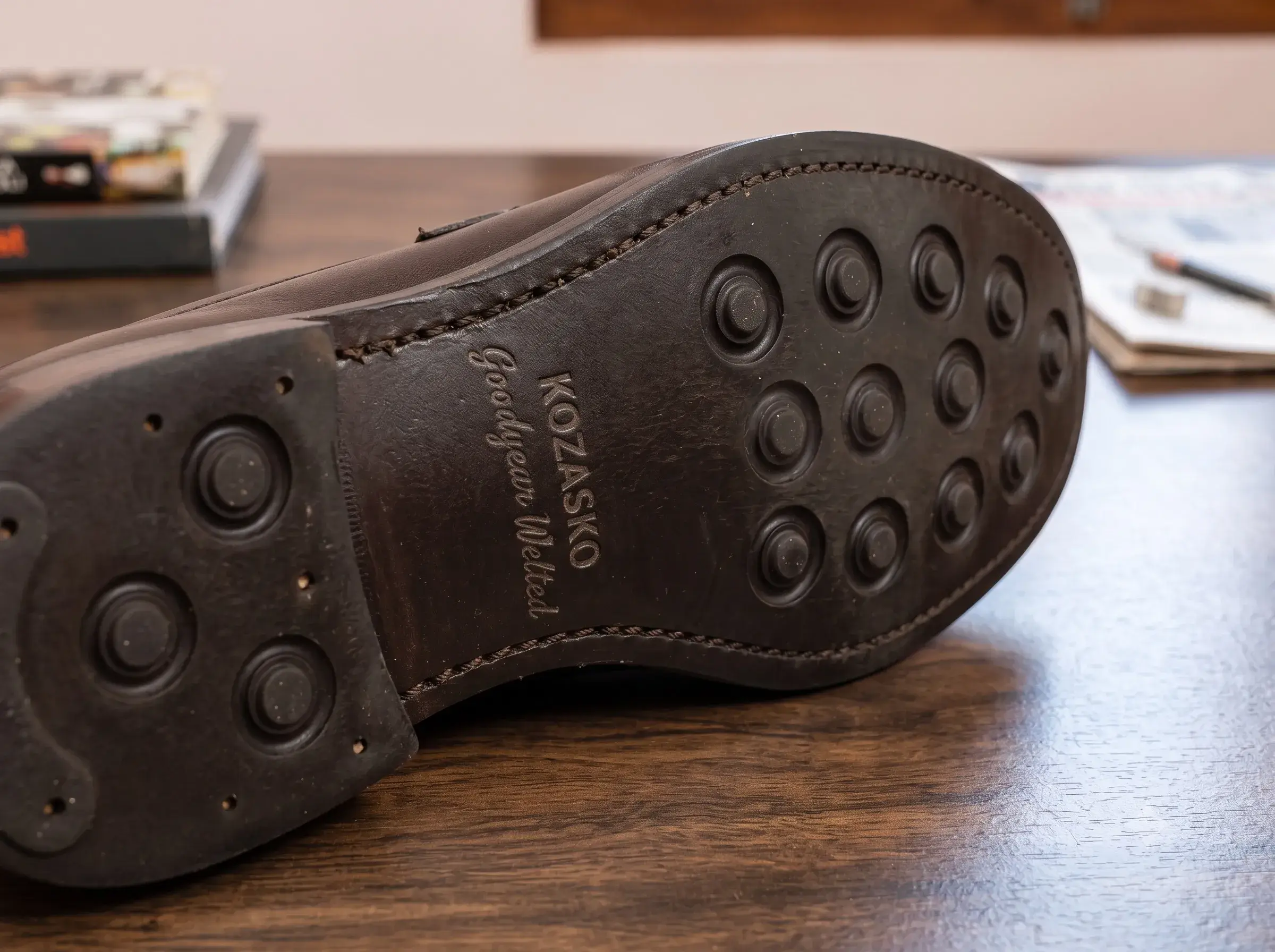
I have shoes with nitrile rubber outsoles and round studs, and those mostly felt sartorial enough while also being fitting to the landscape and activities.
Partly because the compound has the potential to be designed relatively thin while still being durable. That property isn’t standard with all nitrile rubber soles, and depends on the ratio of the two components (butadiene and acrylonitrile) making this synthetic rubber.
However, most makers aim for an ideal ratio to secure wear resistance while keeping it thin. Next is the studded design. Very similar to Dainite’s famous studded pattern, both Kozaskos have low-profile circular studs providing traction without requiring deep, bulky lugs.
A large number of small, distributed contact points can provide useful everyday grip while being much less visually aggressive than conventional lugs.
That design and material are well accommodated by controlled construction to that sole finish. The soles are trimmed very close to the upper.
The perimeter and vertical dimensions are carefully controlled. Both the shoes have very neatly integrated rubber sole units.
The Fit & Comfort
Feels roomy in the forefoot, so narrow-footed wearers may benefit from thicker socks.
Both shoes are wide and round, with a lot of room in the forefoot. Those things combine to give toes a lot of room, and the potential to stretch out a little more width-wise if needed.
My feet are much thinner than most people of my height. I have a lot less volume—in the width, the height, and the general roundness.
Therefore, people with fuller feet benefit a lot more from the shape of these Kozaskos—with their generous width and roundness.
Because of “the human heterogeneity and remote fitting” dilemma, I mostly opt for the size just below 26 cm—which here translates to 7 UK.
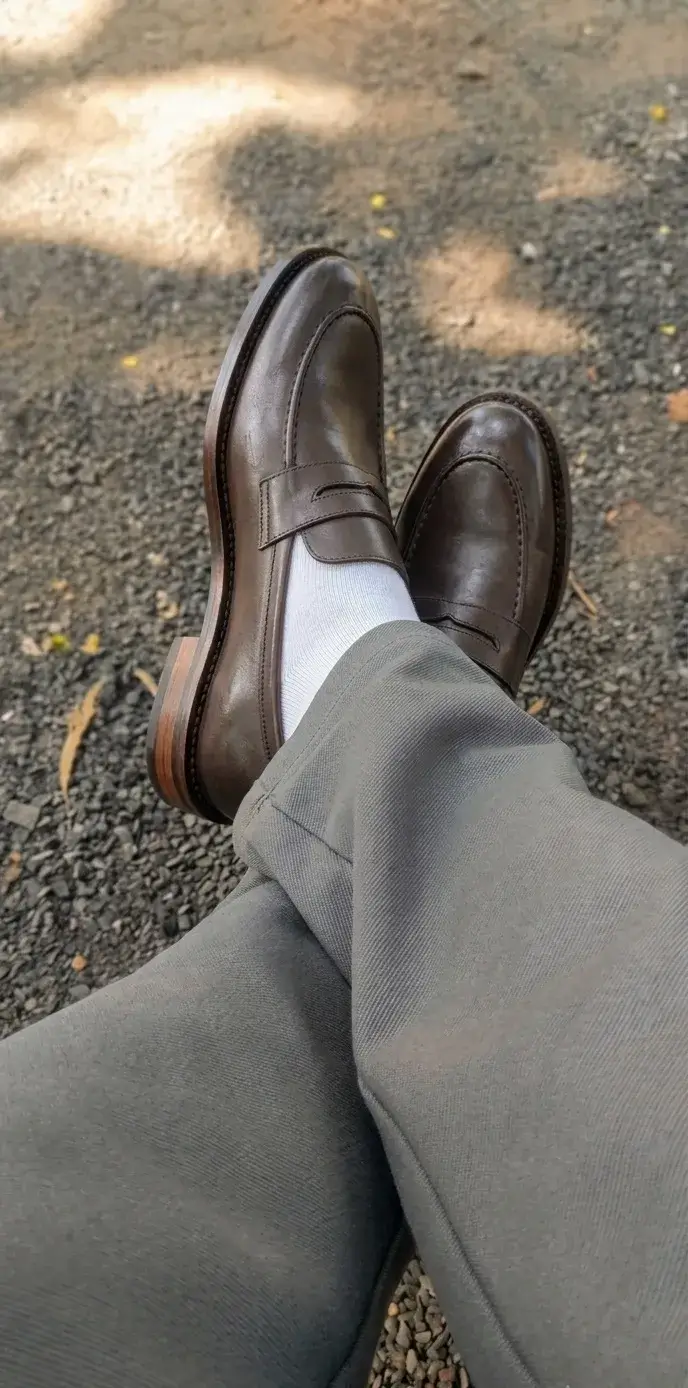
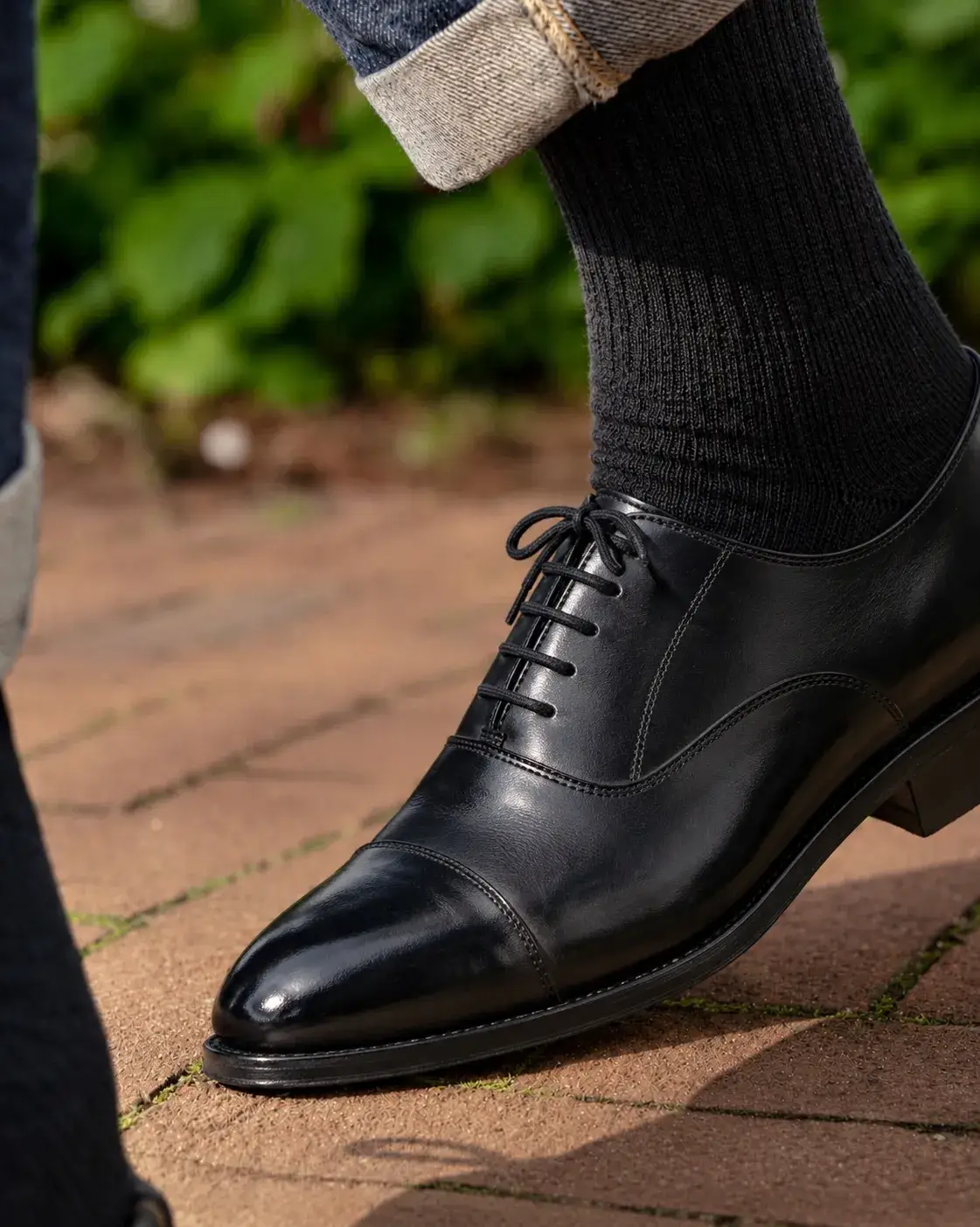
The oxfords turn out comfortable to wear straightaway, despite being in a relatively tough structure and a traditional welt construction.
Fortunately, the oxfords crease and flex at my foot’s natural flex point. Thus, even today (after almost a year of wear), the oxfords look cleaner.
My feet are held well in the back of the shoe (the first key to a good fit) without pulling the laces too tight—which is rare in my case. I have achieved a good fit in these oxfords without any arrangements or inserts.
However, the same-sized loafers didn’t fit straightaway. I have tried different sock thicknesses to fill the volume of the loafer.
The ideal fit is a loafer you can slip in and out of, but that still stays on the heel when you move. Initially, slightly thick socks yield that ideal fit.
But now, as the loafers have loosened with a year of wear, I need proper winter socks. They pair so well with what I wear that these tweaks to maintain a snug fit don’t feel like a chore.
With thick white socks, on a cold day, after being on my feet for a while, the fit is perfect. And this is, of course, the way with most of my loafers and Chelsea boots.
Are They Comfortable?
The comfort here is more structural than cushioned. That, too, depends on how well they fit.
Comfort, the most important need for many, builds on fit. Cushioned or foam-dominant shoes can partially disguise a mediocre fit, but a structured dress shoe does not have much softness to compensate for a poor fit.
The widest part of my foot aligns with the Oxford’s widest part; therefore, my foot bends where the shoe is designed to bend. Good comfort starts with a good fit.
A handwelted pair of shoes is portrayed very attractively, and with all the claims and market-led surroundings, its limit to punish a poor fit is not talked about.
The shoe does not yield easily—your foot is essentially forcing heavy leather to surrender.
I’ve been wearing the Kozasko oxfords twice a week and the loafers every second or third day in a year since I got them, and they didn’t soften much as they broke in, but the sensation is more “secure, supported, and increasingly natural”.
In the oxfords, my foot is held properly, nothing is fighting my movement, and I can walk naturally. Even though I’ve gone through sock-swaps to fill up the volume of the loafers, I’d much rather have a loafer this way round—a touch large, rather than a touch small.
It is often suggested to have a tighter loafer, one that requires a shoehorn to get into.
That type of loafer fit is either too hard to achieve on my foot or just the wrong thing to aim for.
Whenever I opt for a touch-tight loafer, it eventually ends up too painful to wear.
I’ve found (again through painful experiences) that a touch-loose loafer is less likely to create discomfort.
On such loafers (which include this Kozasko loafer), the advantage is that it’s fairly easy to tweak (or should I say, fix) the fit by putting on a thicker sock or by pulling in a thin sockliner.
How to Ensure a Proper-Fitting Kozasko?
Understand your feet, not merely by their size, and communicate that understanding.
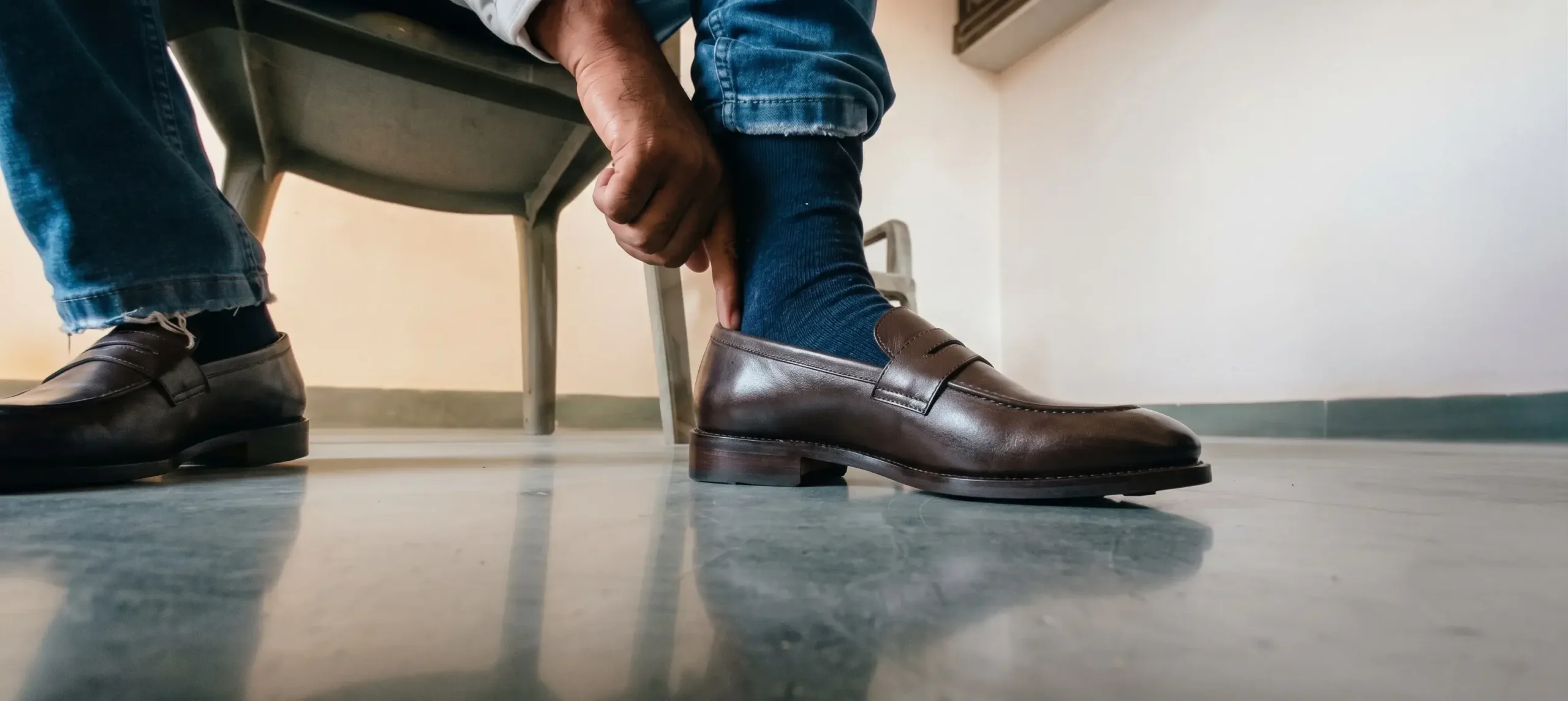
A ₹15,000 hand-welted pair of shoes. Which, in anyone’s books, is a hefty purchase. That is a serious investment—and one that needs equally serious consideration as well as a fair bit of knowledge.
We are not talking about a mobile phone where performance is largely independent of your physical dimensions.
Now, as you are desiring good, proper shoes, it is worth knowing your feet in terms of, say, your actual foot length (in cm), where you need the most room, and whether your foot is narrow or wide.
Be it a Hand-welted or glued pair, from Bridlen or Bata—trust me, this understanding makes the most difference because good fit means different things to different people.
Try to understand the shoe’s geography through my experience with how these Kozaskos fit. I make sure that my shoe-fitting opinion stays transferable to you. That’s a much more reliable way to use reviews.
You don’t have to master everything about your feet and the shoe.
Three measurements—foot length, the widest part of the forefoot (called width), and around the highest part of the foot (called instep girth)—communicate them to the shoemaker, and I’m sure the rest is taken care of.
Every shoemaker has to “fit the mind as well as the foot”. They know people vary in how they like shoes to fit and want you to have a talk about the fit. After all, they want you to be happy enough to return.
That didn’t just deepen the experience of commissioning the shoes, but it gave confidence in how these shoes will wear. Confidence that you know your purchase better. The real issue is that modern society is not set up for that kind of relationship.
How Has My Experience Been?
These are not difficult to recommend, but these Kozaskos are surely not for everyone.
It is hard to be pleased by a shoe that costs ₹15,000. This puts more pressure on high-end shoemakers, as they have to deliver in all respects.
It must be better stylistically, but also be superior in quality, and must look ₹15,000 in some manner too, whether through finely tuned construction or lustrous leather.
Even though I try my best to see these Kozaskos in isolation, it is tough not to benchmark them against the pairs I have.
And in that setting, these Kozaskos felt traditional, conservative, and the shaping is far from aggressive. I believe a shoe must portray its price—that there’s little point in having a five-figure shoe if it fails to overshadow the stock.
It should not “look” distinctive, but should “feel” distinctive. I have a small number of good-quality, similarly priced shoes which fulfill such needs—a little extra refinement keeping things engaging.
These Kozaskos do so if they are properly looked after and properly complemented by the outfit.
The conservative design and accommodating shape of these Kozaskos would not do the visual work by themselves.
The finishing, execution, and context have a bigger role in bringing out their character. These shoes are structurally sound—more than what’s typical at this price.
That’s why the makers have backed them with a two-year warranty. They let us pick between a leather or nitrile rubber outsole.
The maker has to carry stock of shoes in both sole types to facilitate that choice. That is a complicated and rare offering.
I’m glad that shoemakers like Kozasko exist, but I’m concerned about a mismatch that seems quite likely to occur due to the available warranty.
Because what a potential buyer makes out of that warranty claim is subjective, there can be a mismatch:
- Buyer expectation: “It’s durable, so I don’t need to do much.”
- Reality: “It’s durable, but looking refined requires reasonable care.”
One might end up blaming the shoe for looking dull or tired when the real issue is Expectation versus Maintenance.
This applies to every proper shoe or boot, but managing expectations and maintaining these Kozaskos becomes especially important because they don’t rely on a dramatic silhouette to create visual impact.
Is There a Better Alternative?
The alternatives have their strengths—but their compromises too.
Our country’s welted shoe analogue is one of sharp contrasts. In this domain, there are plenty of alternatives, but few substitutes.
Without the legacy of local production, makers are compelled to look far and wide for inspiration.
Each shoemaker brings its own design language and set of priorities. So the shoes (and the shoemakers), I am urging you to consider, certainly do better in some areas, but you’ll give up something elsewhere.
I’ll briefly spell out those gains and trade-offs, so you can decide which matrix is worth opting for.
Craft & Glory Shoes
Not as refined, but easier to live with.
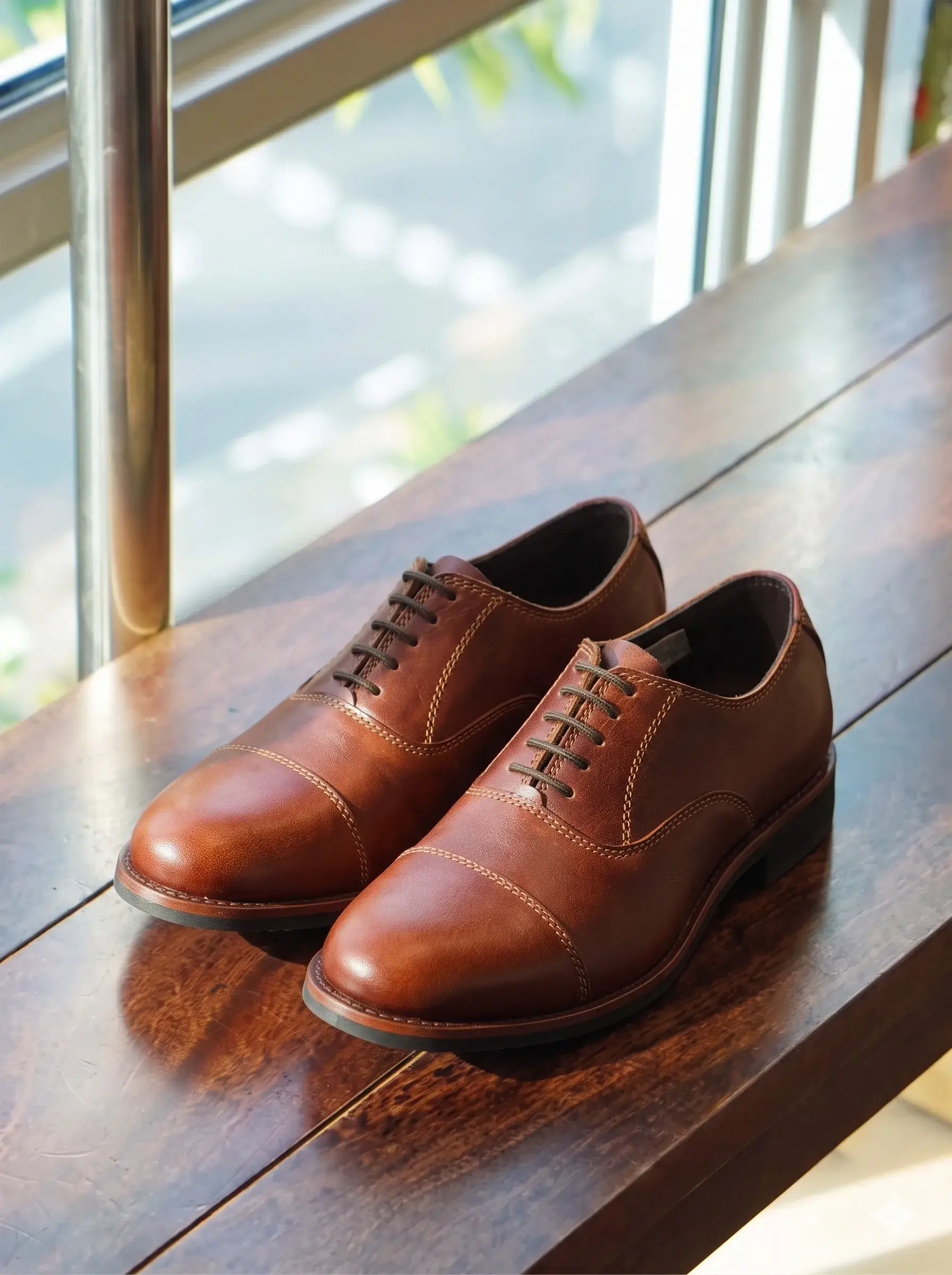
It is known for its Goodyear-welted boots collection—high-quality, but with a more practical, rugged feel.
Their relatively compact offering of dress shoes leans heavily towards those core (Boot-ish) propositions.
These too come with a two-year warranty, but with less dressy manners.
Craft & Glory dress shoes do not involve delicate materials, refined shapes, or the same mastery of skill and investment of time as Kozasko.
And that is mostly why very little care and attention is required to keep a C&G shoe going for years.
If you think these aren’t too rugged for your lifestyle needs, you should consider C&G over Kozasko.
I have written about what 2 years of wearing Craft & Glory shoes has been like, and if you haven’t read that—and are interested in commissioning from them—it’s worth doing so.
BLKBRD Adele Oxford
It is the best sub-₹13,000 dress shoe. What more can a shoemaker do?
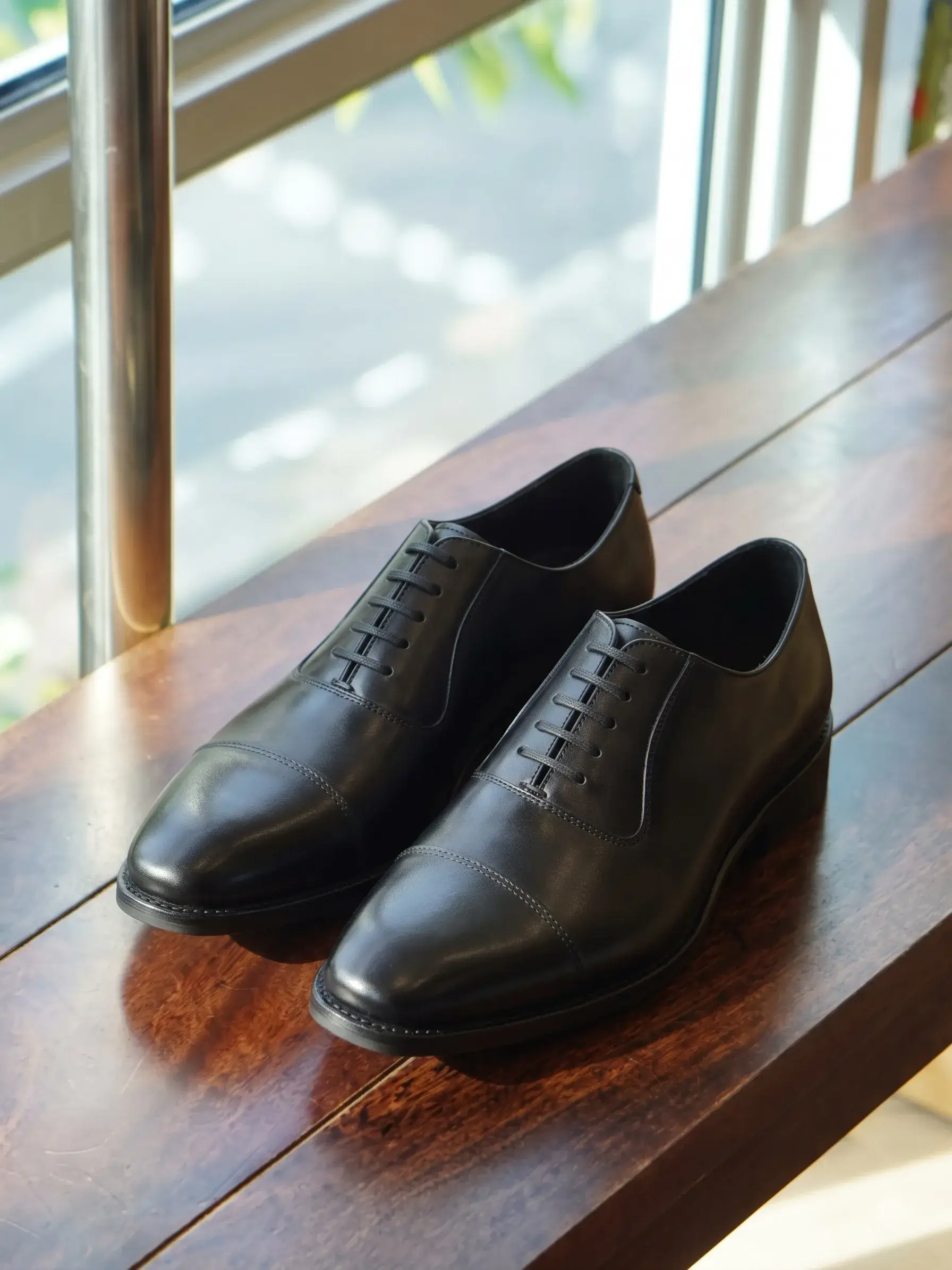
It will take more punishment than most owners will ever ask.
It is shaped and designed with more refinement and balance than most viewers would have the nerve to challenge.
And it comes at a price most makers struggle to come close to.
I might sound like I wax poetic for the reasons I have mentioned in an article dedicated to this wonderful shoe.
A hand-welted (in an absolute best way) veg-tanned leather sole unit with a full-grain (and fully lined) leather upper.
It might appear ordinary through pictures, but the Adele is shaped and designed to soothe, not scintillate.
With Bridlen’s entry-level shoes getting more expensive, the BLKBRD Adele looks more compelling at ₹12,800. Here, the maker offers the opportunity to develop a truly individual garment—not just in sole choices (7 options, btw), but in sole finish, width, and requests to go half a size.
You Might Also Like


How can we improve BestShoe99? Got feedback?