Bridlen Blake Line | Two years later, I finally see its worth.
Bridlen declined to commission the Blake Line, citing a near-break-even price point with no room for margin.
April 27, 2026
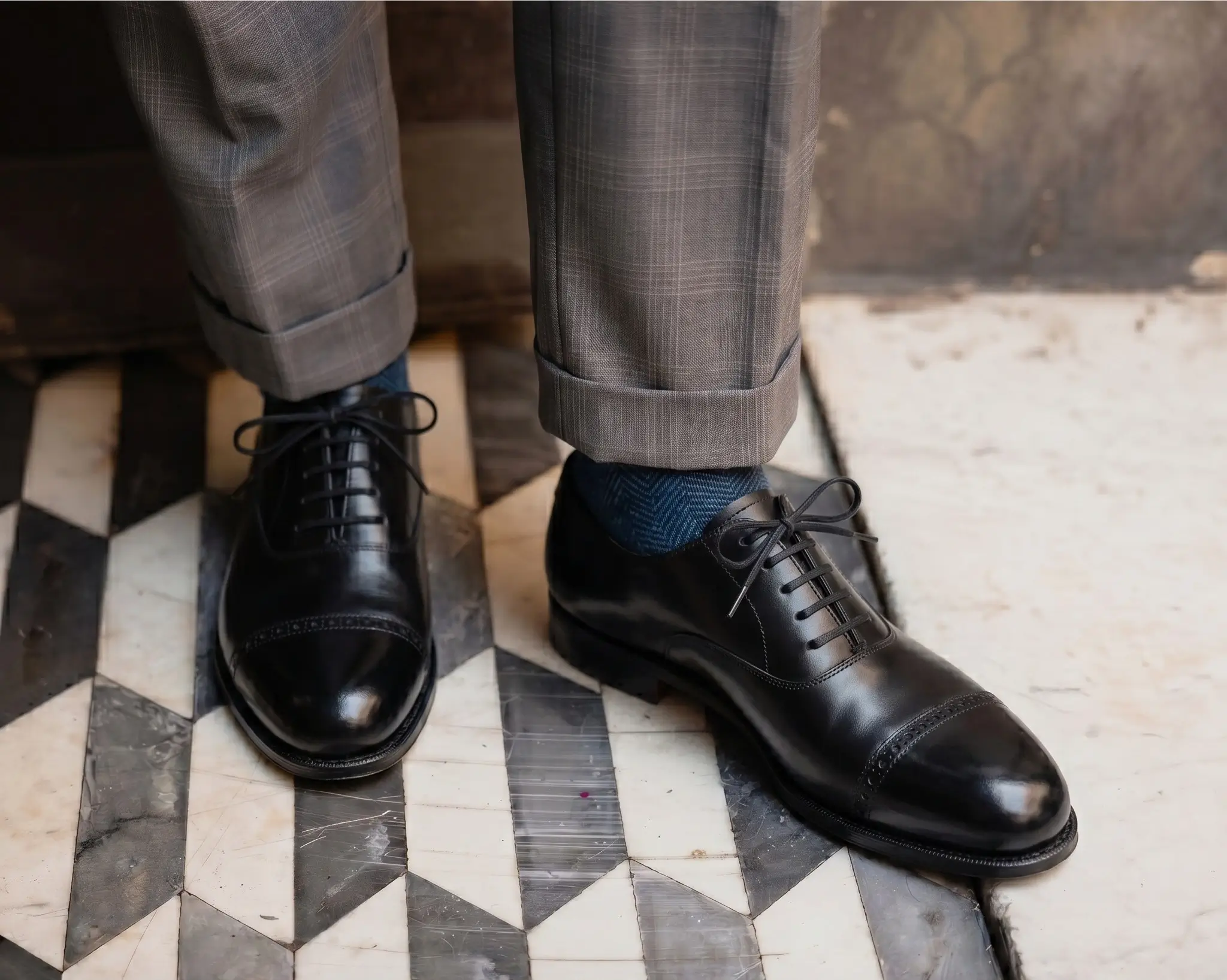
I used to request shoes from the makers I cover in my articles. When Bridlen decided to ship me a pair, I was expecting a “Goodyear-welted shell cordovan something.” I felt bereft upon realizing they viewed my contribution as nothing more than a Blake-stitched Oxford.
Bereft because there’s an implied inferiority about the “entry-level” line in a range. In my anger, I couldn’t look past the fact that I’d received a grasping, unpolished, aspirational version instead of the flagship I truly wanted.
All of the above, along with a lot of successful marketing for Goodyear-welted and against Blake-stitched shoes. Surprisingly, my German friend found these Blake-stitched Oxfords more interesting than any other pair after looking through my entire collection.
That convinced me to reconsider my bias. It was a revelation; what I (and perhaps the other critics) had previously missed about these Blake shoes now felt undeniable. At ₹9,250—up from ₹7,250—the value proposition of these shoes (mainly because of the Calf leather) is still practically unparalleled.
That initial oversight stemmed from my own limited knowledge. I was once impressed only by full-grain, welted pairs, rarely paying attention to what lay beyond them. This pair is from that Beyond sphere. However, it’s something that has since been corrected.
Despite everything I’ve learned over the last six years—about the magnetism of Calf skin, caring for it, construction nuances, the importance of shape, profile, and design—I still very much consider myself a beginner.
But that amount of learning might qualify me to uncover the appeal and value within this line. Those who understand leather may soak up its magic more effectively.
Bridlen (and a few other shoemakers) have industry benchmark-setting pairs featuring far more opulent constructions and materials. However, the elements of the Blake line communicate better with regular people.
It speaks a language that is understandable—defined by a slim, elegant profile and a deep, rich luster. These Oxfords are very wearable, and I maintain them with a certain sincerity because there is huge satisfaction in having a pair that is so clear about what it is for.
The Full Grain Box Calf Upper
Not expert-level nuances, but a luster that everyone can comprehend and admire.
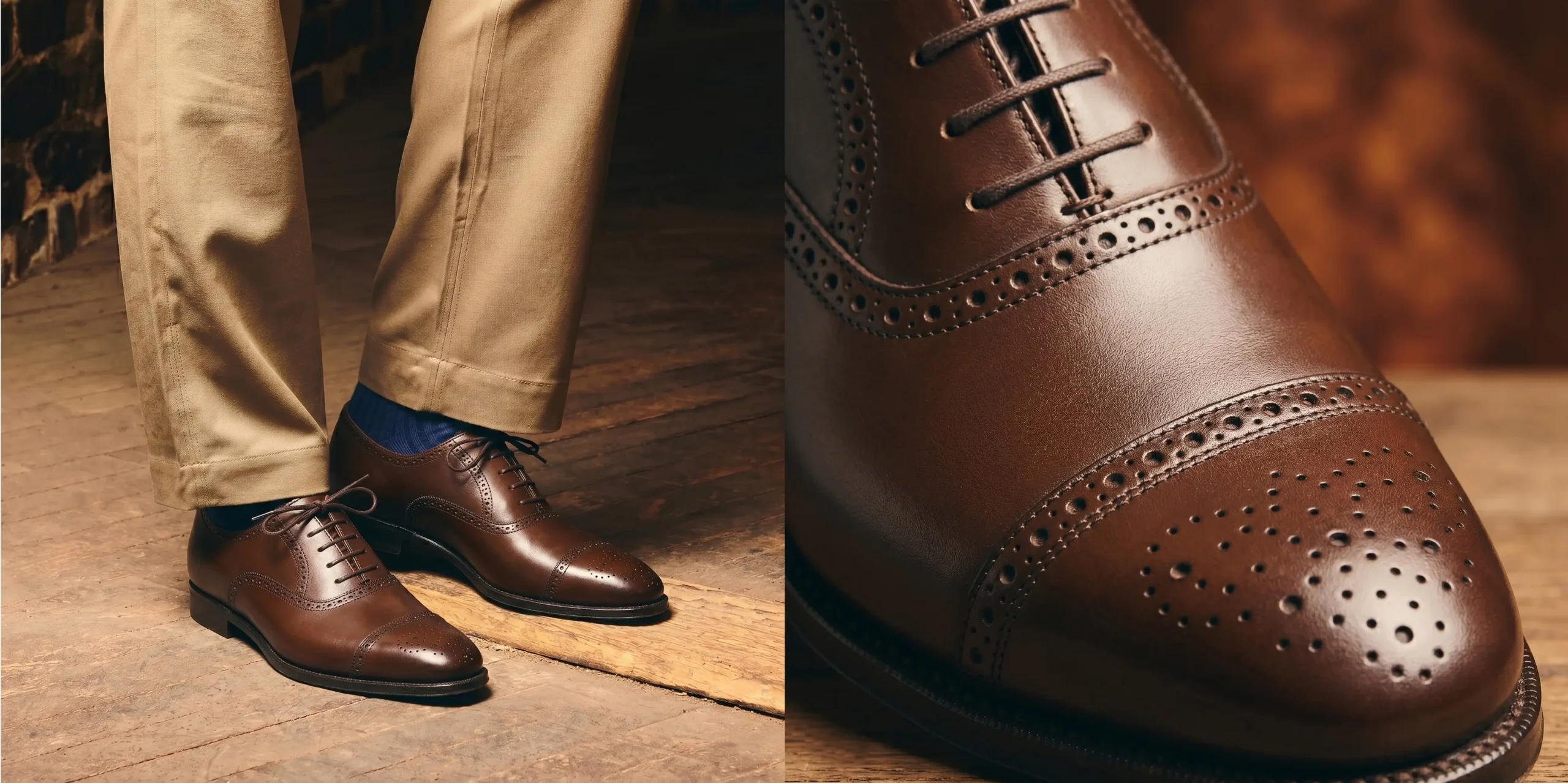
The first dress shoe I ever owned taught me that the satisfaction of smart and sophisticated footwear came from leather and design. They carry weight beyond sole construction and resilience.
The obvious reason is that dress shoes are for settings where there’s no room for exuberance, flamboyance, or colors. A classic design executed in high-quality leather is a calculated nonchalance that reflects elegance without disturbing the audience.
But leather possesses an unexpected depth. Much of the beauty, depth, mystique, strength, and diversity comes from the animal’s biology, transformative process, and finishing.
The basics remain, but between them lie incremental alternatives that may offer a richer look or better resilience, but require a greater degree of understanding. There are always boundaries, and understanding the context is helpful.
Indeed, upgrading to better-looking leather is worth it; after all, dress shoes are meant to be noticed. However, I feel that, after a point, the differences become too subtle to justify the hefty premium.
For example, the relative strength of purchasing power might allow foreign publishers to honor a ₹30,000 Shell Cordovan pair like a bargain. What conforms better to us is this: a full-grain Calf leather for around ₹9,000 is a mere pittance for a niche leather.
Nine thousand rupees is still a lump of money. Calf leather, however, is one such material that very few own or understand, but can skim the difference. The most affordable price for a leather that is most likely to be deemed expensive.
Does ₹9,000 buy the best calf leather?
No. But Bridlen gets us the best possible at this price. Here’s the breakdown:
Three factors forge the caste of calf leather: sourcing, transformation process, and finishing. While the transformation process and finish matter, sourcing is the marrow that separates this Calf leather from the hides used in Bridlen’s flagship models.
A leather that came from a Calf (generally under ten months old), and not from a full-grown cow; the difference can be stringed in words, but is best manifested by comparing the skin of an infant to that of a 50-year-old.
Compare the skin of the hips and abdomen to that of the palms and soles; the latter is significantly softer, right? Environmental factors and evolutionary adaptations act as a ❝natural tannery‚❞ directly shaping the skin’s texture and thickness.
The Calf leather used in the Blake line is Tropical hides tanned in native tanneries. While these local tanneries can replicate the processes of elite European facilities, they cannot overcome the inherent limitations imposed by environmental heterogeneity.
The cold-weather calves develop a tighter interlocked fiber structure to trap heat and stay warm. The tropical calf in this Blake line has a higher density of larger sweat glands; post-tanning, these manifest as open pores with a distinct “grainy” texture, contrasting the glossy finish typical of cold-weather calfskin.
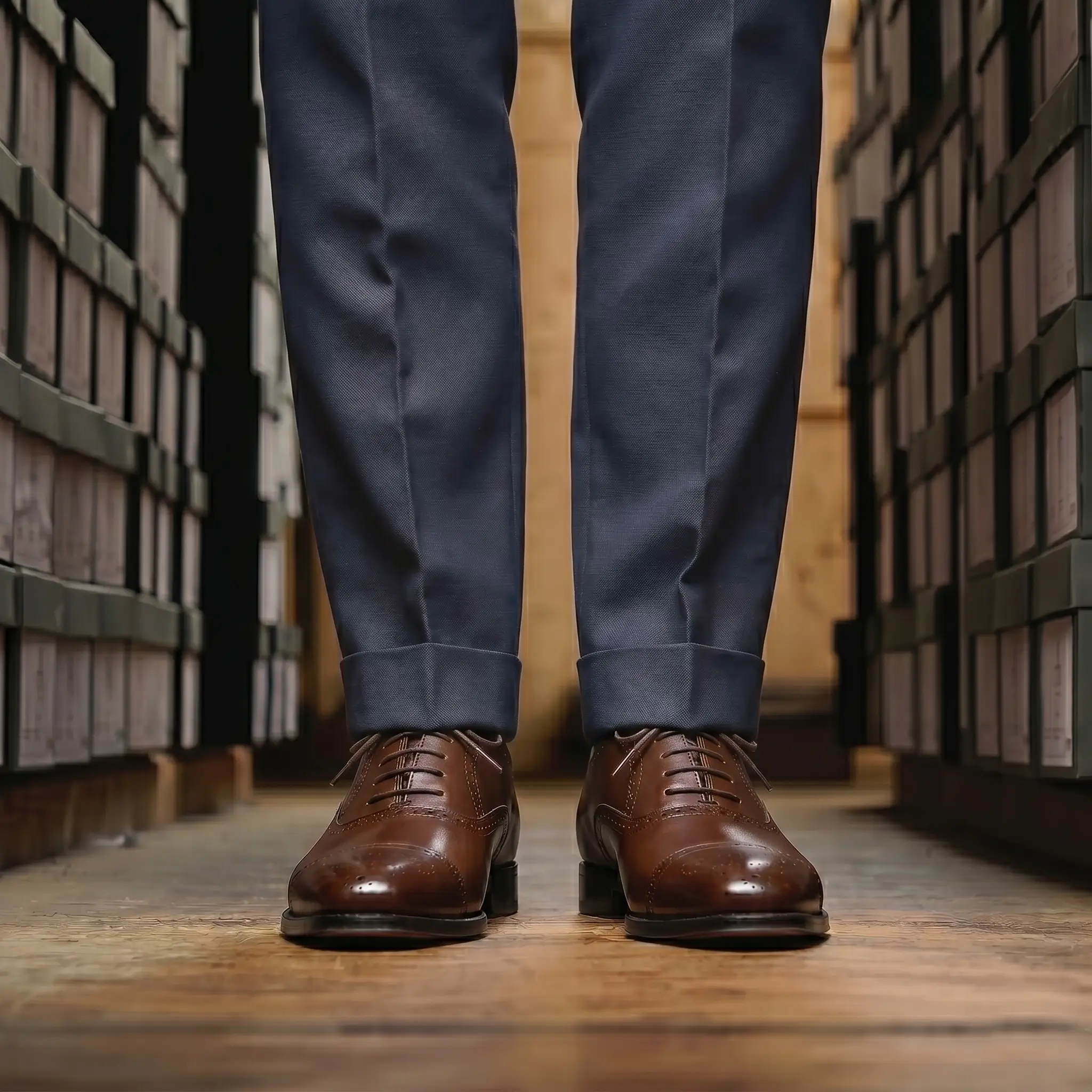
Cold-weather Calf’s dense, interlocked fibers produce a “snappy” leather with superior shape retention—a trait that results in shoes that hold shape for decades. A quality that a shoe from tropical calf leather might fail to achieve because the skin’s loose fiber structure favors breathability and tends to flex.
But the key quality that’s always quoted with cold-weather calf is that it develops micro-creases: hair-thin wrinkles barely distort the surface. That too flattens out significantly with proper storage (with cedar last) and rest.
The relatively loose fiber structure of tropical calf results in wider, rounded folds rather than the sharp and fine lines. After decades of wear, the cold-weather calf looks “lived-in,” whereas the tropical calf turns baggy.
Of all the changes during tanning, “Shrinkage” is the most notable revamp. By utilizing precise temperature control, elite European tanneries force the grain to contract, further amplifying the benefits of a tighter, more resilient structure of cold-weather calf skin.
Beyond the added cost and time, native tanneries value maximum yield—prioritize hide size over the structural benefits of contraction.
Top-tier tanneries can afford the extended lead times required for deep saturation with transparent aniline dyes.
By achieving 100% color penetration, this process creates a “depth of color” that allows light to reflect from within the leather’s fibers.
The Blake line’s calfskin spends less time in the dye drum, meaning the color sits on the surface and creates a 2D aesthetic rather than a luminous depth.
These inherent biological traits and streamlined tanning processes prevent tropical calfskin from developing a rich, multi-dimensional patina over time.
To ensure a fair comparison, I have highlighted these differences; otherwise, benchmarking a locally tanned tropical calf against world-class cold-weather hides—which cost three to four times more—is unfair.
The aforementioned quality differences are not between good and bad, but between good and great. It is highly unusual for a shoe at the ₹9,250 price point to utilize aniline-dyed box calf instead of a standard pigmented coating.
Think of it as soaking the hide in dye for deep penetration rather than simply painting the surface. The calfskin in the Blake line possesses a characteristic transparency that allows the natural grain to remain visible.
The aniline-dyed calf used in the Blake line develops creasing as part of the leather’s structure. It does not crack like the pigmented ones, where the ‘paint’ on top is stiffer than the leather underneath.
Thus, from the many different castes of calf leather, the Blake line offers a highly natural, nuance-free quality full-grain Box calf that is almost unthinkable for a ₹9,250 investment.
What About The Interior & Soles?
The crust leather lining and veg tanned soles are just as rich.
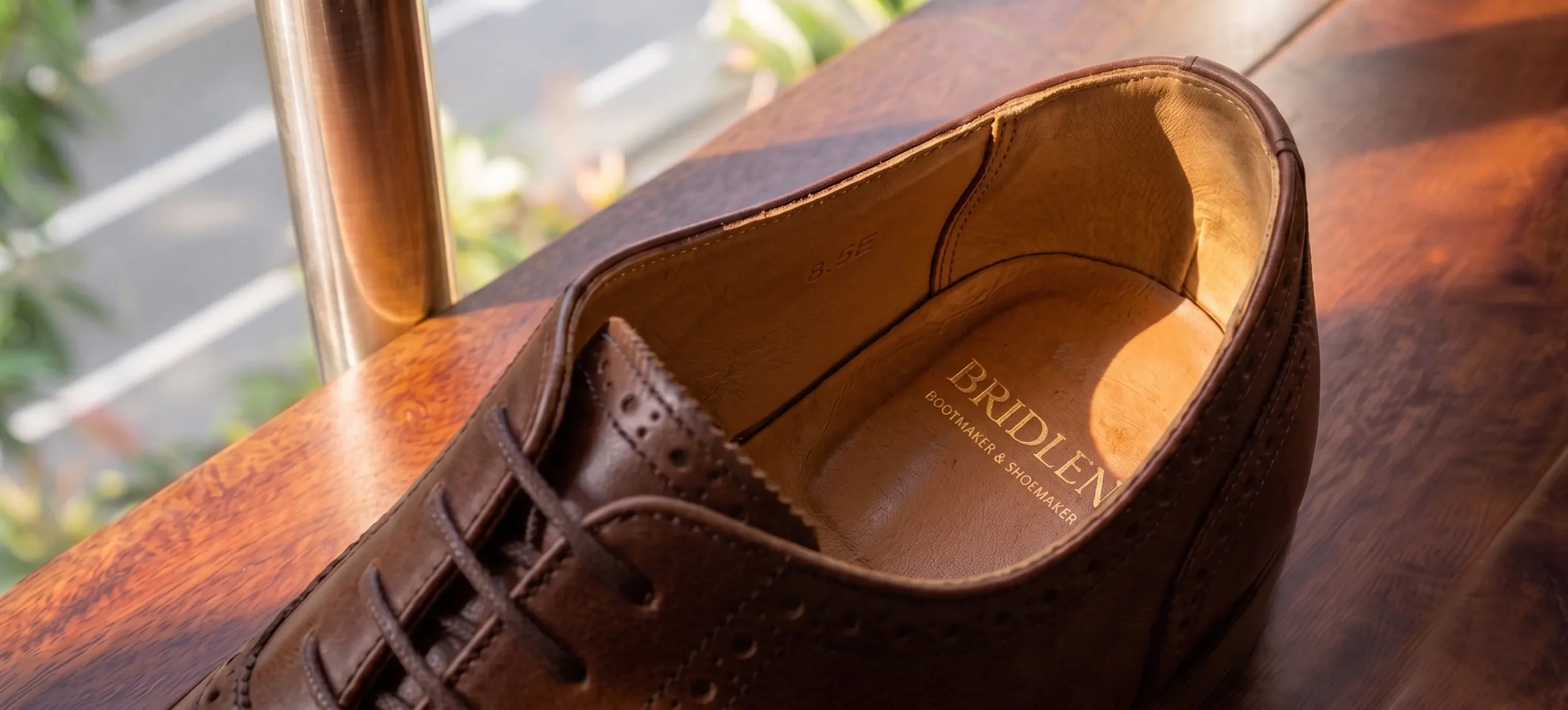
In our labour-abundant economy, where materials make most of the cost, the interior is an inconspicuous area of a shoe where cost-saving compromises naturally fit—especially when the bulk of the investment has already been poured into a premium leather upper.
I have a few pairs with “flex-worthy” uppers let down by subpar, painful interiors. The Bridlen Blake Line stands as a notable exception, pairing its premium calf uppers with high-quality crust leather linings and full vegetable-tanned sole units.
Such selection validates the idea of developing a complete shoe that many shoemakers aim for, but few besides Bridlen actually achieve.
The great combination of white labeling—they handle production for several European & Japanese Heritage brands—and an in-house label allows Bridlen to leverage the volume advantages; More on these advantages later in this reading.
This business model allows them to fully line a ₹9,250 entry-level Box Calf pair with drum-dyed crust leather, a material that most reputable makers can only afford to use on the uppers.
What is Drum-dyed crust leather?
And how does it make a better lining?
Transforming an animal skin into leather is a sophisticated arena of art & science. The tanning process always has more to reveal, but, in effect, it rests on broadly three stages: Tanning (to ensure the skin no longer decays), dyeing (to add the desired aesthetic color), and finishing (final “make-up” and protective coating).
The Drum-dyed crust leather, which sits right between being a “Raw material” and a “Finished leather,” is tanned and dyed but not finished. Free from waxes, oils, resins, or protective top coats, the leather’s pores remain entirely unobstructed, resulting in exceptional breathability and moisture absorption.
The leather’s unfinished state offers an additional benefit: its raw, grainy texture provides a natural grip that helps hold the foot securely in place. It also molds to the shape of the foot faster than leather coated with stiff resins.
How good are the sole materials?
Veg-tanned buffalo leather outsole and thick leather insole.
It has the same 4-5mm thick veg-tanned leather insole that they use in their main and founders line.
The difference a thick insole produces in a Goodyear-welting setup is more acclaimed as it triggers that forsaken classic welting. In the Blake line, however, this insole acts as the “Spine” of the shoe.
The notion of inserting a thick leather insole—along with a hybrid shank and loose cork—might sit just outside many Blake shoemakers’ comfort zone, but is quite rewarding for the wearer.
Beyond providing essential structural reinforcement, having a thicker leather insole contradicts Blake Construction’s age-old complaints of being difficult to resole multiple times.
A thicker leather insole is less likely to crack or degrade during the resoling process. Beyond its substantial thickness, the leather’s durability and character are primarily driven by the traditional vegetable tanning process it undergoes.
Unlike the modern “Chrome Tanning” process, natural tannins—specifically tree bark (like oak, chestnut, or mimosa), leaves, and fruits—are what veg-tanning relies on; a rather slow but lively process that produces a porous leather.
Despite its density, the material remains highly breathable and possesses a ‘memory’ effect, anatomically contouring to the foot under the influence of heat and pressure.
The veg-tanned buffalo leather outsole is noticeably more grainy and porous. While it lacks the resilience and finesse of Bridlen’s premium outsole leathers, its fiber density is lower, making it unable to support a high-density stitch. Nevertheless, this outsole remains significantly more durable than most materials found at this price point.
The Blake Construction
It’s essentially a weltless Goodyear construction without the second seam.
In the world of fine footwear, the method of attaching the sole to the upper is the primary lens through which shoes are categorized, and shoemakers are ranked.
While many attachment methods exist, Goodyear welting feels both familiar and assured, as its advantages have been successfully marketed for decades.
In the absence of a regulatory authority, construction standards are entirely left to the discretion of the shoemaker, ranging from basic implementation to deeply authentic execution.
The result is a landscape where a masterfully executed Blake stitch surpasses a mediocre welt. Bridlen’s Blake line is a prime example of this ‘quality-over-category’ shift.
Fold the upper over the edge and stitch it directly onto the sole: this is the mere requirement to deem a pair Blake-stitched. Bridlen perceives Blake construction as if they are doing a weltless Goodyear welting on a single stitch.
They executed Blake stitching without regard to cost. For instance, Bridlen’s use of a thicker leather insole marks a deliberate departure from the standard Blake construction, trading common pliability for structural substance.
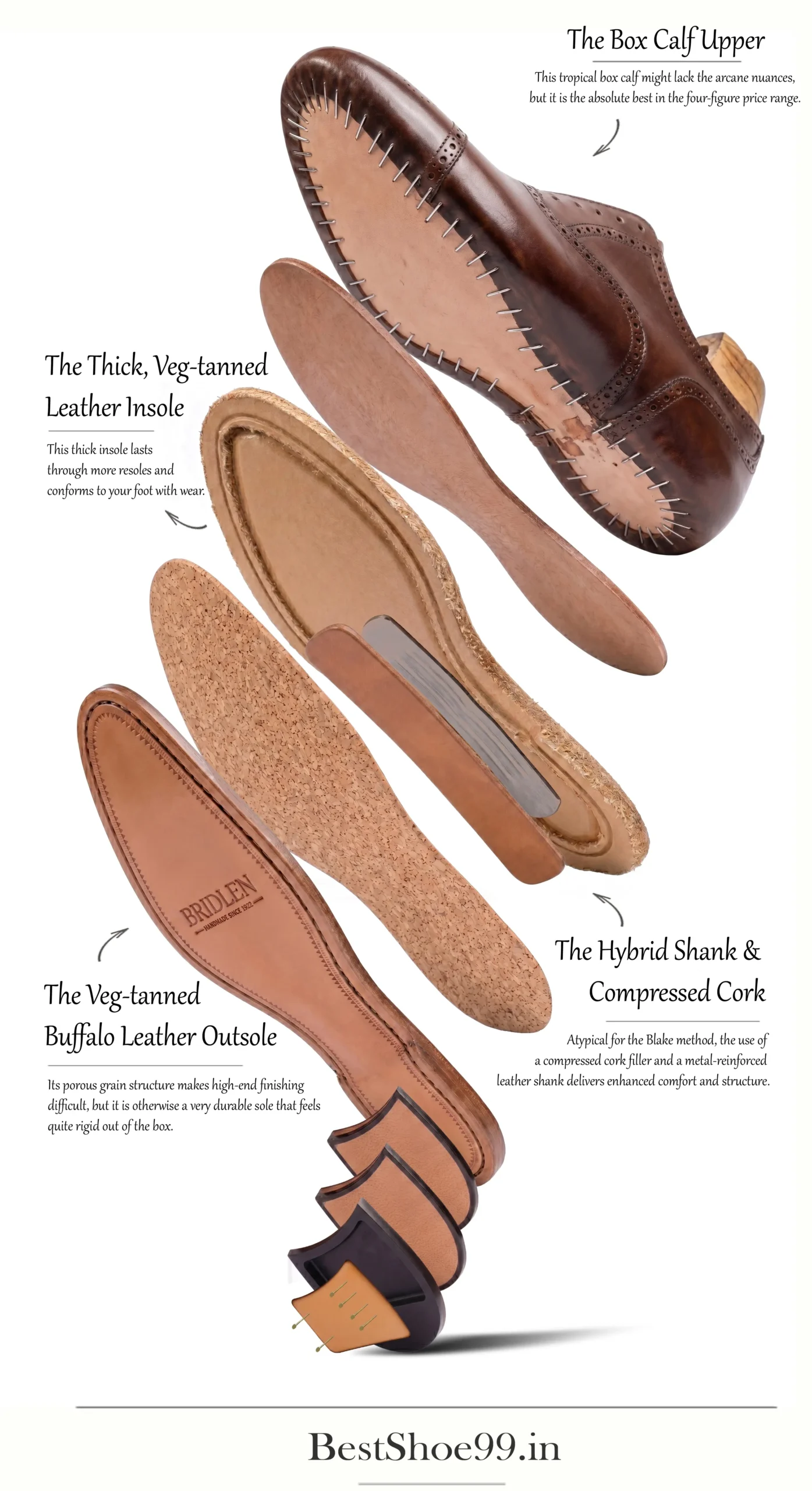
The most distinctive feature of Bridlen’s Blake construction is the layer of compressed cork and a hybrid shank seated between the insole and outsole—a structural rarity for this method.
Supporting the arch of the foot and preventing the shoe from collapsing or folding at the waist, a leather-and-steel hybrid shank is fixed between the heel and ball of the foot.
What astonishes is the presence of a cork layer within such a compact stack of leather, especially since the absence of a welt leaves no obvious void to house it.
Without the volume for a thick application of cork paste, the sole instead incorporates a thin, compressed cork sheet.
Because of the reduced density, this compressed sheet does not yield the same deep footprint over time. Think of that like a padding that keeps the shoe from feeling like walking directly on a hard plank.
Without being anywhere near as extreme as a Goodyear-welted sole unit, this refined Blake construction provides a solid foundation without compromising its sleek, graceful profile.
How repair-friendly is it?
It holds enough life to let us indulge the upper.
The ‘longevity’ argument—and whether it can be re-soled multiple times—often receives a lot of focus whenever someone makes a case for Goodyear welting over Blake construction.
Thinking of how even a poorly Blake-stitched pair packs a life of good two (give or take) years, before needing a re-sole, I wonder if modern society has the patience for the Goodyear welt. The touted benefits of a welted construction often don’t culminate for a decade.
Blake-stitched shoes can be resoled just like Goodyear-welted ones. A new sole can be sewn onto a welted pair using the same holes already present in the welt.
Because the stitching occurs inside the shoe, it is significantly harder to align a new sole with the original stitch holes on a Blake-stitched pair. In fact, the safe thing to assume is that it is inevitable to resole a Blake-stitched shoe without punching new holes into the insole.
The benefit of a thicker insole, one we get in this Bridlen Blake, is that it can bear more damage before becoming too perforated for the new sole to anchor to.
That’s how the repairability of different shoe constructions works in principle, but not all of that translates on the ground for a common user.
The primary appeal of resoling lies in its ability to preserve the personalized comfort and unique patina of a well-worn upper.
Resolability must be seen in context with the upper’s life, as very few leather types tend to last forever. While the box calf in this Blake-stitched line is undoubtedly high quality, its lifespan likely won’t exceed the number of resoles the shoes’ construction can actually handle.
A Goodyear welt makes the most sense for shoes made of museum calf or shell cordovan, since these leathers can last long enough to undergo many resoles. In this Blake line, the construction won’t fail before the leather does.
The Design & Shape
The design reflects Bridlen’s world-class proficiency. The shape doesn’t.
Unlike material and construction, these are the unaddressed aspects of a dress shoe that decide how that shoe will be perceived. The design and shape make a world of difference, which can be validated when many pairs are viewed in direct juxtaposition.
They do that crucial, but often underestimated, thing of closing the gap between what we see on screen and how we would experience it. It is aesthetics, a matter of judgement, that can not be talked about; thus, a good design and striking shape are hard to quantify.
The amount of time a shoemaker invests in design and shape could be a metric. However, those who try Bridlen at any level get to experience a fineness of design and shape that puts most shoemakers to shame.
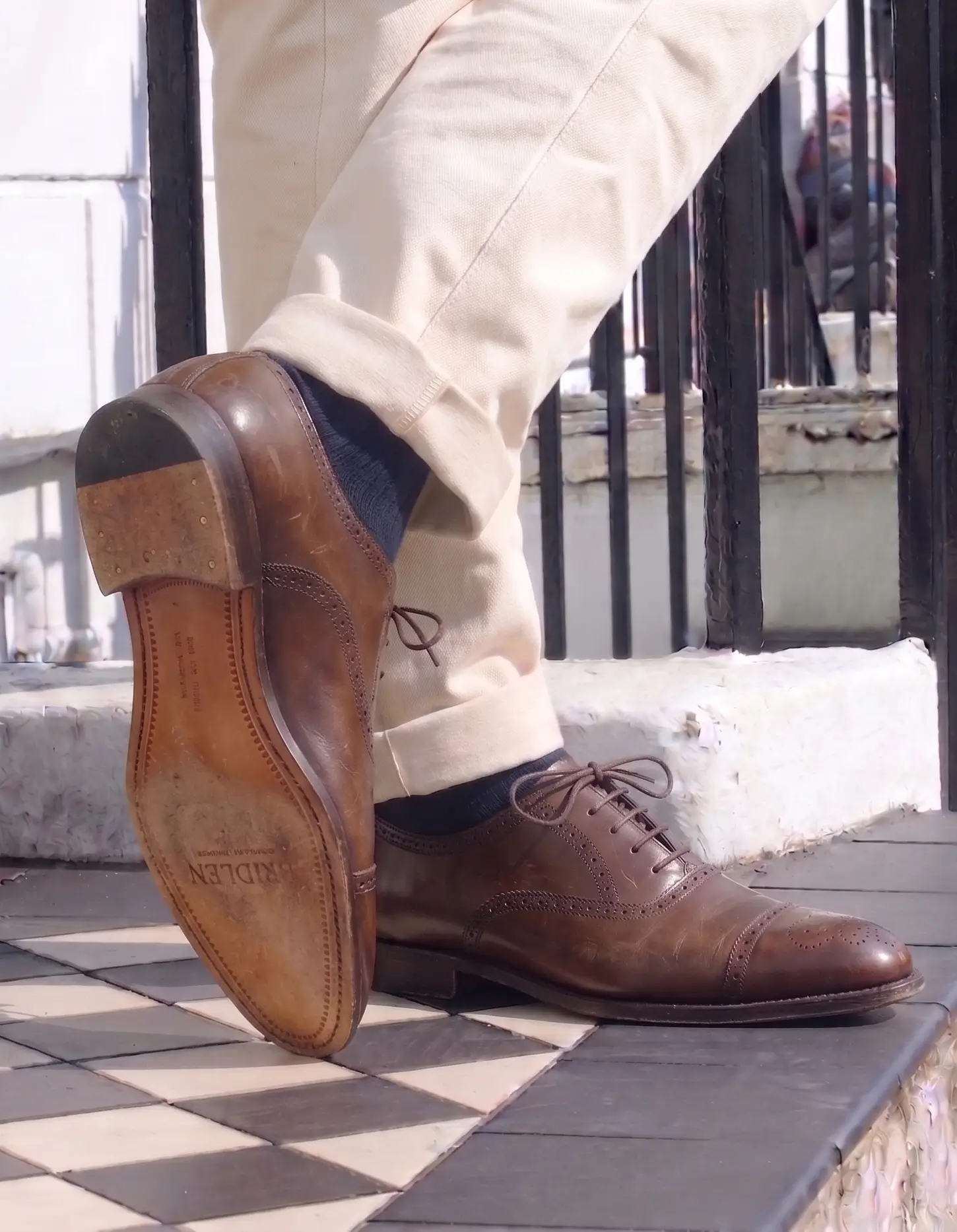
In terms of classic style, these brown semi-brogue Oxfords hit all the right notes. You will see the reaction in others: compliments from women, awkward questions from men. I haven’t found that either for any other shoe in such a price range.
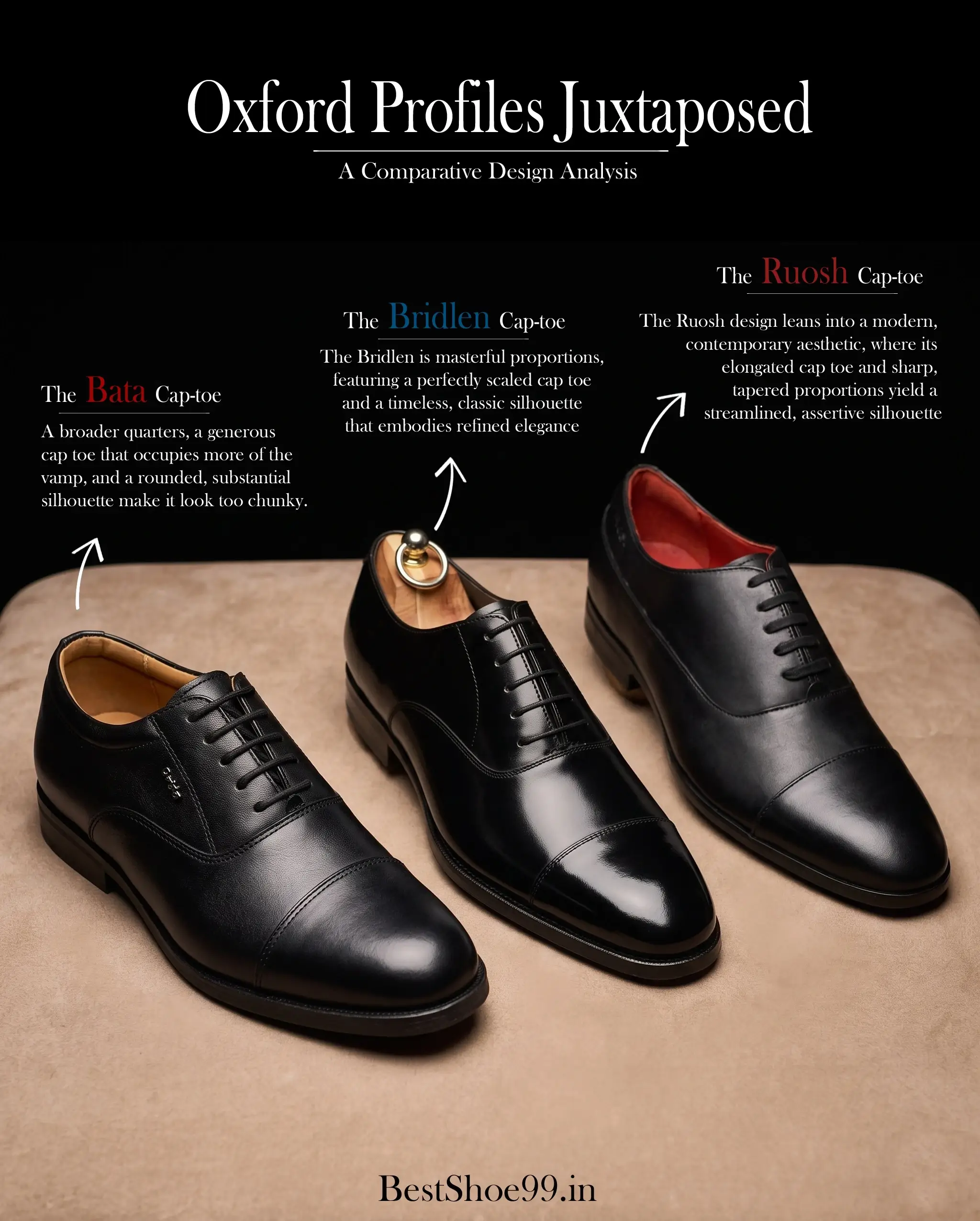
I reckon it is the design that worked here more than the shape. The design is classic. “Classic” has become so debased in modern parlance, but here, for this semi-brogues, it means Oxford that looks like Oxford should look.
A style like semi-brogue encloses a lot of room to end up like a hideous clump at the end of a trouser leg. It needs a lot of design hours and architectural balance to make it like a sleek extension of the foot.
There are a lot of design quirks to emphasize, but it is mainly upon the balance between the toe-cap, the vamp, and the quarters. It is often deemed limited to just its visual contribution, but there is a functional angle to design.
The toe cap, for instance, is purposely left before the ball of the foot in order to accommodate the flex point and natural bend. Along with the toe-cap length, designers use the size of the medallion to guide the eye.
Too intricate and it’ll clash with rest of the shoe. Too small and it’ll look lost. It is so much more than what initially meets the eye. Over decades of refinement, Bridlen achieved the Sprezzatura in design: To the lack of artifice, rather than its display.
“I’ve always said shoes should be simple and versatile,” says Simon Crompton of Permanent Style, “with the beauty coming from things like design and shape, rather than color or curved waist.”
The Shape Deficiency
That a sleek construction can not cover.
Design subtlety is budget-agnostic. It’s a lauded attribute that can be passed to flagship as well as entry-level collections, costing nothing to implement.
The shape, however, is an expensive undertaking. Parallelizing the last’s complex geometry over leather is gruelling and taxing task.
Gruelling because, after considering the material’s resistance, it needs to be hand-pulled around the last to extrude a sharper feather line and tight waist.
Taxing because the shape and curves call for time and care, which means added cost. It is difficult to reconcile the labor of a master craftsman with the economics of an entry-level line, particularly regarding the lengthy process of hand-lasting and shaping.
The lack of a pronounced shape in Bridlen’s Blake line seemed acceptable to me until PLNK’s Goodyear-welted shoes arrived. They completely reset my expectations for what is (shape-wise) possible in this price range.
Unfortunately, with PLNK now out of business, Bridlen’s lack of a refined shape must be viewed as a flaw rather than a deal-breaker.
How does this shoe fit?
Individuals with narrow feet should consider sizing down by half to achieve a more secure heel fit.
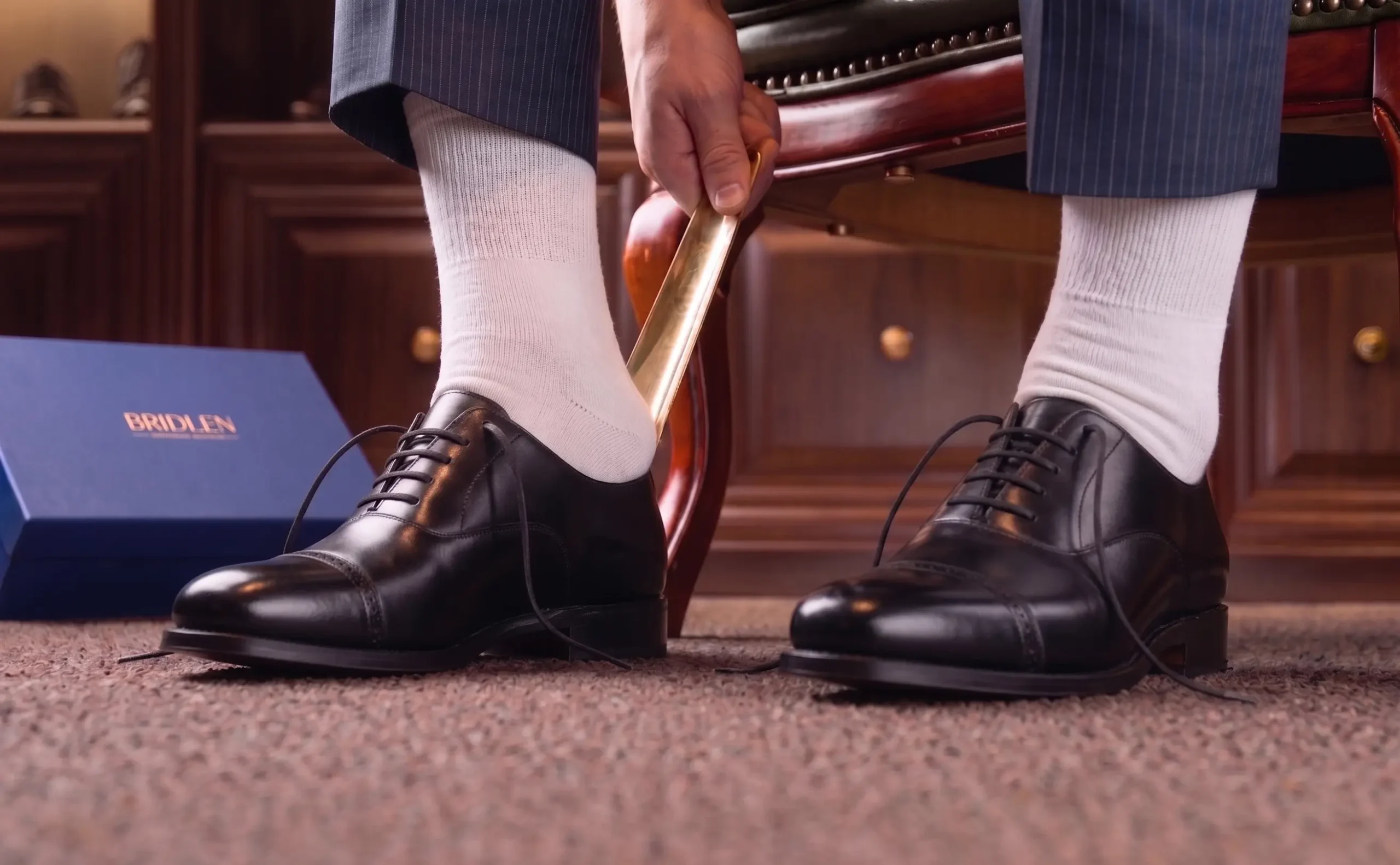
Shoemaker has to fit the mind as well as the foot. People vary in how they like shoes to fit, but not all necessarily realise how they’re different. And even if they do, they don’t know how to communicate it.
These semi-brogue Oxfords are my first pair of Bridlen, which I suspect is the case for most new customers. I chose a size based on my best judgment, as it is difficult to determine how a specific last will fit solely through photographs and charts.
I might not be able to defend how these Semi-brogue fits, as my standards for a well-fitting shoe have significantly matured over the last six years. Therefore, I will stick to obvious details rather than subjective observations.
The Blake line’s lace-ups and loafers are made on Bridlen’s most established Rui and Rufer last. They are structurally similar, but the Rufer offers a more refined fit for loafers. These lasts have been adapted and developed for so long that now they deliver in all respects.
It is common for lasts designed to accommodate a diverse range of foot shapes to feature a roomier, wider toe box. Those with wider feet are more likely to find this fit spot-on: snug and tight around the heel and ankle, but provide enough room at the front for the toes to move freely.
The Rui is known for its “upward Streak” from the gerth, which, in simple language, means a rising slope from the toe towards the opening. This clever shape engineering provides the shoe’s vertical volume without making the shoe look “chunky.”
The primary advantage of this additional vertical volume is twofold. First, it prevents the upper from compressing the toenails. Second, it creates a more elegant, narrow V-gap on Oxfords by allowing the facings to sit closer together.
While these features are ideal for high arches and wide feet, they are less suited to my flatter, lower-volume foot shape. Since these were provided complementary, I was reluctant to ask for a swap. Wearing them with thicker socks manages the extra room perfectly.
Is Bridlen Blake Line Worth It?
Who should (not) buy these Blake-stitched shoes?
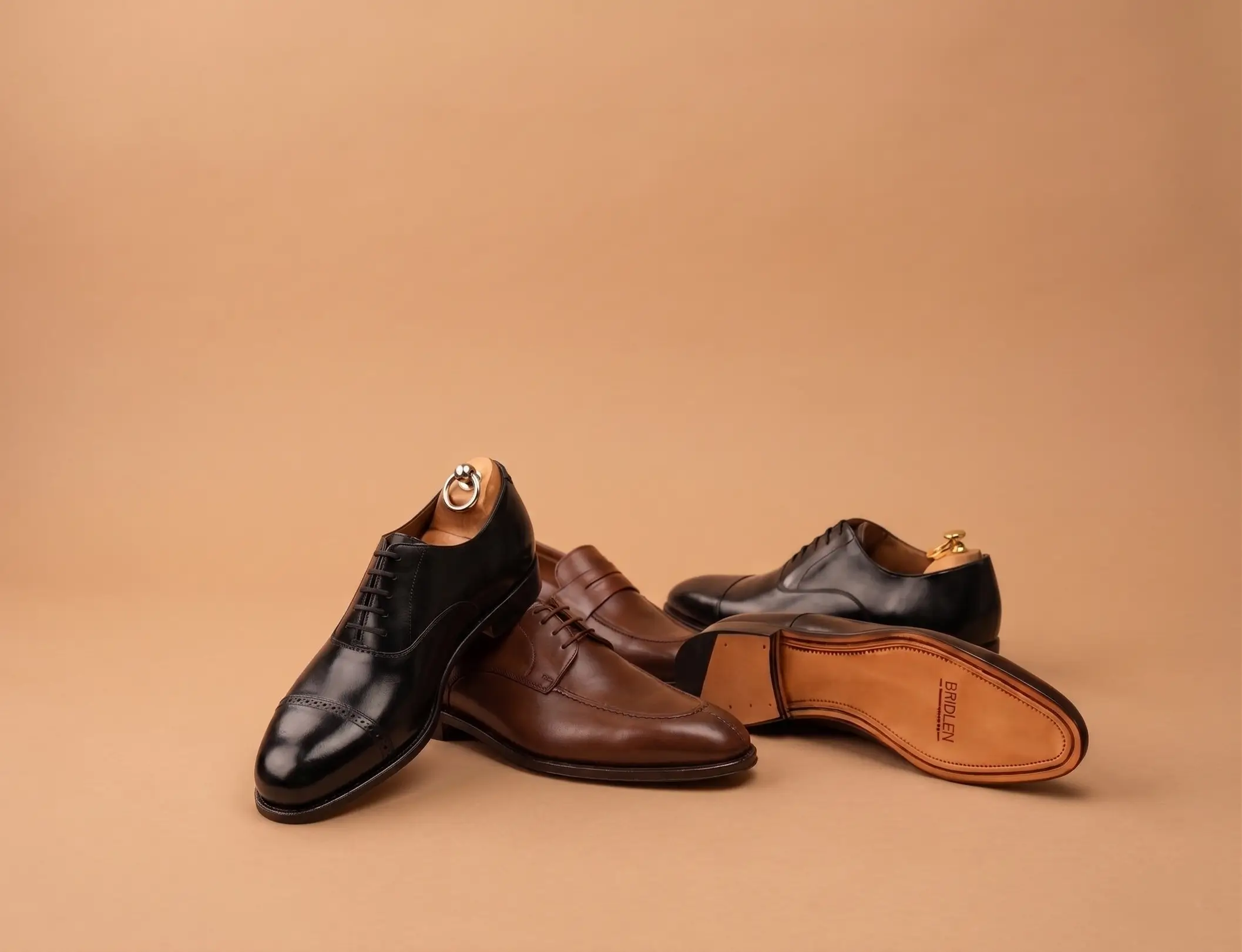
A ₹9,250 Blake-stitched Box-calf dres shoe. That, in anyone’s book, is still a hefty purchase, even so they are called “Entry-level” Bridlen. If “Buy the best you can afford” is a sense-making suggestion, the Bridlen Blake line might provide many budding aficionados.
At a price of ₹9,250, these are highly accessible to many people, many of whom consider that investment big enough to demand top-tier longevity and might want to put this pair off the charts to see if it can withstand punishment.
It is easy and natural for those who spend around a five-figure sum on a pair from a renowned shoemaker to think it will meet their wildest expectation. Dear readers, it simply won’t.
It is tough to get first-time buyers to understand that a quality pair of shoes is an investment that requires effort to look good and last years.
Its worth depends on your priorities. First, manage the following expectation. These are by no means unimportant, but are not the major reasons to buy the Bridlen Blake shoes.
Indestructible Quality: The key quality that men always associate with pricey pieces is that they last well. When great shoemakers talk about higher-quality shoes, they mean ones made from finer materials—but it is important to remember that these are often more delicate, even if they are built to a higher standard.
A decade of life is well within reach for a pair of Bridlen Blake-stitched shoes, assuming they have been treated with the care and attention they deserve. However, that is likely to happen with a pair made of Buffalo leather from the high street.
Superior Box-calf: This is the most exciting element, and I can see the appeal. “The very dense and interlocked fiber structure resulting in hair-thin creasing” is a trait that many consider standard to calf leather shoes. As I have detailed, this is not an inherent trait of calfskin.
The leather used in this Blake line is sourced from tropical calf; while it is tanned with radical authenticity, it lacks the dense fiber structure characteristic of cold-climate calfskin. If you are buying these strictly for the pedigree of the European calf, you might want to reconsider the Bridlen Blake line.
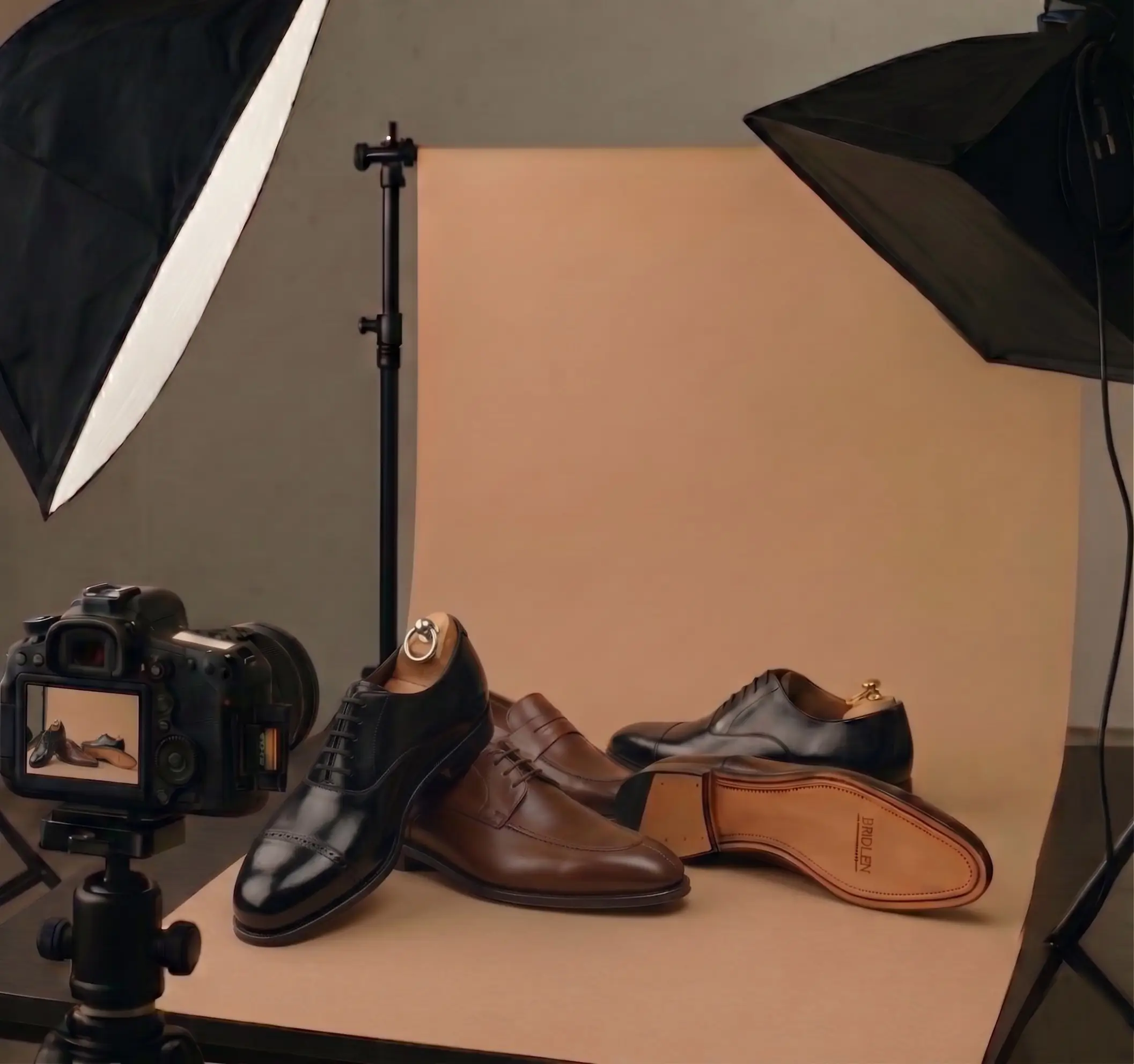
So, when do these Blake shoes really shine and emerge as the best choice for a buyer?
For me, it is the value achieved through the combination of quality leather, generous make, and a very good price. When you begin to search for dress shoes under ten thousand rupees and strip them down to their essence and components, you start to realize how different (actually better) these Blake shoes are!
The recent influx of shoemakers offers great value in welted pairs, but it will add substantially to the price and is unlikely to see much wear. Bridlen Blake line offers a very lucidly appreciable set of components at a very justifiable price.
It’ll last longer, with decent care, than most owners will ever ask. The leather and design possess a level of refinement that exceeds the standard of formal footwear, with more discernment than most people would have the nerve to test.
It may not be the last word in sophistication, but there’s huge satisfaction in having a shoe that has enough substance to be held as a dress shoe better than the rest.
A formal dresser putting nine thousand on footgear, I know, deserves it the most. It’s worth it. Just wear these in front of the audience, who have probably never seen a shoe this beautiful.
What are the alternatives?
The only real competitor has been discontinued! However…
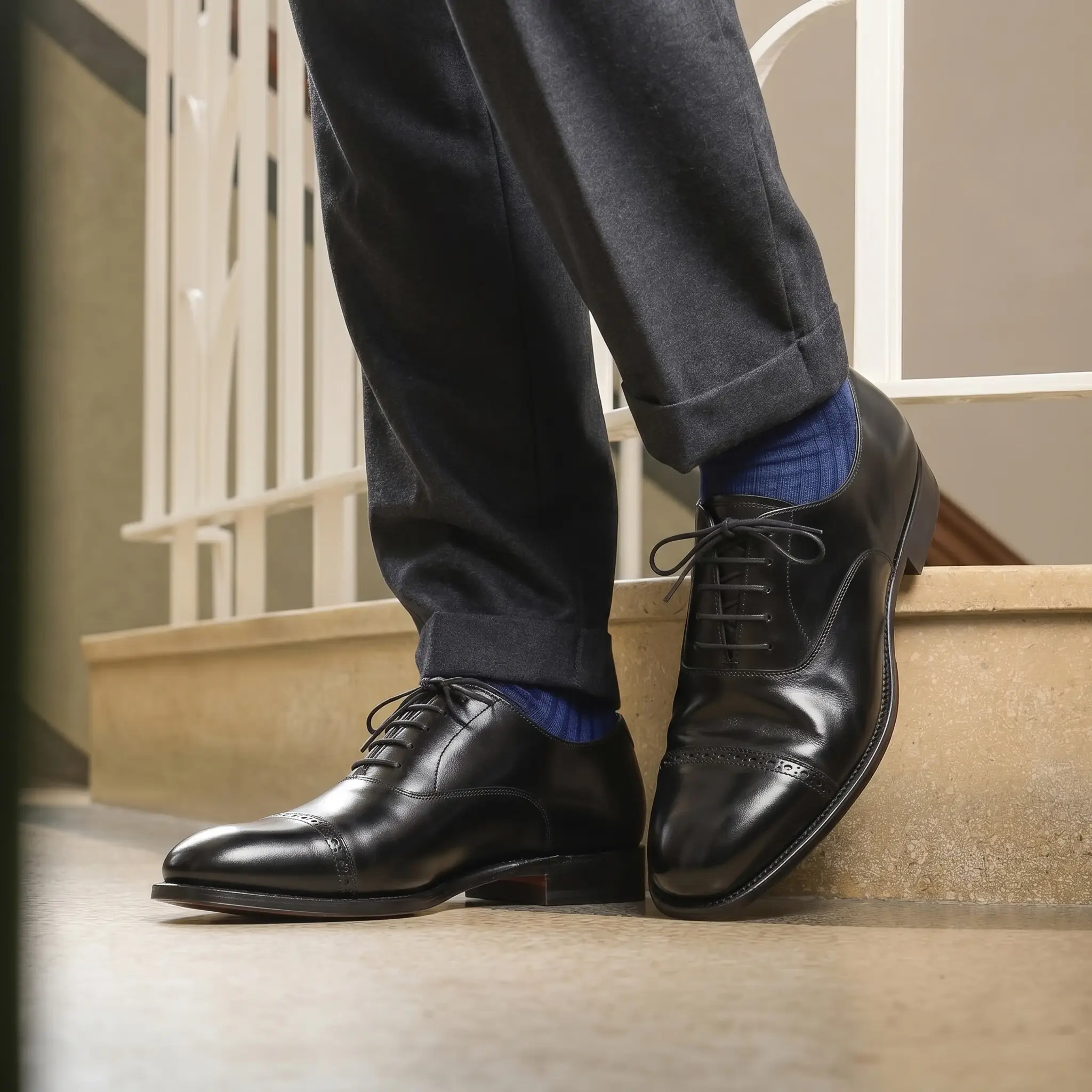
Whether viewed as an introduction to the brand, an entry-level collection, or simply the most approachable point of entry, the pairs from Bridlen Blake line came standard with a rudimentary paradigm.
I own at least two pairs from every line Bridlen offers. That amount of experience might qualify me to confirm that the Blake line is Bridlen at its most compassionate shape.
Recognized globally as a standard for value, Bridlen distills its suppliers’ alliance, technical know-how, and financial strength to create a commensurately premium line that can trouble even the most justifiable price-to-value ratios.
I write about shoes for a living and firmly believe that consumers are best served when a high level of competition forces new makers to offer quality for a little less or existing ones try to improve their quality at the same price.
The quality that Bridlen Blake line brought to the under ten thousand bracket is somewhat unchallenged: A state that I repel for the above-mentioned reason.
PLNK, a much smaller operation than Bridlen, has managed to offer a better price-to-quality ratio through its Goodyear-welted shoes (which were priced at around eight thousand rupees), but that was a fond memory gone too soon.
After PLNK discontinued, Bridlen Blake line is the only standard by which all its under- ₹10k peers are measured. Unfortunately, those peers nigh on always come off worse. The likes of Pellé Santino and Kozasko might lack either material or make, but represent the closest analogs to the Bridlen Blake line.
Pellé Santino Goodyear-welted Line
Achieving Goodyear construction with local materials for under ₹8,000.
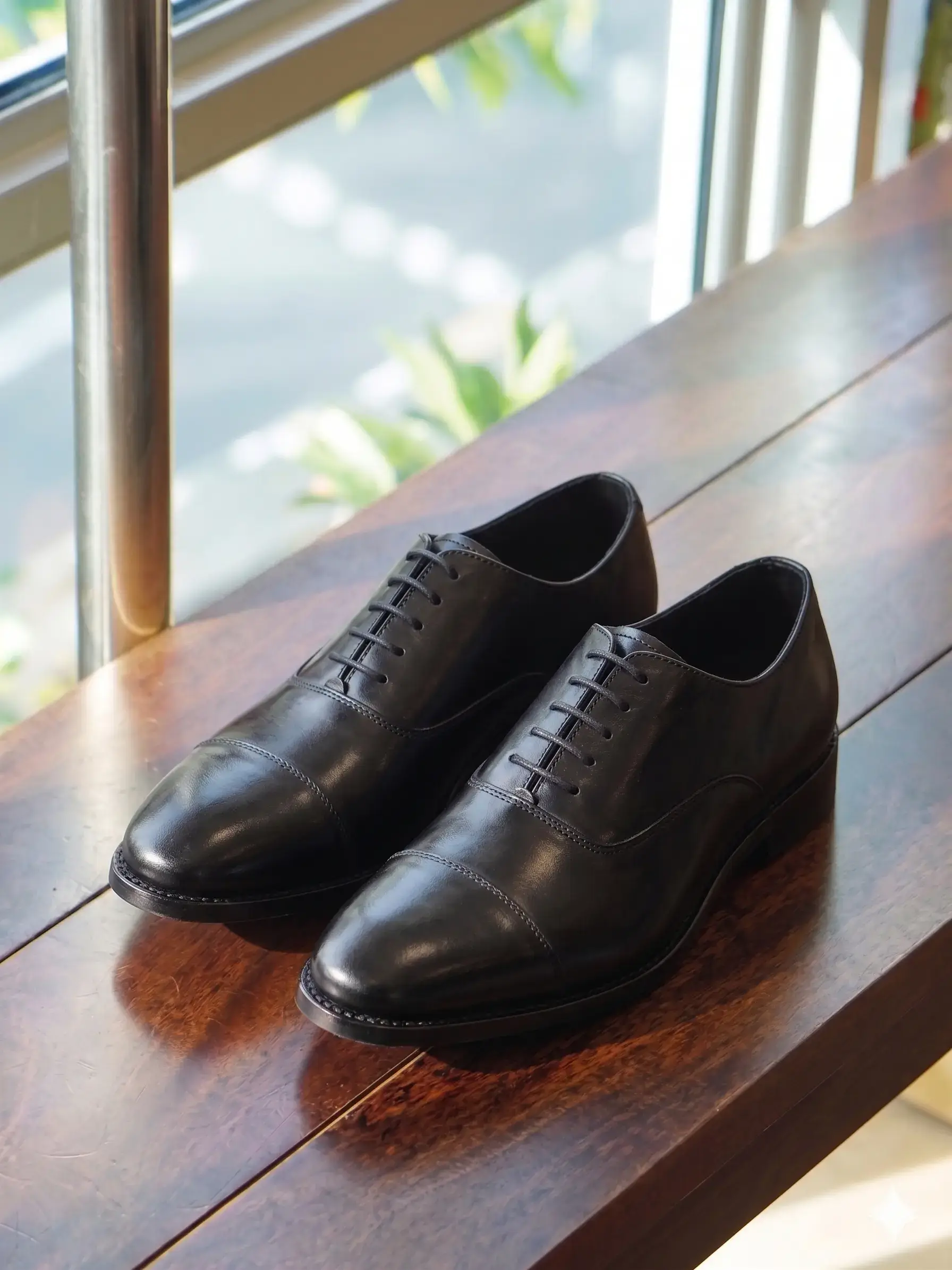
The shoe construction orb has one thing working in favour of the value seekers: it has a lot of room for smart sacrifices. This recommendation is the cleverest harvest of that flexibility.
I had two pairs of Goodyear-welted shoes from Pellé Santino—a black buffalo leather chelsea boot and a brown cap-toe Oxford. Everything about those shoes was covered in detail in a separate reading.
While ₹8,000 a pair is nobody’s idea of cheap, in the context of Goodyear-welting, it can be an improbable deal.
Representing the entry-level benchmark for value, the Gurugram-based direct-to-consumer brand Pellé Santino offers a compelling range of both Goodyear-welted and Blake-stitched footwear.
Generally, such a value is feasible when renowned gussets are used to distract from all the shortcuts the maker has taken elsewhere. Foregoing these compromises, Pellé Santino constructs its Goodyear-welted shoes using available native materials.
The full-grain buffalo leather upper, mediocre design, neither a tight waist nor a sharp feather line, and chrome-tanned leather outsoles. None is as distinctive as the likes of Bridlen or BLKBRD, but it can express the strength and style of Goodyear construction.
Kozasko Blake Oxfords
For those who desire suede and two-year assurance.
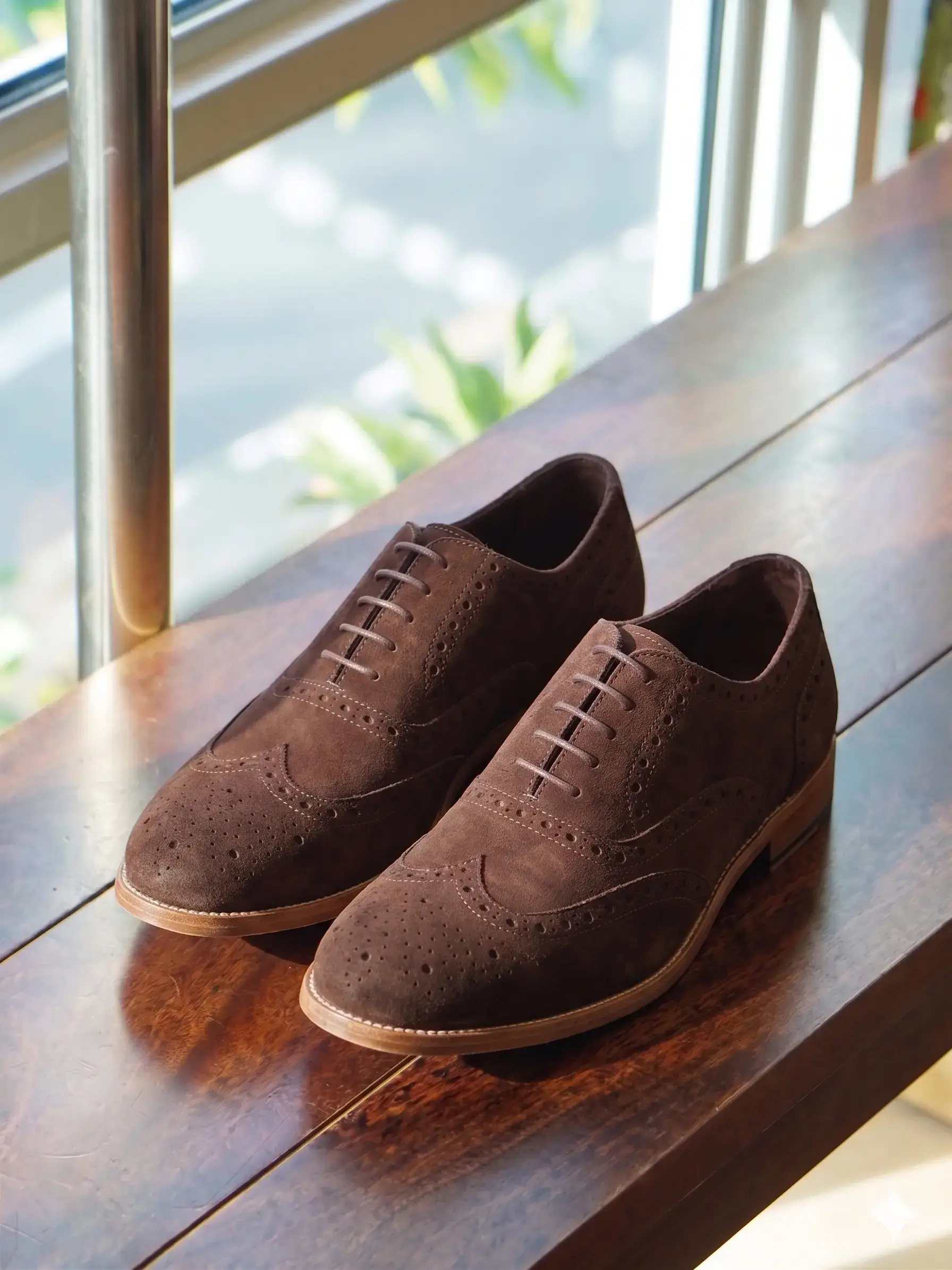
Unlike Bridlen, Kozasko Blake stitched its shoes in the most standard manner, using a lower echelon of materials than what Bridlen uses for its Blake shoes. But Kozasko does so with much more confidence. A confidence that they quantify and transmit in the cover of a two-year warranty.
This feature speaks volumes—underscoring the brand’s deep confidence in both its craftsmanship and its materials, robust quality control, curtails the fear of making an expensive mistake, and freedom to use them without the “kid-glove” anxiety.
On to the shoes, the split suede creating the uppers is buttressed by—in the context of strength and structure—resilient veg-tanned (drum-dyed) leather lining. The suede is more subtle than the obvious alternative, leather.
The shape doesn’t astonish, but they are so painstakingly designed and perforated that you can’t help but glance back at them after a full day of wear.
Finished with a very textbook standard Blake construction using an Argentinean leather outsole. All combine to form a dress shoe that’s very painless to own.
You Might Also Like


How can we improve BestShoe99? Got feedback?