I do try to avoid excessively costly boots and to seek value in my suggestions.
May 5, 2022
(Updated on: March 12, 2026)
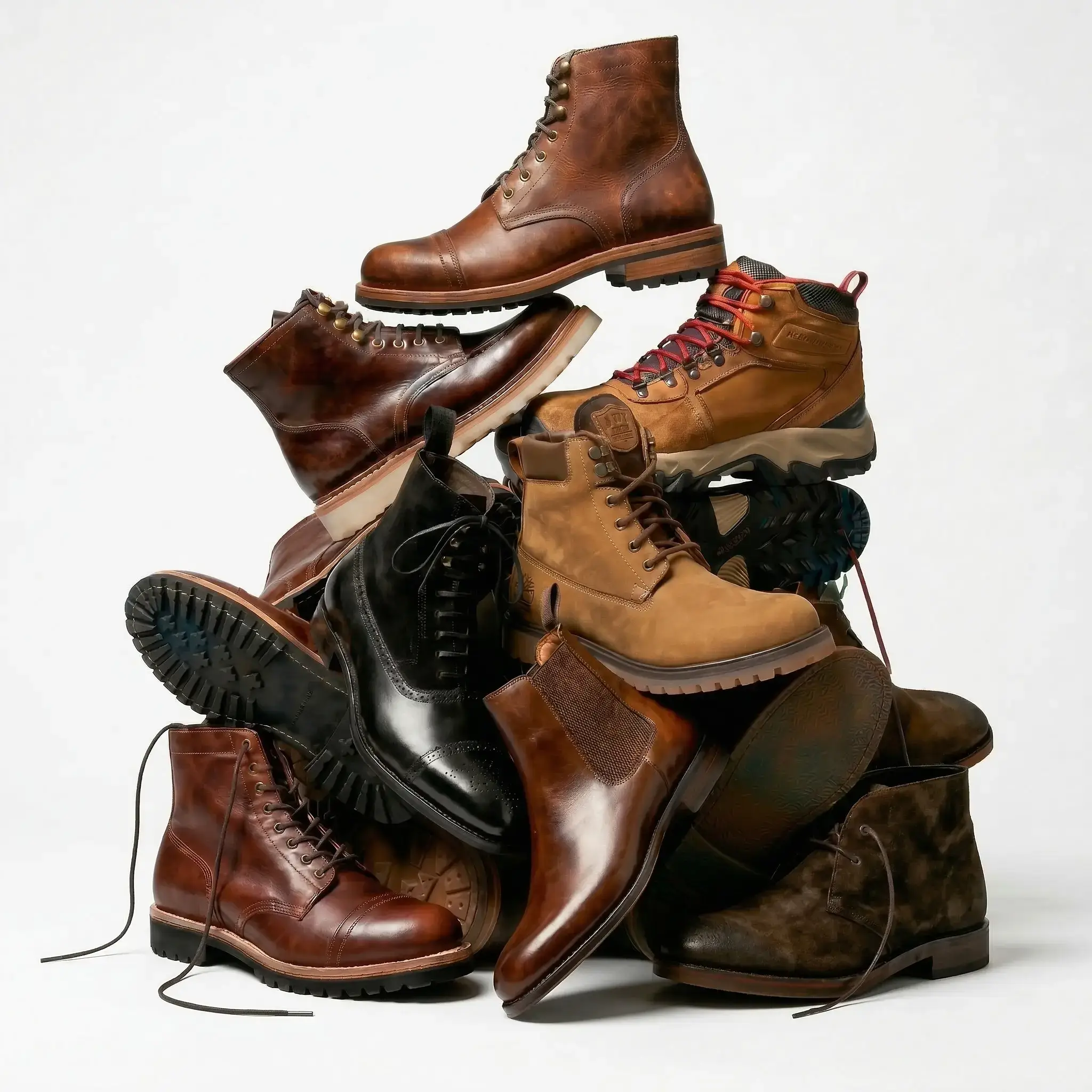
A decade ago, ten or fifteen pairs could convincingly constitute our nation’s best boots for men. Today, isolating the best examples in one go would be an untenably narrow representation of a landscape that is brimming with many more styles, forms, qualities, and purposes.
From bar-setters of Bridlen and Black Bird to resilient serviceable of Craft & Glory and Kozasko, from the hackneyed of Woodland and Red Chief to trailblazers of Clarks and Jodhpur, there is an astounding diversity of boots available to us at this moment.
Due to the choices available, I believe, we get better value for a ₹5k boot now than, say, 10 years ago, despite inflation. It is a good time to be a consumer in a landscape where new makers are trying to offer better quality for a little less, and existing ones are trying to enhance their quality at the same price.
However, choices are good only if you can choose well. And because forty-seven of the sixty-one pairs of boots I have are handouts, I have not paid nearly enough attention to the dangers of (selecting from) too many choices.
The course of developing an in-depth guide on how to buy boots has taught me that the ❛why❜ behind the need for a boot is a good starting point. Identifying the need helps to narrow the selection to, say, a style.
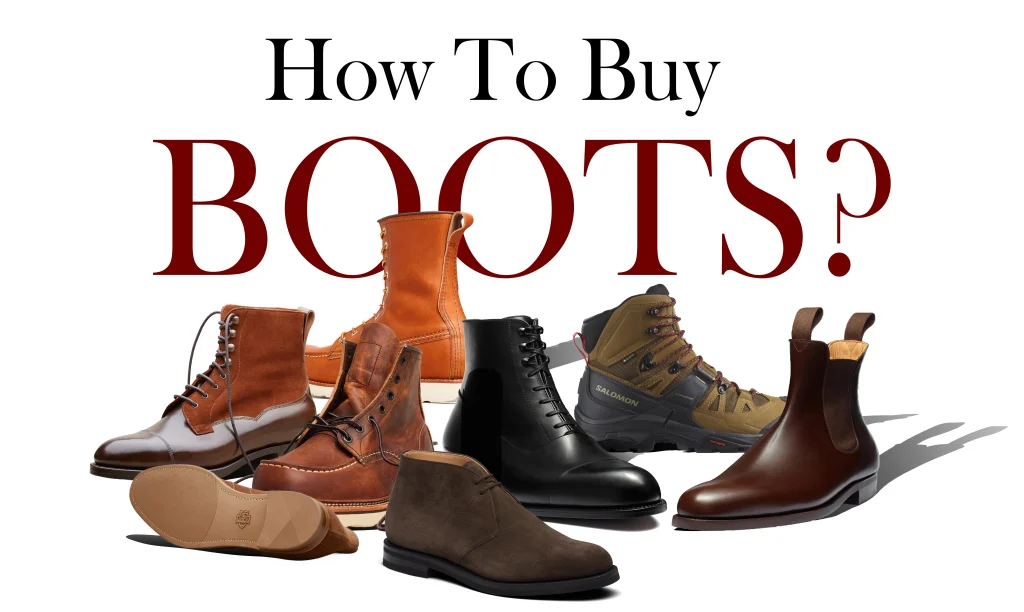
And because almost every boot style carries enough good options to merit a dedicated list, the idea here is to provide a single reference point for the best options we’ve previously covered. Each entry below is paired with a link to a list showing equally good alternatives.
Craft &Glory Combat Boots 6″
Locally sourced all the essentials of a perfect boot to keep the fee frugal.
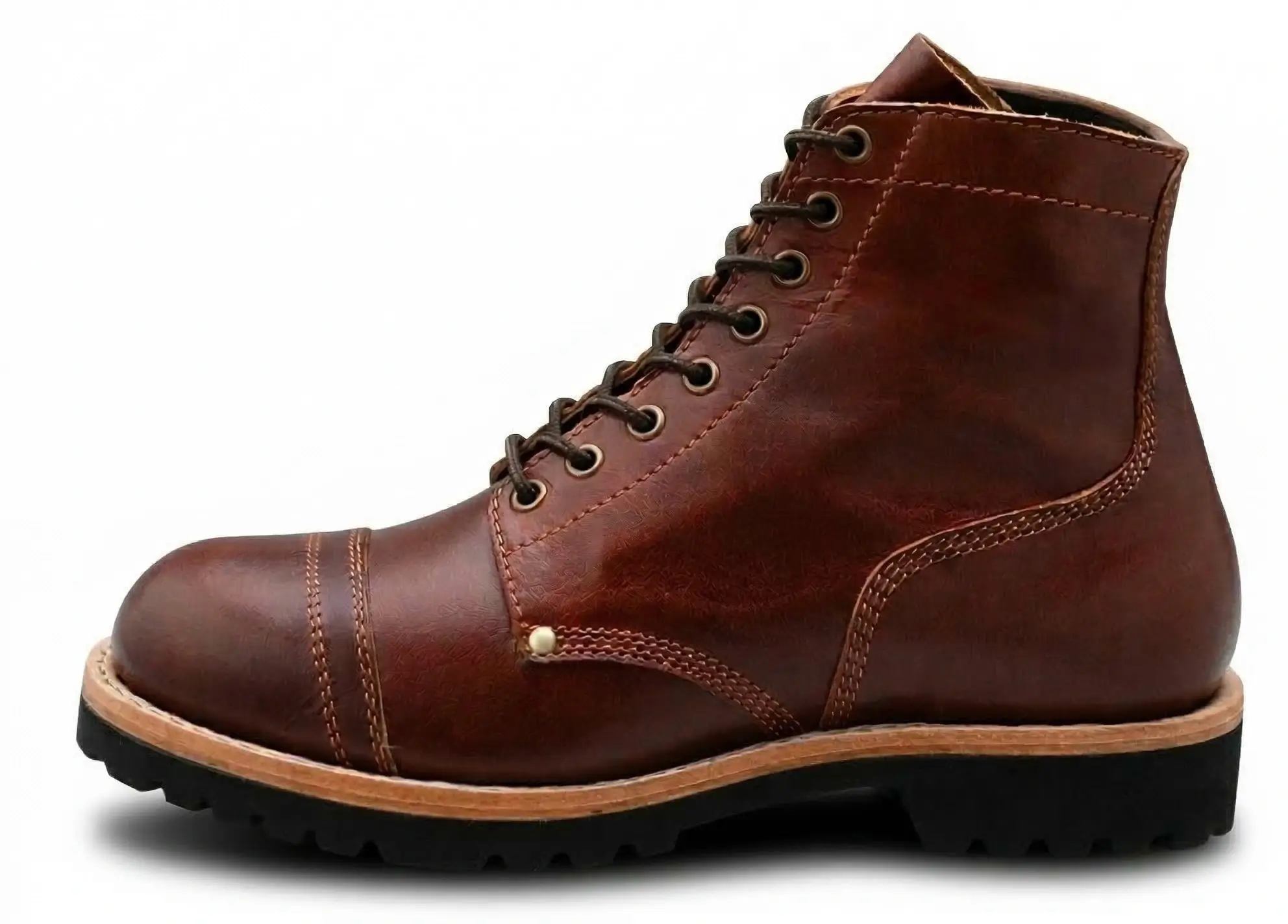
The goods
- Very boot suitable pull up buffalo leather
- Goodyear-welted bottoms
- Manufacturing & material warranty
- Great value
The not-so-goods
- Screws attaching the heel might irritate.
- Stitches running over the soles’ lug
The toe box might feel too roomy for a narrow foot. But the heel and rear hold remain secure and well-supported.
After giving some real time (and effort) to break in these Combat, its comfort reveals itself as a patron of structure rather than softness.
Good four years of pristine look and rugged use for those who can show them decent care. The leather sag is inevitable, B.T.W.
Leading with a style that conjures when we think of a boot. Among all the Boots I own, Craft & Glory Combat 6″ sees the most wear purely because it withstands my rough use while looking pristine.
A Waxed Full-grain Buffalo leather upper, Goodyear-welted nitrile rubber outsole, not stunning but accommodating last shape, plastic stiffeners, carefully put together at a small atelier in Gurugram, Haryana, that many won’t regret paying ₹12k for.
I agree, it is a considerable investment for a pair of boots. While this offers options that outperform in appearance, longevity, or comfort individually, the C&G Combat manages to deliver the right balance of all three. The maker quantifies their trust and claims by granting a two-year warranty.
After the Moc-toe and Captain, the Combat is my third pair of Craft & Glory. Thus, enough wear and findings to merit a separate coverage revealing the true quality of its make and material, how the fit evolves, and what else to expect.
That’s a recommended read if the quick summary of its highlights below isn’t enough for you to decide on the ₹12k layoff.
.01
The Goodyear Welted Sole Unit
Understand Goodyear welting, as its prestige can’t be taken for granted anymore.
Boots’ construction—especially how the sole is attached to the upper—determines how much of the material’s potential is leverageable. For example, the beauty and strength of full-grain leather are worthless when paired with a glued sole.
The best boots for men derive their strength and comfort through stitched construction. The C&G Combat boots are built using the most widely marketed construction of them all—Goodyear Welting. We have covered it in a dedicated post here, in the Shoe Case section of BS99.
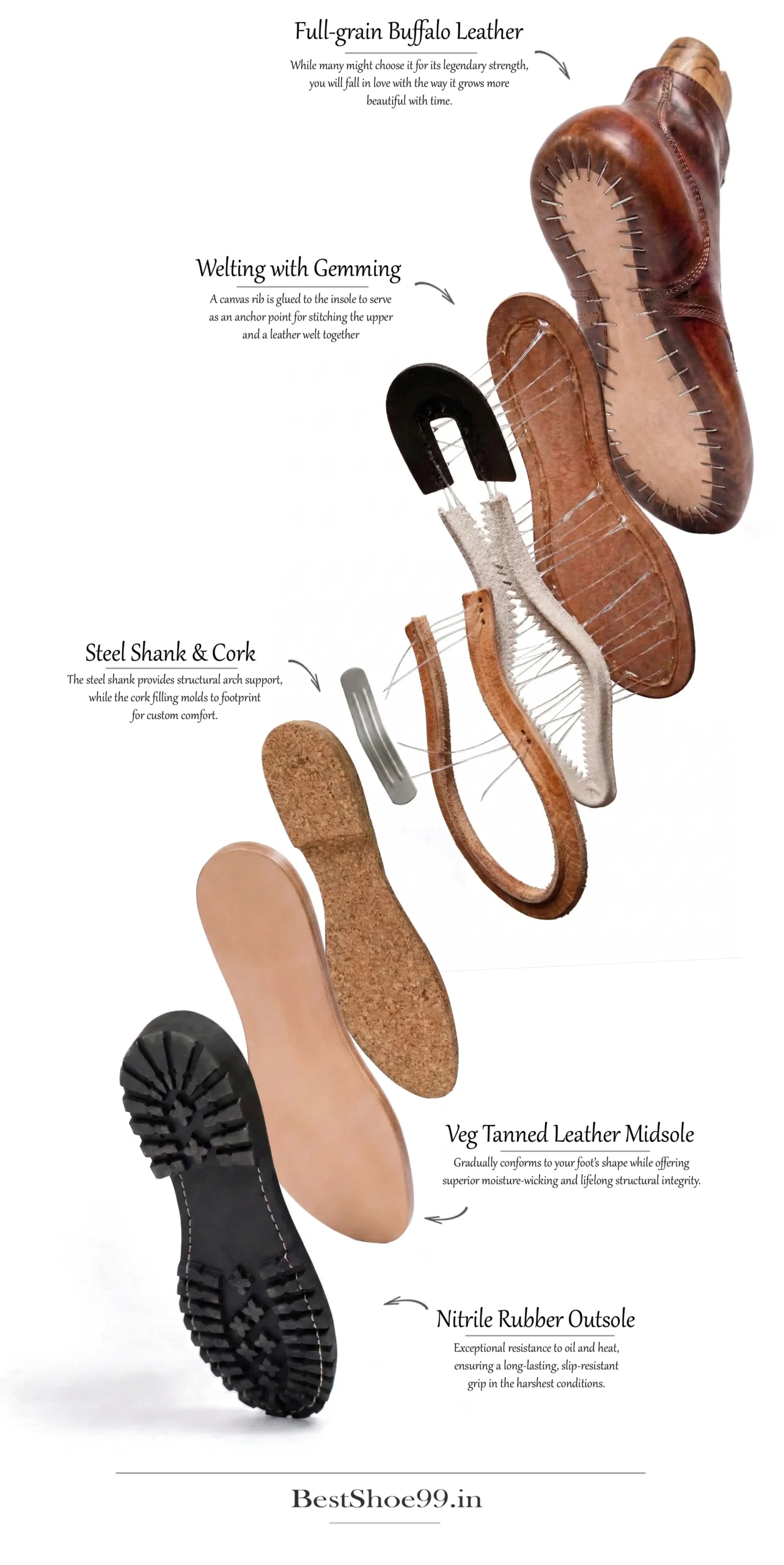
But in brief, a Goodyear welt involves running a lockstitch through the upper, insole, and welt, while an entirely separate stitch is used to attach the outsole.
This double-stitch reinforcement is enough to deem a pair Goodyear-welted; otherwise, there is so much more that this half-inch space packs, ranging from cost-effectively quick compromises to time-consuming, costly authentic methods that define what Goodyear welting actually promises.
How authentic is the Combat 6″ welting?
The handwork is apparent, but one can’t dismiss the quality. Very boot appropriate.
Craft & Glory’s credentials lie somewhere in the middle of the range mentioned before. The compromises are mostly in the areas that didn’t do much in the context of boots, except for the length of the welt.
I don’t think anyone would prefer a neatly finished heel over a full (360°) length welt work on a boot. Looks matter, but not at the expense of extra resilience. Otherwise, the Combat has a sturdy, thick three-quarter leather welt which could easily take four (if not five) resoling.
The leather midsole, steel shank, and cork board are integral to the comfort architecture of these Combat boots. Initially, the leather midsole accepts pressure, develops impressions, and beds into the cork board, creating a custom footbed–like feel over time.
The thicker leather used in the sole of these boots is likely to put your boot break-in abilities to the test. Thus, give these boots a full six weeks of wear before forming an opinion on their comfort.
How effective is the Combat’s Outsole?
Nitrile rubber excels in hot, slippery conditions, but is less effective in the cold.
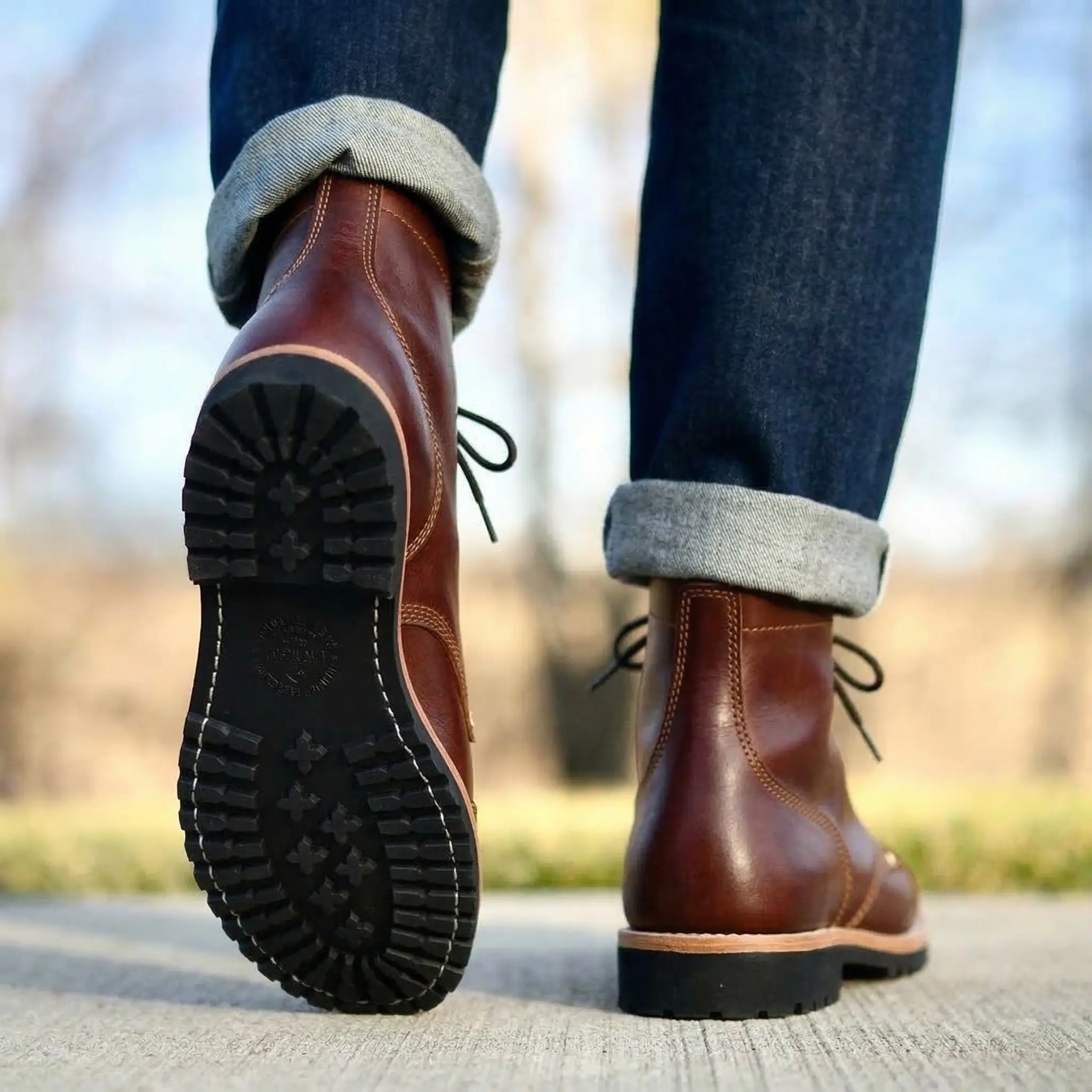
The support and structure of the steel shank become significantly noticeable as the leather becomes softer. However, the Nitrile rubber outsole is not forgiving at all.
Although Craft & Glory aren’t the only bootmakers in India that offer a full Nitrile rubber outsole, none of them do Nitrile soles at this price.
The fittings in Korea were OK. The finish of the outsole was good by the time we got used to the bulk of the boot.
In real-world use, it can withstand temperatures up to 300°C and perform reliably on acidic and oily terrain. While it’s commonly claimed that nitrile outsoles underperform in extreme cold, I haven’t had the opportunity to test this myself.
Nothing within the sole unit, when viewed in isolation, stands out particularly. The smart arrangement of leather and rubber soles creates a synergy, a sole that conveys a sense of completeness beyond what its parts might have suggested.
This smart hedge against elemental idiosyncrasy is why we are recommending Combat boots over their renowned Ranger boot, despite the latter featuring a stacked leather heel.
.02
The Material
Full-grain buffalo leather may not yet enjoy sartorial acclaim, but it appears to be an exceptional material for boots.
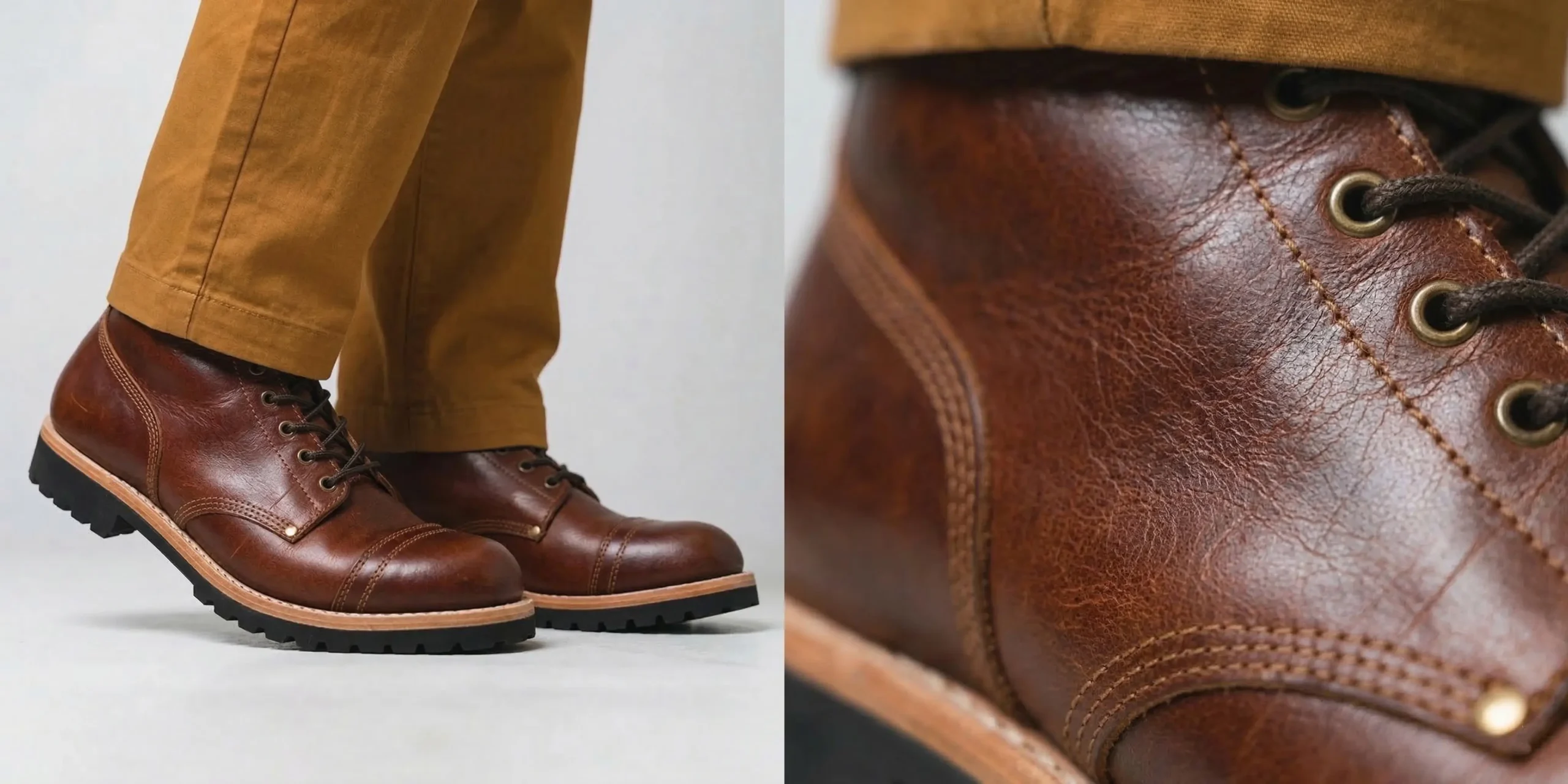
Through reviews, we seek validation and self-affirm that we are making an informed purchase.
Despite thorough research and even in-person inspections, we all buy leather goods with crossed fingers, because, thanks to modern manufacturing advancements, most leathers (synthetic or real) make a striking early impression—at least for the first few weeks.
The buffalo leather used for the uppers of these combat boots lacks the coverage when set against delicate and costly calfskin or cordovan. The very name can put off the urbane—tell them something is of ❛bison❜ leather rather than buffalo, and they will look at it in a different light.
Buffalo leather is so practical. Its two key features, as regards bootmaking, are its coarser open grain structure and strength. The first makes it look rugged, and the second makes it practical.
Because it absorbs oils and cream pigments so readily, this leather develops a beautifully supple character over time, despite its thickness and resilience, which is one reason I chose these boots in saddle tan.
Rigged with Pull Up treatment.
Quickly explain why this treatment elevates the leather from good to great.
The lack of a refined finish, uneven patina, and tendency to sag are what often put people off buffalo leather. Still, none of these qualities make it any less suitable for being proper boot leather.
Higher moisture absorption and lengthy drying time, however, remain the primary concerns with boots made from buffalo leather.
The infusion of waxes and oils keeps the buffalo leather in these boots from becoming a genuine turn-off. Stridewise goes into depth on what ❛Pull-up❜ treatment is.
Briefly, hot oil emulsions and natural waxes are infused into hide during the tanning process, which, when pulled, folded, or stretched, lighten as the wax disperses.
Apart from improving the leather’s water resistance, this treatment brings greater depth and dynamism to the saddle tan color.
.03
The Price
I cannot mark ₹12,000 as affordable, but this is the least serious bootmaking cost.
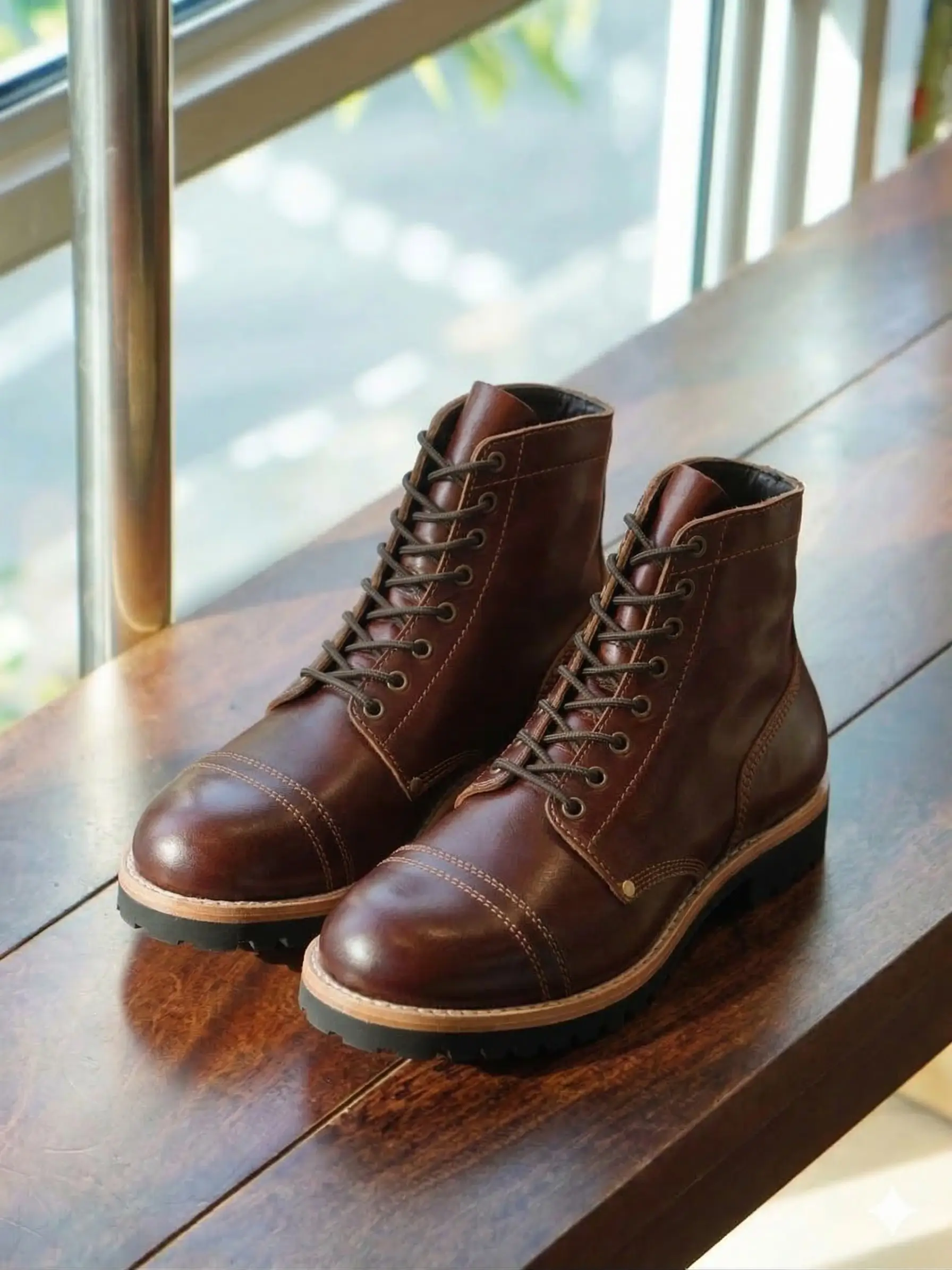
We are convinced that Goodyear-welting is an expensive and lengthy form of bootmaking. That popular association largely comes from the media and marketers.
Indeed, it is lengthy, but that does not translate into costly. It depends on how expensive the maker’s labor market is. I’m not claiming that an underpaid laborer made every low-priced good.
Even when executed by highly skilled artisans, it is economical to finish a boot in a country with a lower cost of living.
Many Indian Goodyear-welters, one that never got covered, exist merely for their foreign outsourcers.
Thus, it’s difficult to believe that a significant portion of the ₹12,000 price is spent on welting these Combat boots.
A full sheet of pull-up, full-grain buffalo leather—sufficient to craft a pair of boots—typically retails for around ₹3,500.
I’m dissecting the price to describe that instead of giving up on markup, Craft & Glory has conquered the virtues of crafting boots using the finest artisans and materials our country has to offer.
Neither these boots nor the maker’s bootmaking principles are articulated to satisfy outside forces or to critics’ notions of what is proper and desirable. Function-led bootmaking.
You Might Also Appreciate.
Kozasko Work Boot
It’s essentially the same boot in a more refined upper and complete welt.
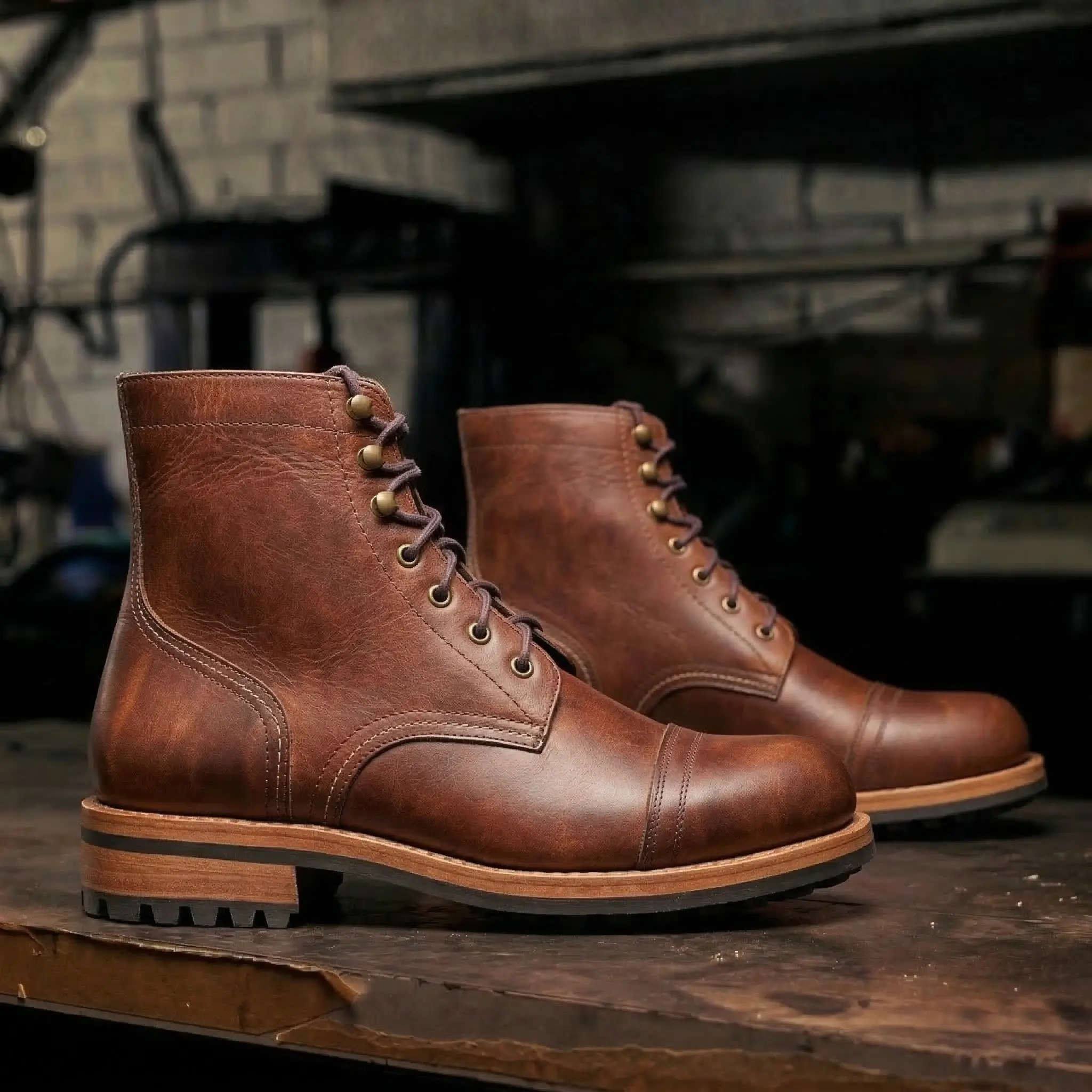
For the same price, Kozasko offers the good-natural boot spirit through a full (360°) Goodyear welted bottom and a relatively sophisticated upper. They achieved this decisively by preferring a less bulky leather for the upper instead of an overly thick one. But this trade-off does not limit them from being a sophisticated work boot—it won’t mind the abuse of everyday life. Kozasko’s two-year warranty covers every type of damage.
SeeandWear Safety Boots
A genuinely capable but significantly cheaper option.
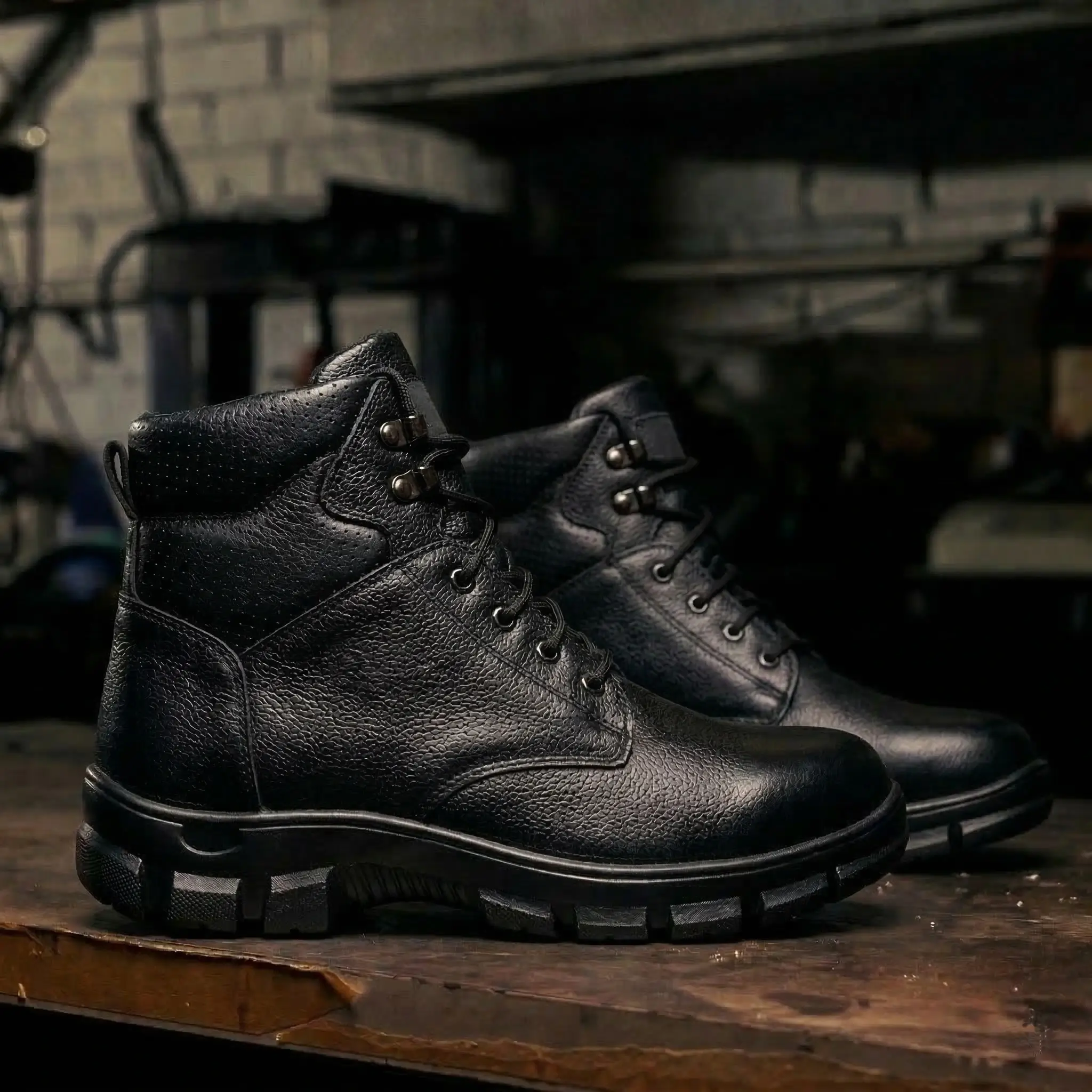
Those who don’t/couldn’t care about/for an opulent leather and need a stitched sole for functionality rather than repairability. This is a tool from SeeandWear. Buy a pair for ₹1,300 and beat them up, then repeat as the years go on. Sure, it won’t win anyone over with its looks, but you’ll be laughing at them when the going gets sketchy.
Woodland Camel High Ankle Boots
Critics deride them, but I haven’t encountered
a single unhappy Woodland user yet.
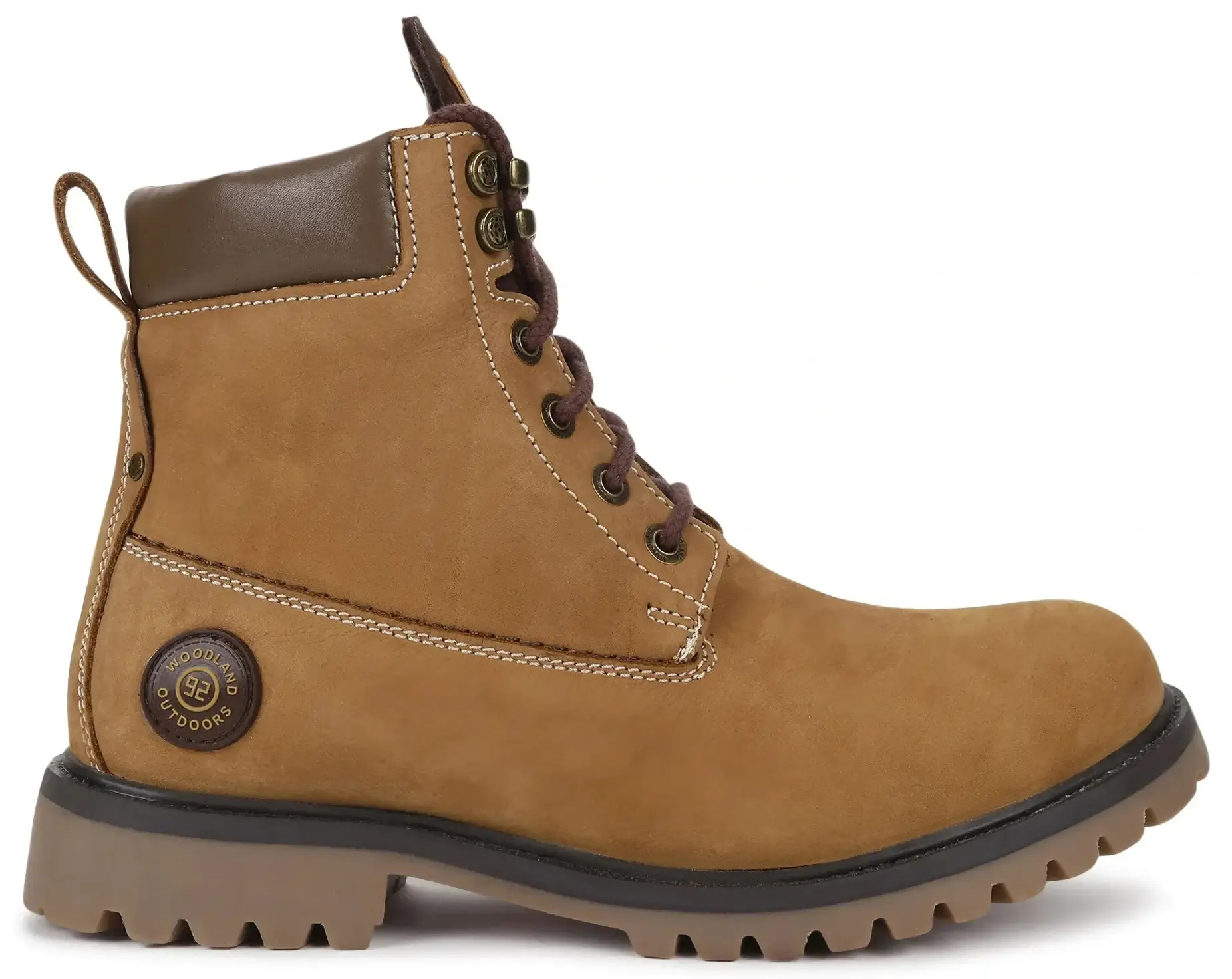
The goods
- Compression-resistant TPR outsole
- Little to no break-in
- Good value
- Physical store to assure fit
The not-so-goods
- Chunky
The desired fit can be swiftly achieved at their physical store. The generous padding accommodates a wide range of foot shapes without leaving excess space.
The soft interior doesn’t need a thorough break-in to untie peak comfort. The foam and padding deflate/lopside after, say, a month of proper wear, thus, the comfort degrades and flattens at one point.
Durability is subjective, depending on what stage you consider a boot dead. The cushioning diminishes noticeably within four months of use, and after roughly three years, the upper begins to tear at the vamp.
Unbeknownst to the materials or technical elements of bootmaking, the first time many of us consciously bought a boot might be a Woodland. Their Boots do not comply with conventional bootmaking benchmarks, but they affirm the belief that one doesn’t need to spend big to get a lot of functional capability.
Selling four pairs every minute, they led the class; this boot domain. That’s mainly why they can produce an excellent value, as they have streamlined the manufacturing of boots for so long that they can turn out good-quality boots for a very low price.
Shouldn’t we appreciate Woodland’s extensive store network, which makes achieving the desired fit far easier? The details of what makes these Camel Boots one of the best boots for men were laid out in this article. For a concise and quicker reference, I’ve outlined it below.
.01
The Material
They own tanneries, and the privileges are evident in the price-to-quality ratio.
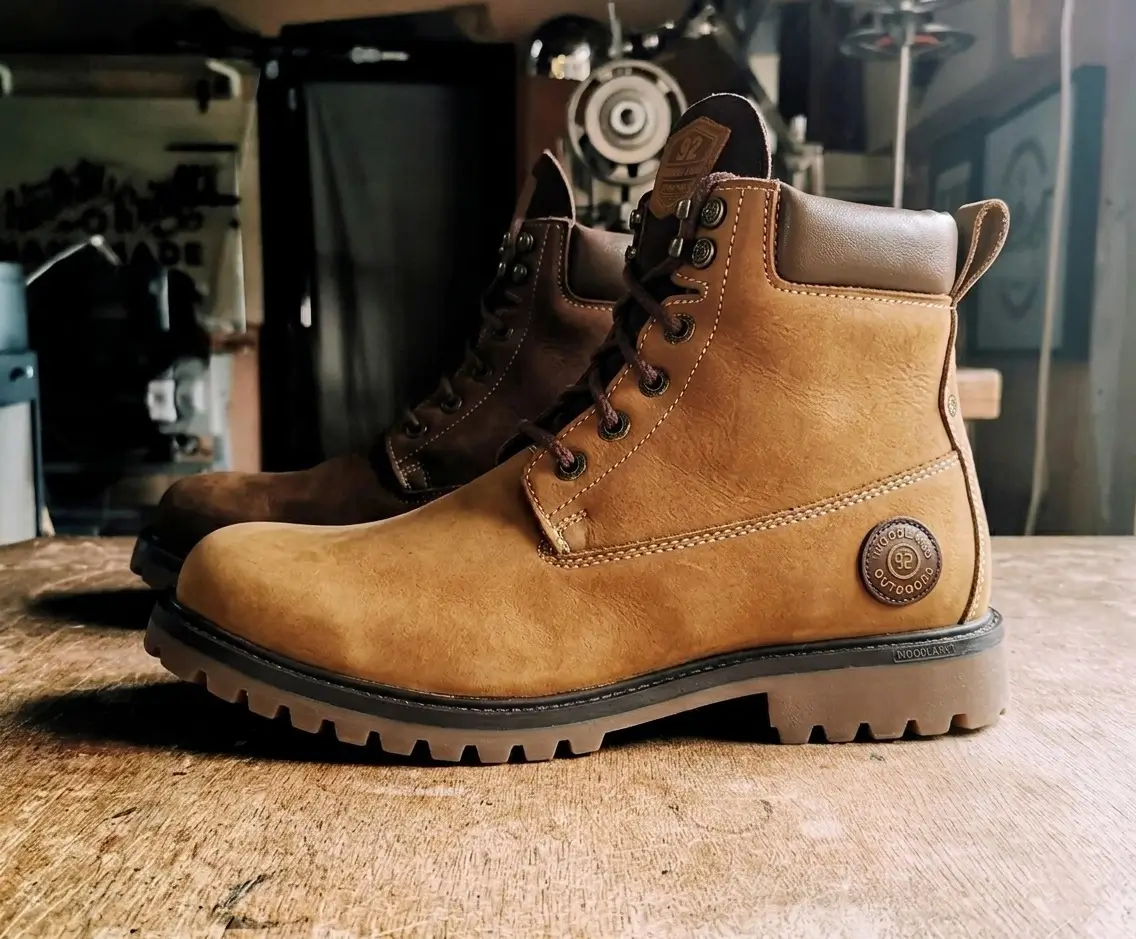
If you desire to wear the best materials, one that screams opulence, you have to be willing to spend some money. But I love to make the most with the least, thus, I chose ₹4,000 Camel High Ankle Boots in Nubuck.
Nubuck because it’s the material I find versatile, but you’ll also notice quality differences less in suede, usually, than in leather. More scratch-resistant than leather and water-resistant than suede, but doesn’t patina the way suede and leather do.
Most creasing-prone areas and sagging are ironed out by smartly arranging overlays. Lined with mesh fabric made of polyester and nylon, its open-weave structure is light and breathable, but not durable. Now let’s get the drawbacks out of the way.
First, there’s comfort. Or rather, there isn’t. The foam padding, filling the mesh, compresses with wear and turns into a thick, hard layer of fabric. The same happens with the EVA midsole. It loses the cushioning and beds the foot on the adhesive.
Yes, it is riddled with problems. Yet, beyond all of that, what drew me—and many others—to Woodland was the TPR outsole. Thermoplastic Rubber is a compound that has both the characteristics of rubber and plastic.
Besides the standard rubber sole privileges—chemical, temperature, tear, and abrasion resistance—it has excellent compression strength. This sole can go through multiple load/unload cycles without failing due to fatigue.
.02
The Construction
Not a theoretically backed build, but don’t feel like missing out on anything.

The construction of these boots does not comply with critics’ notions of what is proper. What’s proper, according to critics, is what most people can only dream of being able to afford.
To remain approachable to the masses, these boots are made using the most economical, industrial, and fast method of bootmaking—cementing. In cementing, the outsole is glued to the upper, which makes it fast, cheap, and lightweight, but also un-repairable.
The results are neither as poor as critics claim nor as impressive as many of us believe. The advancement in the quality of adhesives is largely underappreciated. Contemporary bonding does not impede mobility or develop stiffness. Parts of the upper are glued too.
Such aggressive use of glue certainly reduces the breathability. But nothing would fall off, well, at least for two years, no matter how badly they are (ab)used. Might not find it crushingly complete if Goodyear-welted boots have spoilt you in that regard.
.03
The Value
The price point softens judgment, making the boots easier to appreciate.
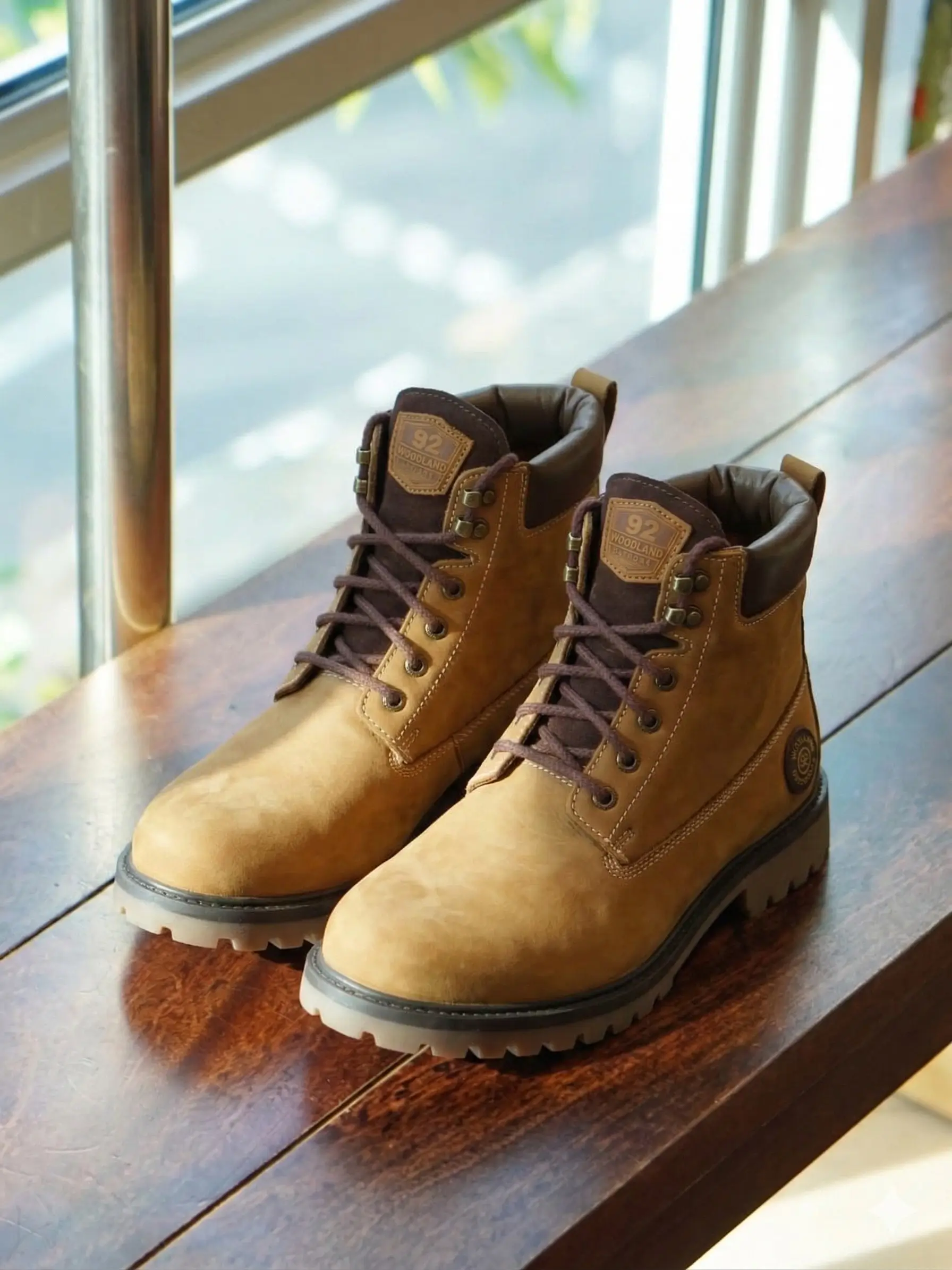
❝A buyer becomes demanding as the purchase gets expensive.❞ Everyone sets their own benchmarks of quality for a, say, ₹13,000 boot.
Even though it is a very disappointment-prone practice and puts the bootmaker under huge pressure, I adore it. However, this behaviour works in favour of ❛The Best❜ lingering on the lower end of the price spectrum.
I mean, the moderate Woodland pricing helps find resurgence, to be honest, in their mass-manufactured boots. The shortcoming in, for instance, comfort might be seen in different lights if these Camel Boots carry prices in five figures.
Decent boots that are moderately priced and work in any setting—this approach has forged our relationship with boots for decades.
Although it is rare today that people say they want to pay for a physical shop, staff who understand the inventory, and a lot more than just fetch you a size, these remain a genuine advantage.
I always look for great quality regardless of price, but I can not take myself off of great value since I too am boot lover on budget.
You Might Also Appreciate.
Red Chief Boots
A little less refined and pricy, but still looks planted.
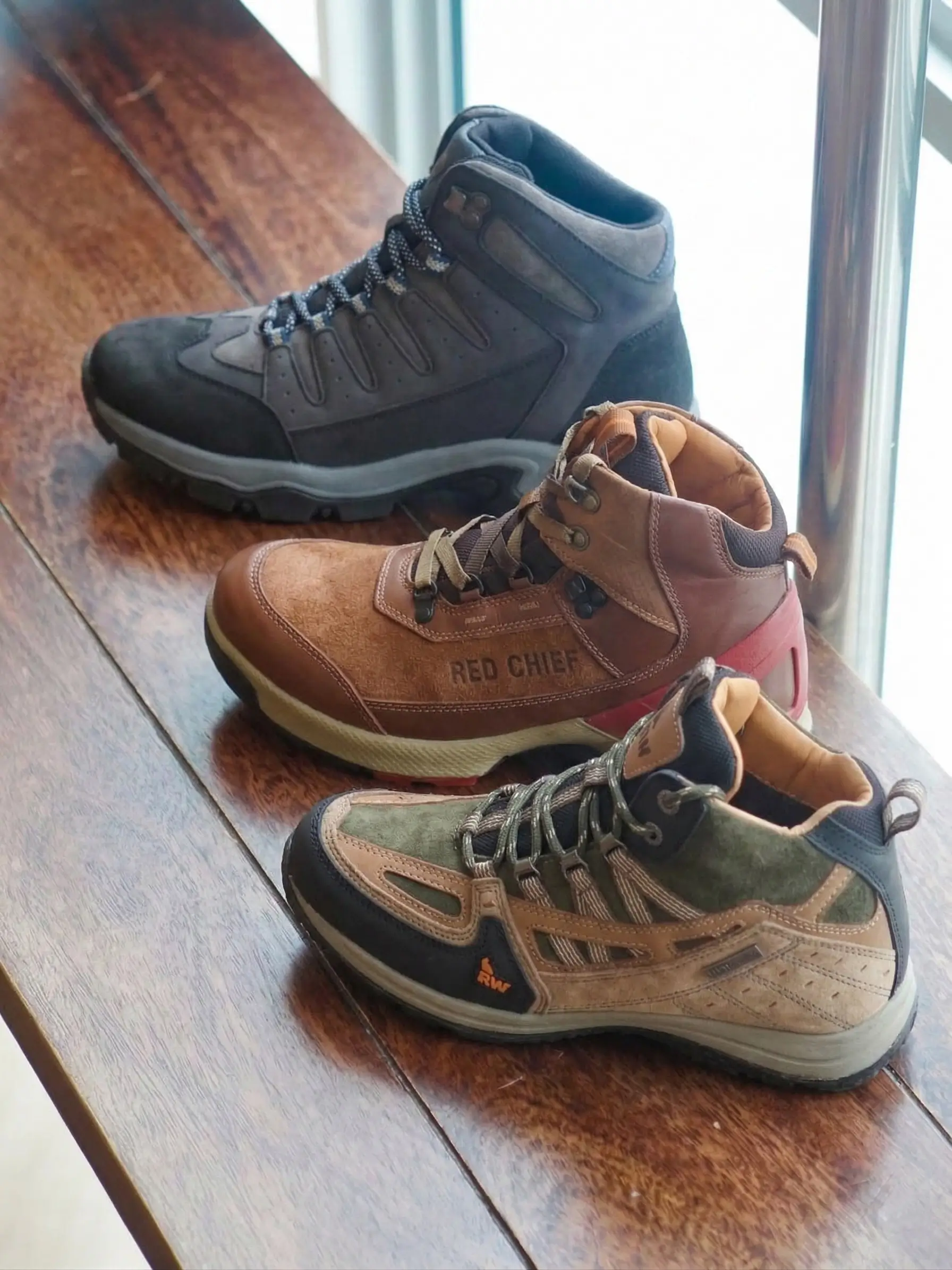
Has done enough to remain every inch a Woodland rival—same sanded top-grain upper, TPR outsole, and cemented construction.
It looks a bit more aggressive and rougher, whereas Woodland is like a fresh take on the old norms.
They won’t last as long as a Woodland does, but Red Chief exudes a mature attitude. It feels grown-up and dignified.
BLKBRD Dallas
A very appreciable footwear polymatch fiercely tailored
for a discerning, affluent clientele.
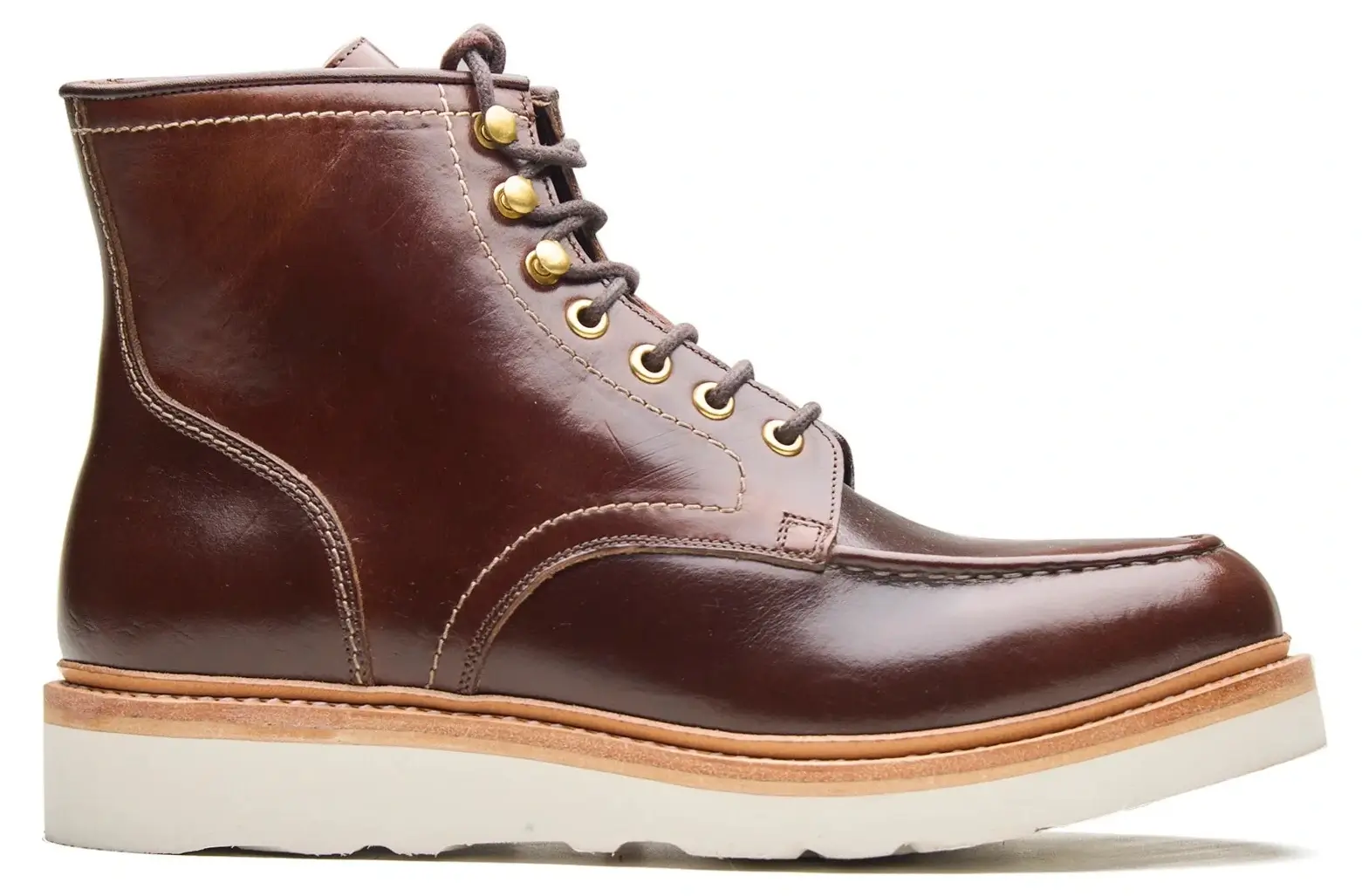
The goods
- Delicately-tough Chromexcel upper
- Hand-welted Sole-unit
- Not as heavy as its profile suggests
- All-day standing comfort.
The not-so-goods
- The outsole wears relatively quickly.
- Calls for more attentive care (products)
BLKBRD purchase system has the potential to deliver the best possible fit. I felt there was nothing they can’t easily fix, particularly since we could speak directly with the makers. The full-leather lining adapts with time, but I love the firm instep grasp.
I’ve them for almost one year, and they are still getting better for me! The brief (almost painless) break-in phase opens the delightful rut of settling in until it matures into a custom-like wrap around the foot. The leathery layout underneath smooths out almost every terrain. The Vibram Cristy has a lot of give, too.
A ₹25,000 outlay naturally invites high expectations of durability. However, I think it’s way too early to lay statements about the durability of boots which, with proper care and respectful use, have the potential to last for decades.
The Dallas comes from the people who have blanketed the US with their line of boots. This is what they mean when they say‚ ❝Boots that are built to last decades.❞ But I can’t explain this. Do you think it is wise to trust reviews with Boots commanding ₹25,000?
The glare of its build, the intensity of its Chromexcel, and the stoicism of its wear can only be appreciated in person—by touching them, by wearing them. From the photographs, reviews, and readings alone, no one can go past its worryingly expensive fee.
Dallas is so capable that they go well beyond what is ordinarily expected of a boot. Only a handful have the intent, scope, and knowledge to exploit its full potential—and only a fraction of them can afford it. Those few, I reckon, reach for such boots best-of lists, and not the poverty-spec model.
Neither my colleagues nor I had worn boots of this quality before receiving the Dallas last year, on March 1st, it’s been something of a revolution. Anomalies are detailed below; however, they have their own dedicated page, where we discuss their aging, durability, care, and drawbacks.
.01
The Chromexcel Leather
Richly pre-fed, leaving no space for water and oil in the skin. By a century-old master.

I recommend this read from the makers; it elucidates the lengthy combination-tanning process of turning skin into Chromexcel. Briefly, it is the ❛Hot Stuffing❜ of oils, greases, and waxes (food-grade beef tallow and cosmetic-grade beeswax) into the chrome (base)tanned leather.
Why is it so pricey?
We are paying for the expertise that renders leather both beautiful and resilient.
Considering that a full sheet of full-grain pull-up leather retails for around ₹3,500, Dallas’s ❛expensive❜ pricing seems fishy. Chromexcel, however, carries with it Horween’s renowned century-old leather-making artistry.
Heritage, dear readers, is not on the smokescreen. There are many tanneries doing pull-up, but Horween has honed the concentration, timing, and pH level that yields that very evident character difference. Divergence between Champagne and sparkling wine, something like that!
We turn to consider the number one obligation when spending ₹25,000: durability and how well the item ages. It is arguable to quantify its durability because Chromexcel, with proper care, has the potential to last for decades.
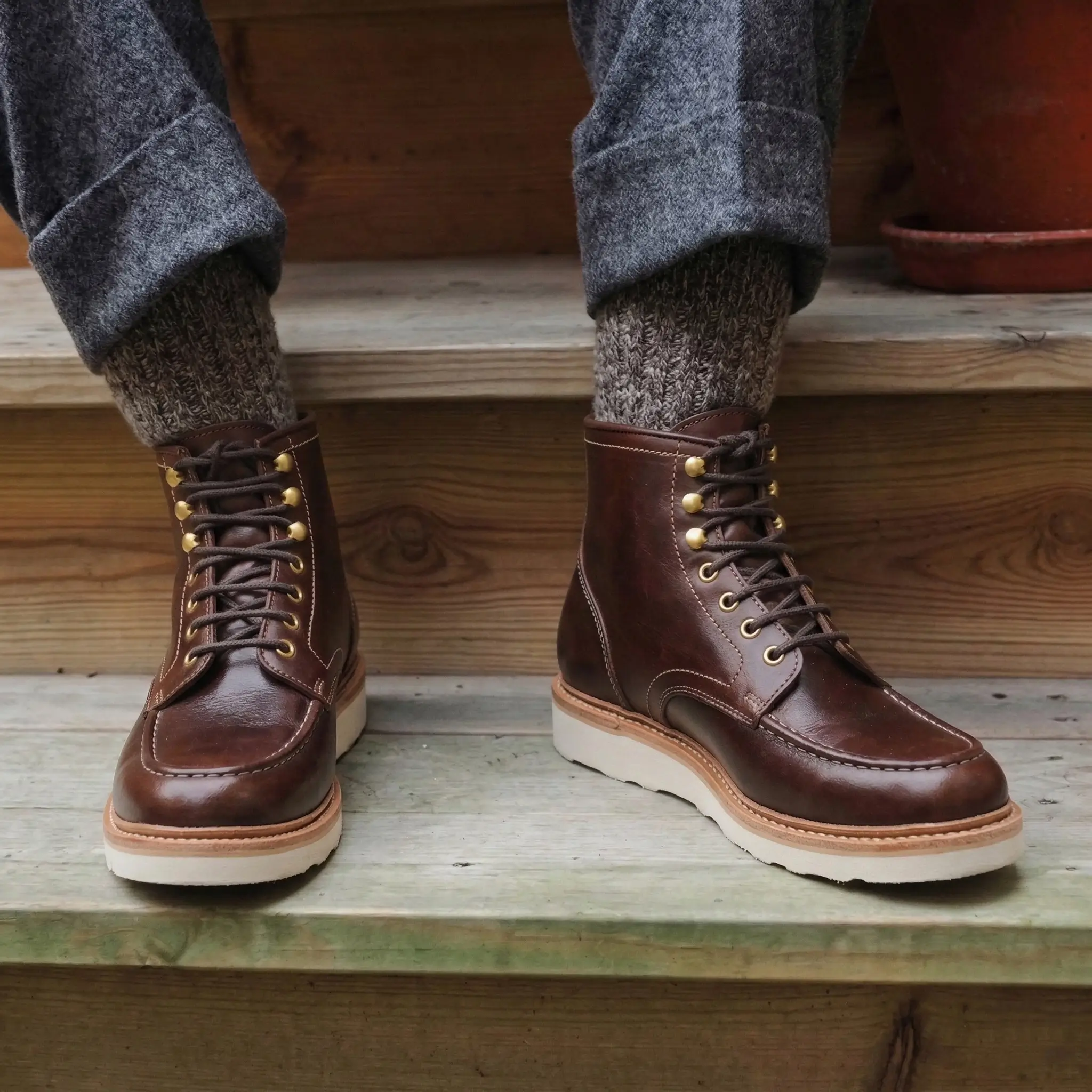
It is safe to say that very few leathers (Shell Cordovan, maybe) would outlast Chromexcel for a given application or use case. In the quest to unite beauty and strength in leather, Chromexcel is the most successful attempt.
Made from a recipe honed through a century of refinement. Horween knows exactly how deep to sand to remove blemishes without compromising strength. Thus, technically, it is a top-grain leather.
Its renowned patina and character development are subject to the care and regard it gets. There are readings detailing Chromexcel care practices and suitable products. Briefly, it is best treated with the waxes and cream the leather is saturated with.
.02
The Construction
Hand-welted Vibram Christy Soles are delicately strong.
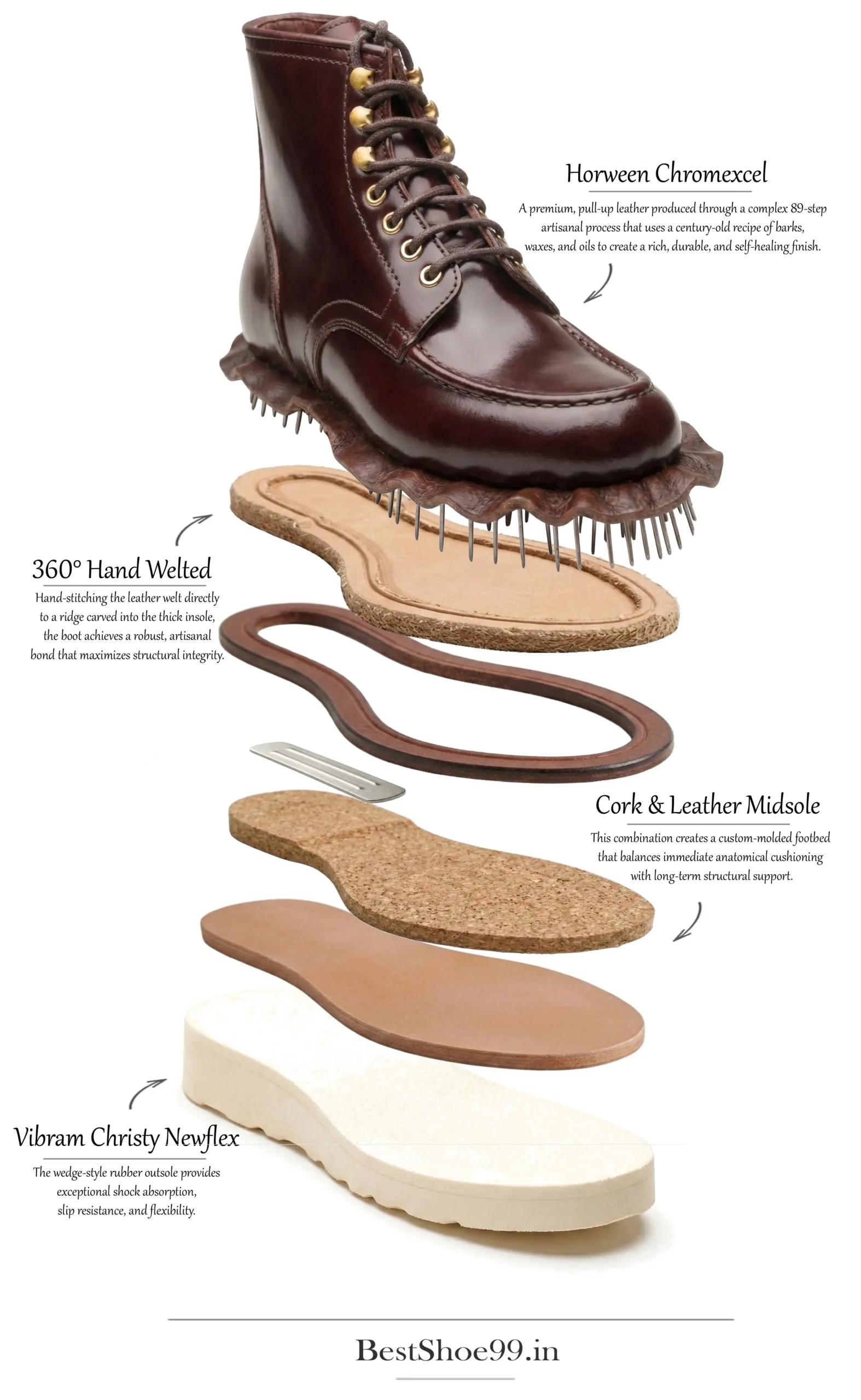
Hand-welting has a few idiosyncrasies in comparison to the aforementioned Goodyear-welting. I have to say, a thicker insole is one of Hand-welting’s strongest aspects. The responsive/grounded feel might not be inferable for everyone, but a thick insole is.
The maker needs to slice the leather to create the channel—a channel to which the welt is sewn—thus necessitating a thicker insole because hand-welters do not use canvas rib. That slight difference is enough for marketers to articulate a big case for Hand-welted boots.
Every element is integrated into the structure of the boot. The compact build leaves smaller voids and less cork to fill them. Such a tight and leathery set-up is better at conforming to and supporting the foot than a fabric-tied and cork-loaded one.
The privileges of having a hand-welted boot over a machine-welted one grow noticeable after years of use. Both are re-sole-able, but hand-welted ones would survive more resoles. A similar case can be made for comfort.
The selection of material for the outsole speaks for its rich buyers and the most likely use case of such boots. Such buyers are unlikely to find their work taking them onto the rocky floors of hot mines. The Vibram Cristy endures everything but that.
Made using blown rubber compound, it yields an extremely lightweight, flexible, but less durable outsole. It is perfect for an indoor shop environment, especially on flat concrete surfaces, and jobs that require all-day standing—thanks to its zero-drop profile.
You Might Also Appreciate.
Kozasko Repello Suede Moctoe
The same boot in suede. The World’s best suede.
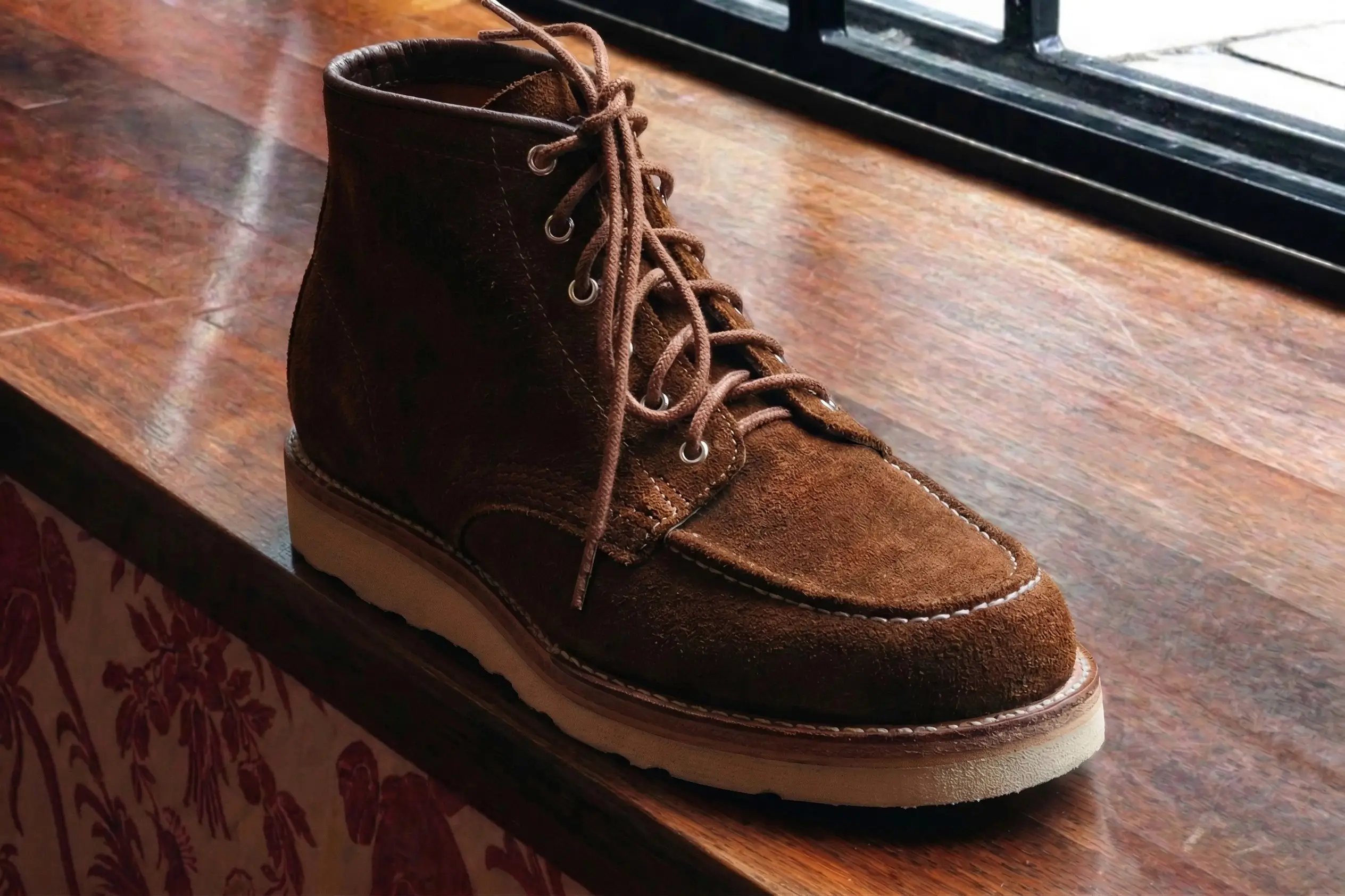
If you can pay handsomely for boots, Kozasko offers a similar style and sole in a material that oozes refined, old-money elegance. I have both on my desk, as I write this, the fine nap of the suede absorbs light rather than reflecting it.
The ❛Scotch-guarding,❜ from the illustrious CF Steads, makes this suede stain-resistant. Its life-lasting proofing is obtained using hydrophobic, waterproof fat liquors added during the tanning process, rather than spraying them on finished suede.
This upper is folded outwards and Stitch Down (another traditional construction method) to the Vibram Cristy outsole. Praise is inevitable, as such boots are too swish for muddy fields and too expensive for many.
Craft & Glory 6″ Moc-Toe
A less pricey, nuance-free moctoe you’d use more but will still last.
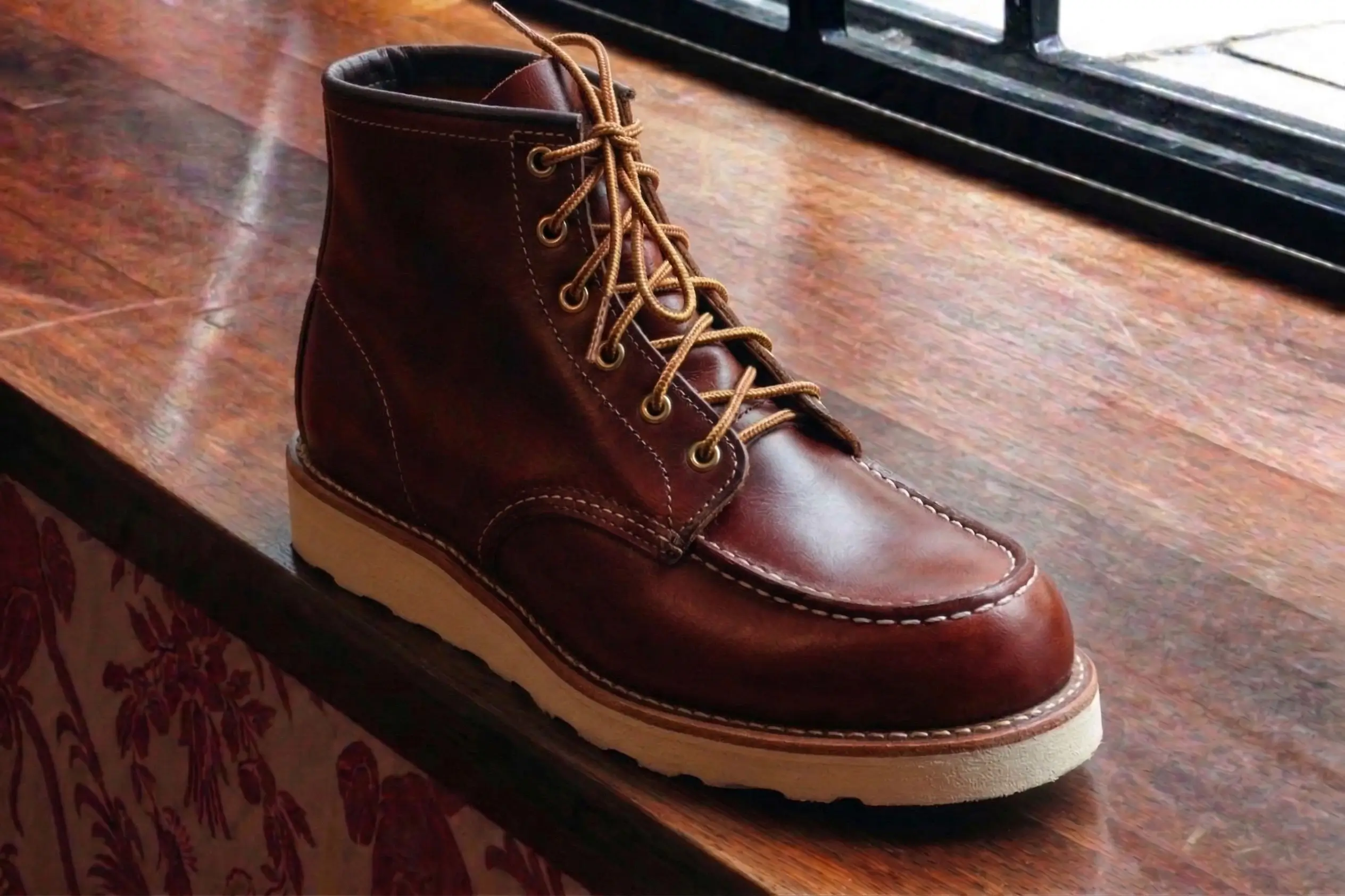
The ₹12,000 Moctoe—which, in anyone’s book, is still a hefty purchase—is easier to justify. Comprises positive markdowns from the models we are suggesting along with it.
Markdowns because here we get the full-grain buffalo leather upper, the semi-lined interior, and the EVA blended rubber outsole. Positive because it’s underpinned by the same construction mechanism: Goodyear-welting. It is tough. Has all that most of us ❛Need.❜
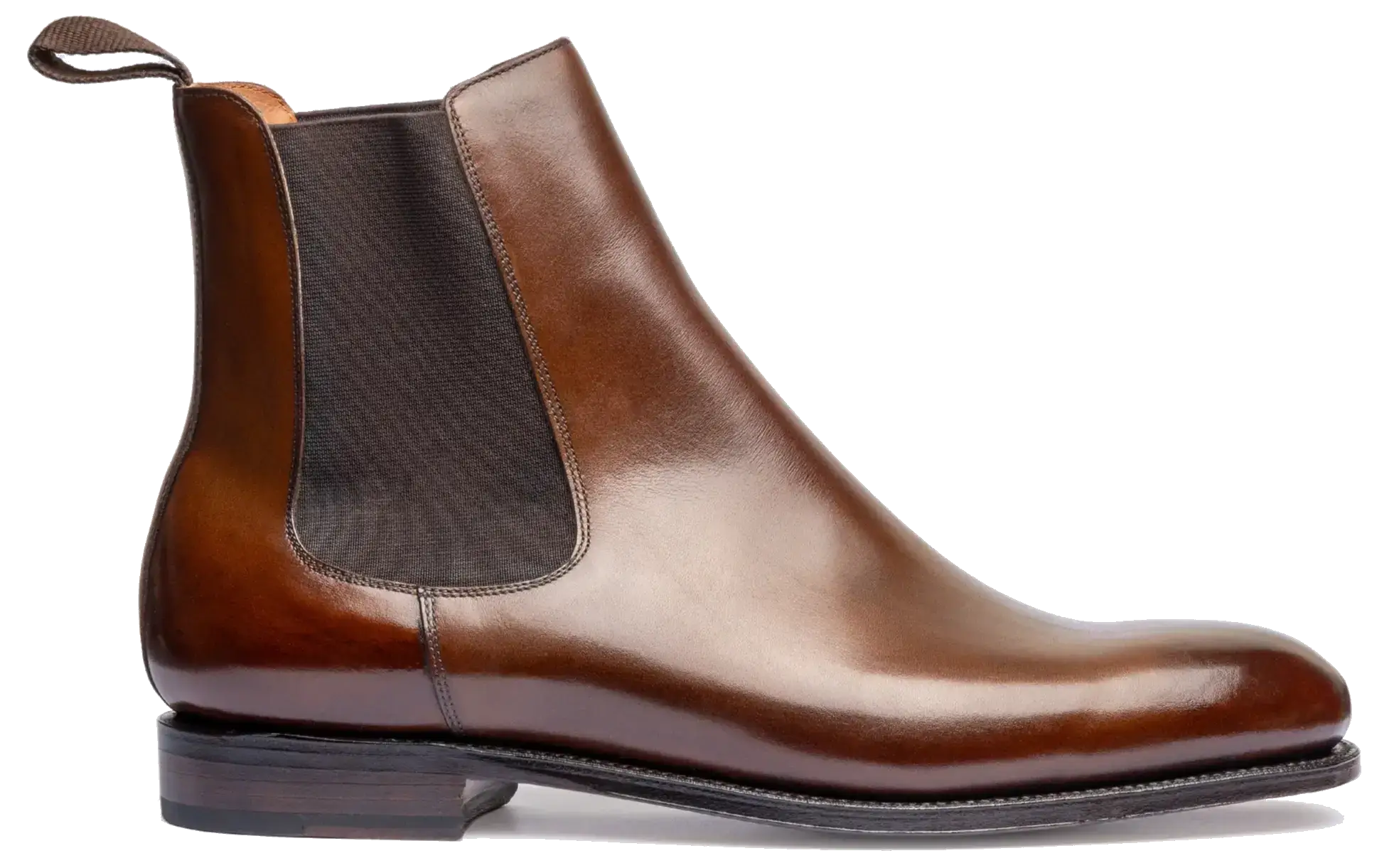
Bridlen Chelsea – Rui last
Buy Bridlen’s world-renowned leather quality and bootmaking
prowess through this Chelsea boot.
The goods
- Hand-lasting gives a flattering yet natural shape.
- Goodyear-welted using channeled insoles
- Best materials
- A choice of leather or rubber outsole
The not-so-goods
- Their made-to-order model is not for the wait-averse.
- Too pricey for Nitrile Rubber outsole
There is a noticeable, favorable difference in the fit achieved through the made-to-order approach and erudite staff that does more than fetch a size.
Easy to slip in and out of, yet stays on the heel while walking. Despite that, don’t expect a lace-obtained fit from a boot that is merely on elastic panels.
Surprisingly, these were comfortable to wear straight away, despite being in a fairly tough material, a traditional welt construction, and fully lined.
I’m very selective in using these Chelsea, thus I didn’t qualify to tell how they gain character over time or how much better the fit and style get.
The Chelsea designers spared no effort to kill the style’s Victorian era authenticity. The more Chelsea boots I tried and wore, the more hollow rang the claims that cast them as versatile, simple, and robust.
Elegance is an obligation, more so than anything, earned only through costly and work-intensive classic practices—hand-lasting, quality leather, and shape—because there’s nothing in a Chelsea to distract the eye.
No one places greater emphasis on form—or understands leather with deeper conviction—than Bridlen. The shape and proportions are turned into a wooden/plastic carving, called The Last, and Bridlen do Chelsea in three different last—Rui, Yama, and Deus.
I picked Rui last as it appears more balanced and closer to the shape of my foot. They’ve been deliberately kept idle, mirror-shined, for the two years since I got them, because they are so sculpted that I never felt inclined to go crazy with them.
They didn’t have a full review. I have, however, included observations and experiences in the page, conferring the best Chelsea boots I have tried. The defining components are set out below.
.01
The Materials
It is not easy to earn praise from European critics. They love to hate our bootmakers.
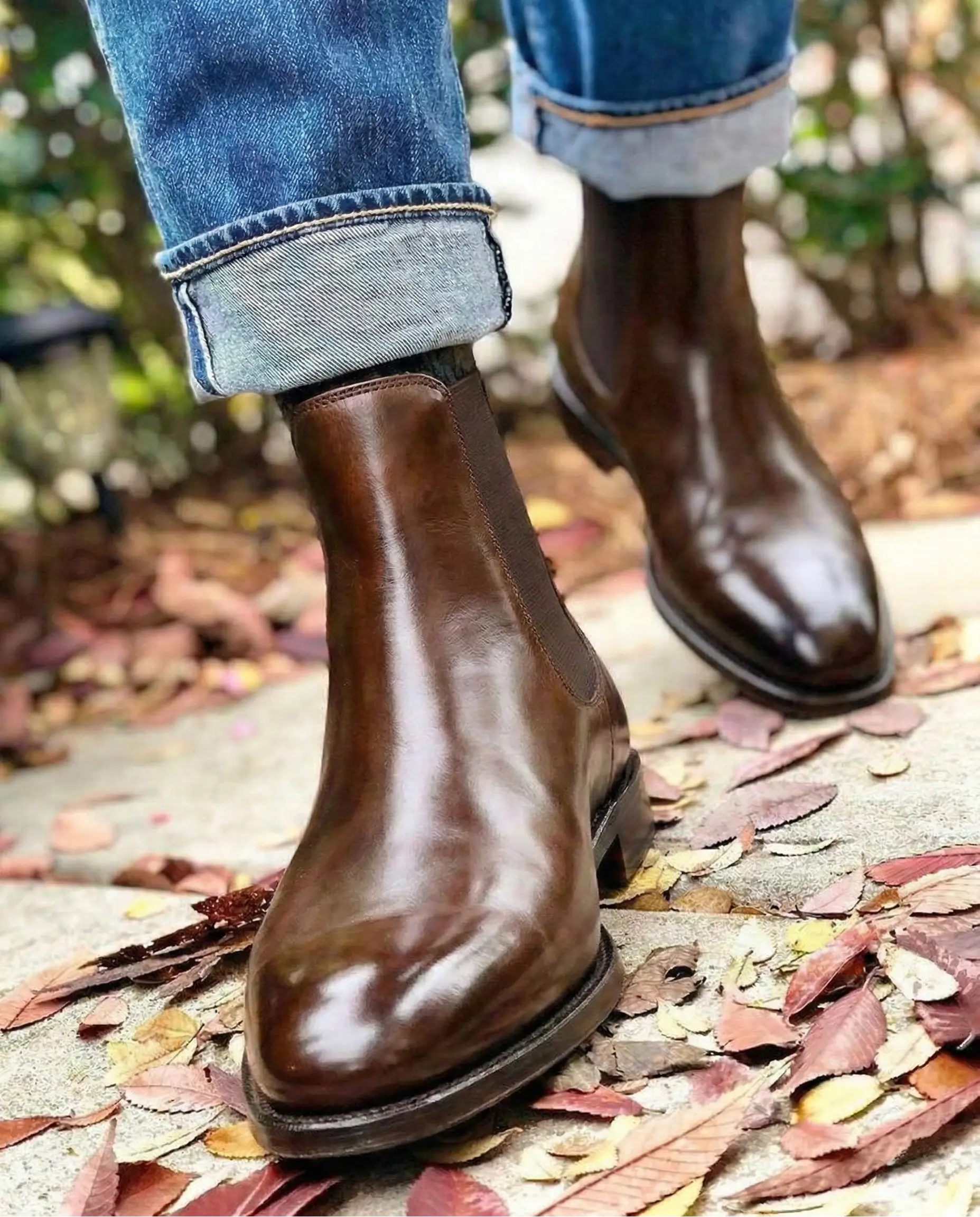
Four decades of Bridlen’s discerning heritage are rooted in its founders’ enduring passion for leather, from exploration to forging relationships with the world’s finest leather tanneries.
Underpinned by a business model that allows them to be selective in using the best portion from the bulk they maintain to make uppers and shoes for foreign manufacturers.
The uppers of this particular Chelsea are made using Annonay Vegano box calf. Annonay is a French tannery producing about two million square feet of leather annually, a portion of which ranks among the world’s finest calf leathers.
Vegano Box Calf is a leather dyed using transparent (Aniline) dye and left without any top coat or finishings. There is nothing that keeps the colourant from penetrating the entire thickness of the skin, thus the natural look of the skin blooms.
Clickers at Bridlen work around any imperfections and blemishes; otherwise, such marks magnify too on Box calf.
Leather quality carries greater importance in minimalist styles like the Chelsea than in footwear composed of multiple pattern pieces.
The limited wear and frenzied determination to look after this boot do not qualify me to comment on its age and creasing tendency.
Okay. What’s it like inward?
And what goes underneath?
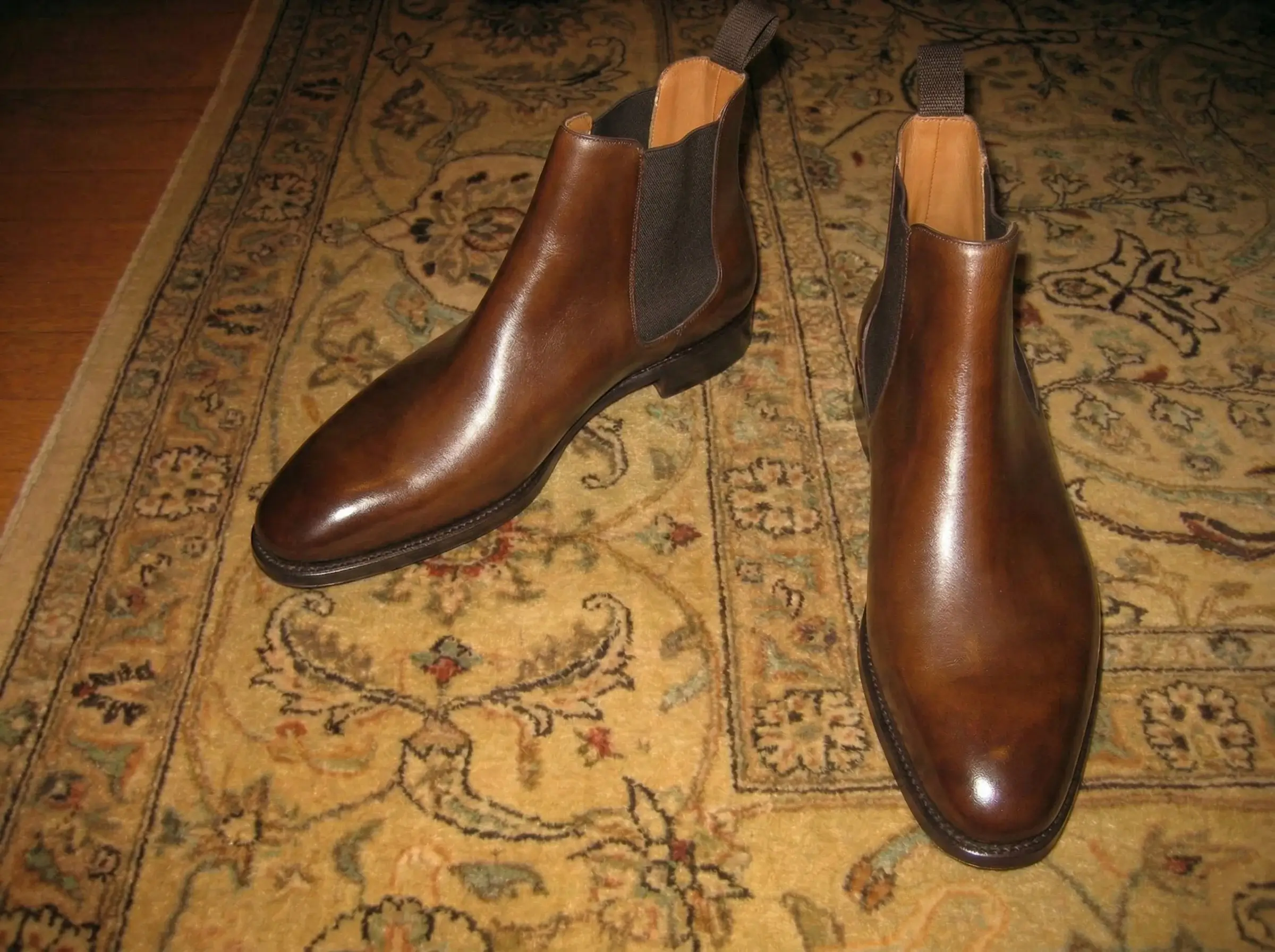
Fully lasted with drum-dyed crust leather. It is a full-grain hide that is tanned but left undyed, thus not hardened by the pigments of dye, so it conforms better to the foot’s proportions, making it an exceptional—though very costly and therefore rare—choice for lining.
Chestnut pit–tanned leather insoles form a resilient, supportive platform that is slow to take the foot’s impression yet capable of holding it for years.
These properties stem from a time-honoured process that steadily increases the hide’s exposure to stronger solutions of chestnut bark tannins.
Owing to their excellent durability, the outsole is available in the same leather as an option. I, however, opted for the nitrile rubber outsole.
They are indeed extremely practical—defy quite hot and slippery terrains—it nonetheless feels somewhat misaligned with the ₹29,000 price point compared to the leather soles.
The studded pattern and thin structure do not muddle but contribute to the sleek profile of this Chelsea, with a dash of practicality.
.02
The Make
Too robust for a Chelsea that’s too beautiful to wear.
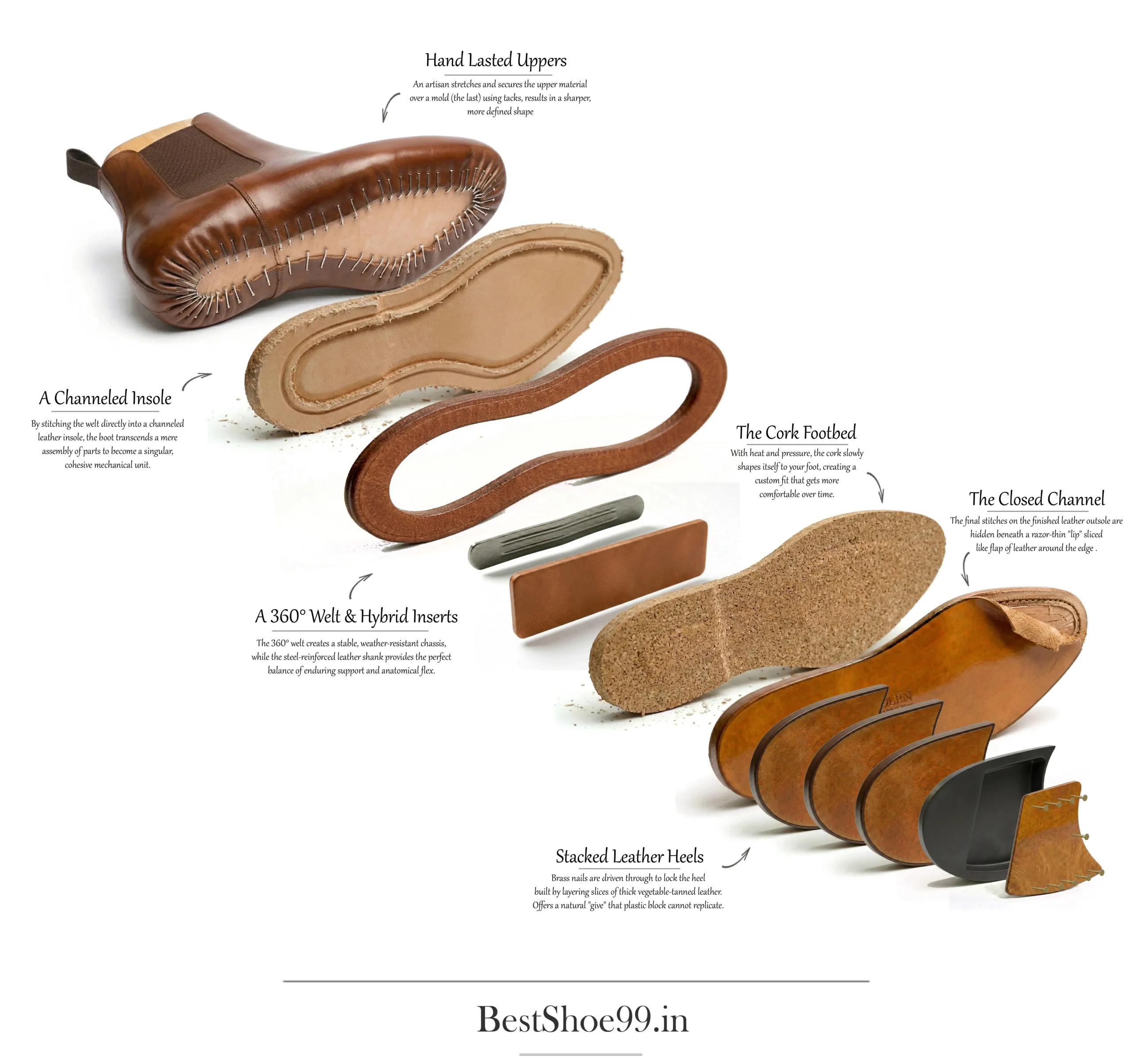
I hate advocating for pieces that are not affordable, however compelling the value may be, especially through subjective, ineffable traits. Beauty, for instance.
Let’s talk about the obvious attributes first. Bridlen machine-welt components that are typical in hand-welting, thus secure the virtues of hand-welting—welt is machine-stitched to a channeled, thick leather insole, compact construction, fewer cavities—a little quicker.
The hand-clicked uppers are kept stretched and shaped around the last for weeks to orient and pre-shape the leather before pinning them to the lining and properly hand-lasting them.
It allows for an upgrade from plastic stiffeners to leather backing for enhanced shape retention and structural integrity. The leather backing adheres to the foot’s proportions and can be clamped between the upper and lining with minimal glue, thereby aiding breathability.
Such leather has the tensile strength to withstand high-stitch density, which Bridlen leverages by running upto eight stitches per inch. The sole edges are trimmed very close to the uppers.
But what do these subtleties result in?
It isn’t immediately apparent from a picture on a phone or computer screen.
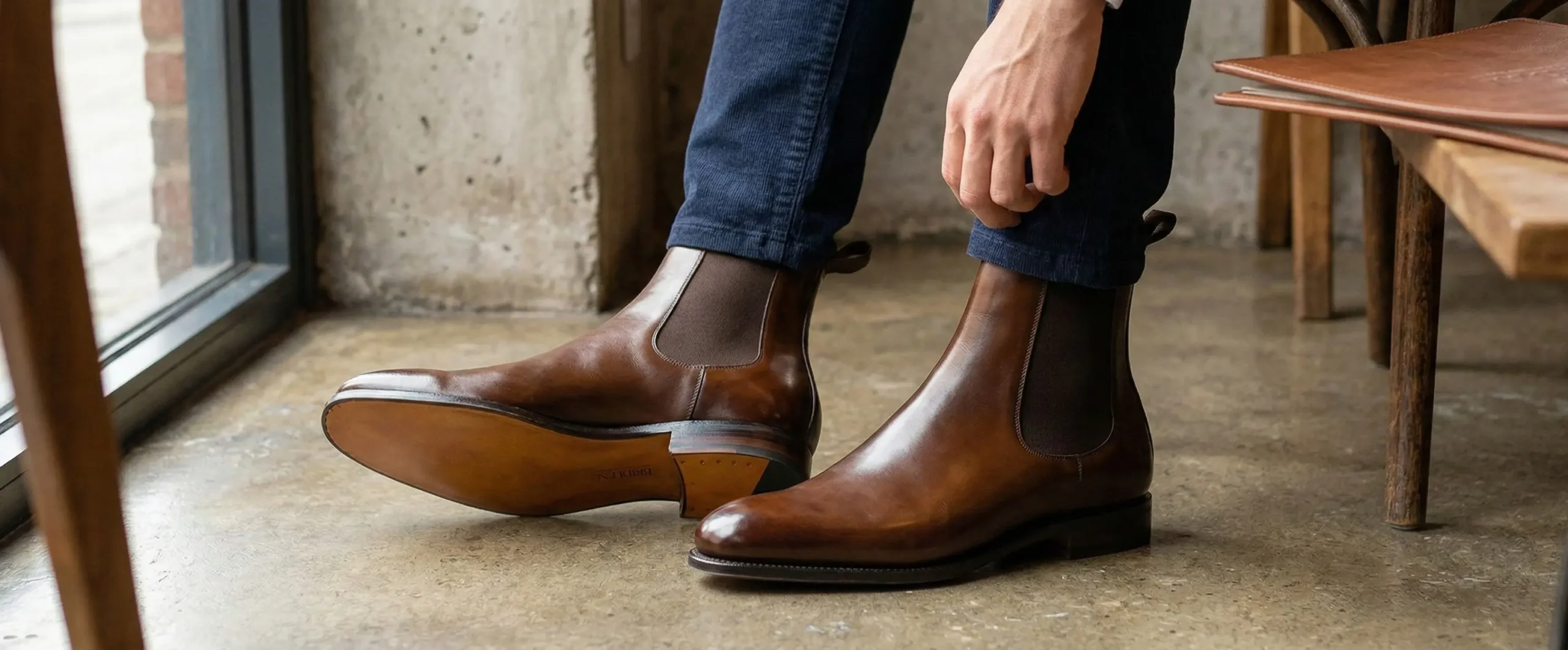
No other style of footwear values such wealth of assiduously embedded details better than Chelsea. One might not be able to admire the results such nuances produce, but one quickly senses when they are absent.
The closely trimmed sole edges culminate in the sophisticated profile of Chelsea, as does the waist that disappears under the foot. It is made to have shape, quite rightly so being as the foot has shape.
These efforts are almost ineffectual on a Combat, or Field, or even a Balmoral boot. Beautiful Chelsea is elusive. It’s pointless to have one that isn’t. Bridlen applied the cost to defy such verity.
You Might Also Appreciate.

As someone who has been trying, iterating, and compiling about Chelsea boots for the better part of the last decade, I wouldn’t recommend pursuing the Chelsea sphere lackadaisically because it is all too easy to look dilapidated in many of the available options.
The recommendations in the suggested reading are a summary of my experiences with different bootmakers’ Chelsea boots. There, I’ve covered models that offer the strongest value within their respective price brackets, from ₹5,000 to ₹50,000.
Columbia Newton Ridge Plus II
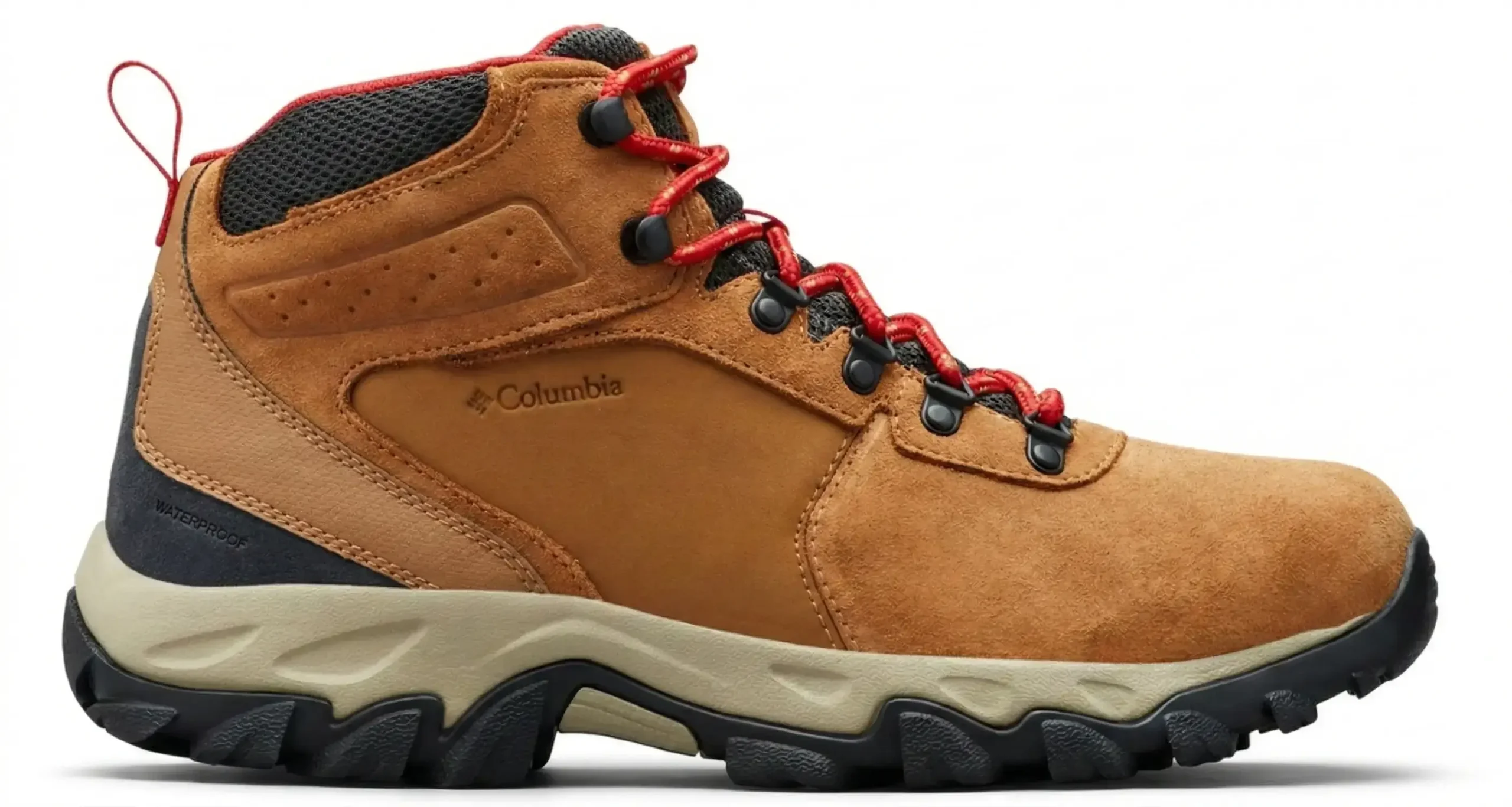
An urban hauler in the skin of a leathery hiking boot.
The goods
- Relatively light
- Well-rounded upper
- Very durable
- Good value
The not-so-goods
- Built for trails, not true mountaineering.
As a mass-market build, it can run wide for slimmer feet. Even with firm lacing, the PU-coated, stiff full-grain leather limits how much the fit can truly be dialed in.
The material’s obstinacy, while durable, is often cited for prolonging the path to comfort. I’ve got my pair around a year ago, but have seen many examples revealing how the Newton Ridge Plus II can last many years if used and cared for properly.
Among all boot categories, I’m least involved in this sphere—these performance boots—because the genre requires a great deal of determination. Every maker has a name for the same compound or material. A slight cosmetic workover is celebrated quite like a car’s facelift.
However, this hiking boot from Columbia echoes consistency and maturity. With only one major reappraisal in 12 years, Newton Ridge represents a hybrid approach that develops synergy between structure, protection, comfort, and weight, utilizing both natural and synthetic materials.
The internet is brimming with reading expounding on the Newton Ridge—I’ve added a link to some. Points below are increasingly specific about what makes Newton Ridge better.
.01
The Upper
It’s art—harvesting the benefits of both natural & synthetic material for completeness.
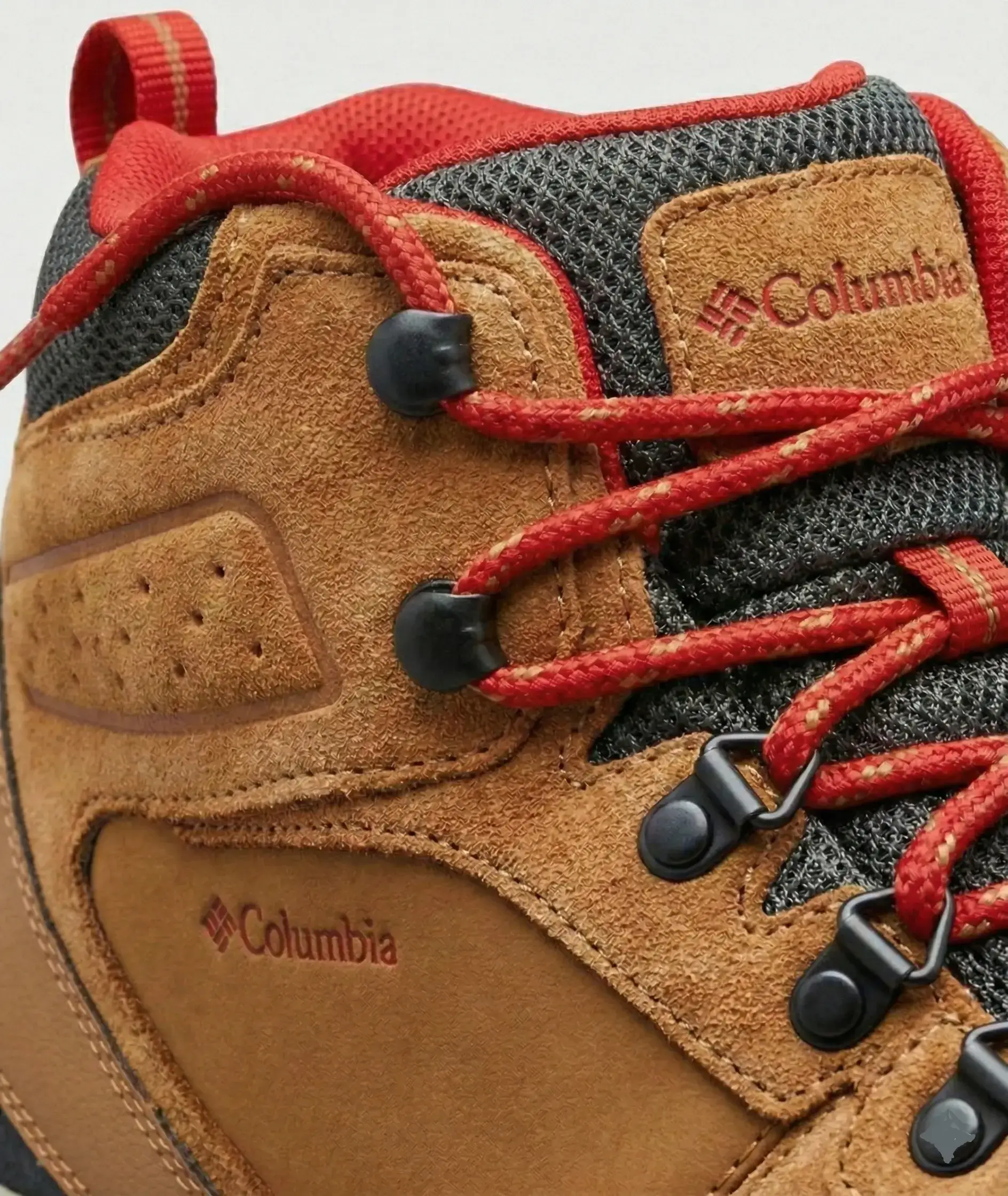
Composing uppers by blending different materials might seem feasible in theory. Of course, what one material might lack in strength, porosity, or flexibility could be provided by another, or a third or fourth.
But it is a smart hedge—one that only mature bootmakers can truly bring to life.
That completeness is the result of decades spent gathering insight, testing countless blends and ratios, and refinement based on feedback, all to determine the most suitable material for every section of the upper.
The Newton Ridge embraces Columbia’s century of bootmaking heritage. They know how much polyurethane coating is just enough to improve water and abrasion resistance while keeping the full-grain leather’s natural breathability intact.
The midfoot and side walls are made of suede, as it conforms to the foot’s proportions over time. The tongue and some side inserts are in breathable mesh. Apart from what the name suggests, the use of mesh makes these giant-looking boots surprisingly light.
What’s the Omni-Tech™ waterproof?
Columbia’s proprietary system offers acceptable value for performance.
Beneath the skin is a breathable membrane system, in the form of boot lining, that keeps external moisture (rain) out and lets internal moisture (sweat) escape. Even though the seams are sealed, these boots are not submersion-proof.
Because, unlike Gore-Tex®, which is a microporous membrane featuring over 9 billion pores per square inch, Omni-Tech™ is a layer-based design impervious to moisture in light and moderate rain conditions. However, it is much softer, more comfortable, and more affordable than Gore-Tex®.
.02
The Sole & Construction
Fair for day hiking and the ever-changing underfoot topography of urban India.
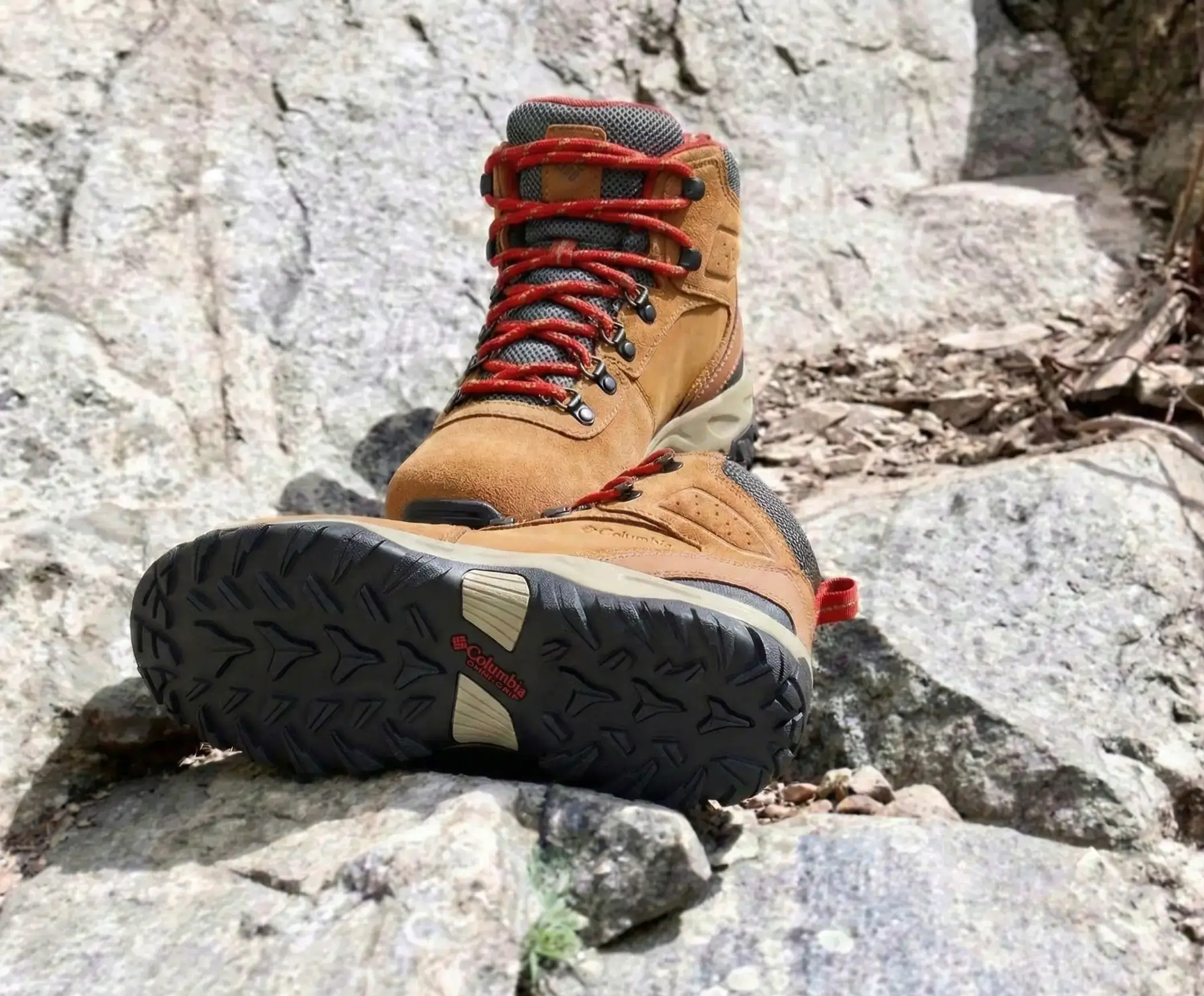
Columbia has 𝚝̶𝚎̶𝚛̶𝚖̶𝚜̶ technology for the midsole (Techlite™) and outsole (Omni-Grip™)—plenty has been written about them online. Instead of layering technical jargon, I’ll focus on their composition and real-world feel.
Techlite™ is essentially Columbia’s take on lightweight EVA foam. They are not blown or injected but compression-molded, making them very durable and firm. One might not find this midsole too forgiving on hard, flat surfaces, but the firmness keeps the foot supported on day hikes or light backpacking.
The outsole features Columbia’s Omni-Grip™. It is a softer rubber compound compared to hard industrial rubber, thus performing and gripping better on dry trails, dirt, and rock, but wearing out faster.
It caters well to those seeking comfort—ideal for routine hikes and general outdoor use, not technical mountain pursuits. There’s no rigid shank inside, reinforcing its comfort-first philosophy over technical terrain rigidity.
The all-terrain deep tread pattern with multi-directional lugs labouring to bite into dirt, gravel, and uneven surfaces. But it is still very much like having an SUV for daily urban driving rather than serious off-roading, which is fine, after all, most people use boots in a similar narrative.
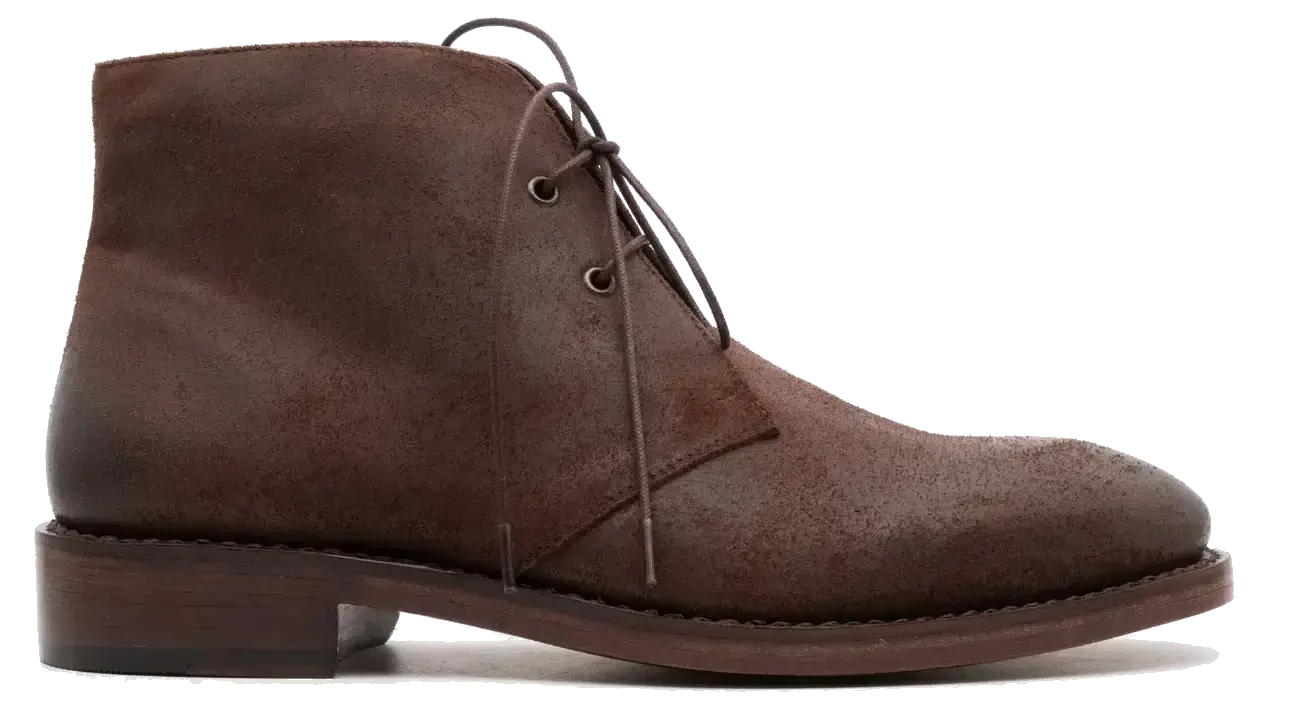
Kozasko Rough-out Suede Chukka
It is super tough, but no less precious. A boot that
would wear and hide its battle scars proudly.
The goods
- Rough-out suede upper
- Nitrile rubber outsole
- Hand-welted
- Best value
The not-so-goods
- Long break-in period
Get right-sized by the makers (before placing the order), otherwise, the two eyelets may not be enough to keep the tongue from drifting outwards, especially in an overly generous fit.
It is a lot of stiff leather, making the uppers and insole (very thick as well), so not contentedly comfortable right out of the box. Thus, it is a time-consuming and rather painful chore to reduce them to softness.
In theory, the boot is extremely durable. However, getting the fit right is crucial not just for comfort but also for durability. Any unfilled room in the toe box derivatives folds around the tongue and eventually develops cuts.
The longer life and desirability of quality boots hinge on ❛Proper care❜; from alternating between two pairs to finding a boot last to smooth out creases, if you ever owned such pairs, you know what a pain in the a*s this boot’s ❛Proper care❜ is.
If it feels like labour you won’t enjoy, rough-out suede preserves its character and strength without requiring an onerous care regimen. Kozasko competently made a Chukka in this rather unusual (but great) material.
The hand-welted sole unit makes them more appropriate for hard service. I have set out my experiences in a reading dedicated to this (and two other) boots from Kozasko. I will recommend that, but for the sake of your time, here are the decision-shaping takeaways.
.01
The Upper
Made of “one of the most practical materials a man could have in his boot collection,” as described by Crockett & Jones, a Northampton shoemaker since 1879.
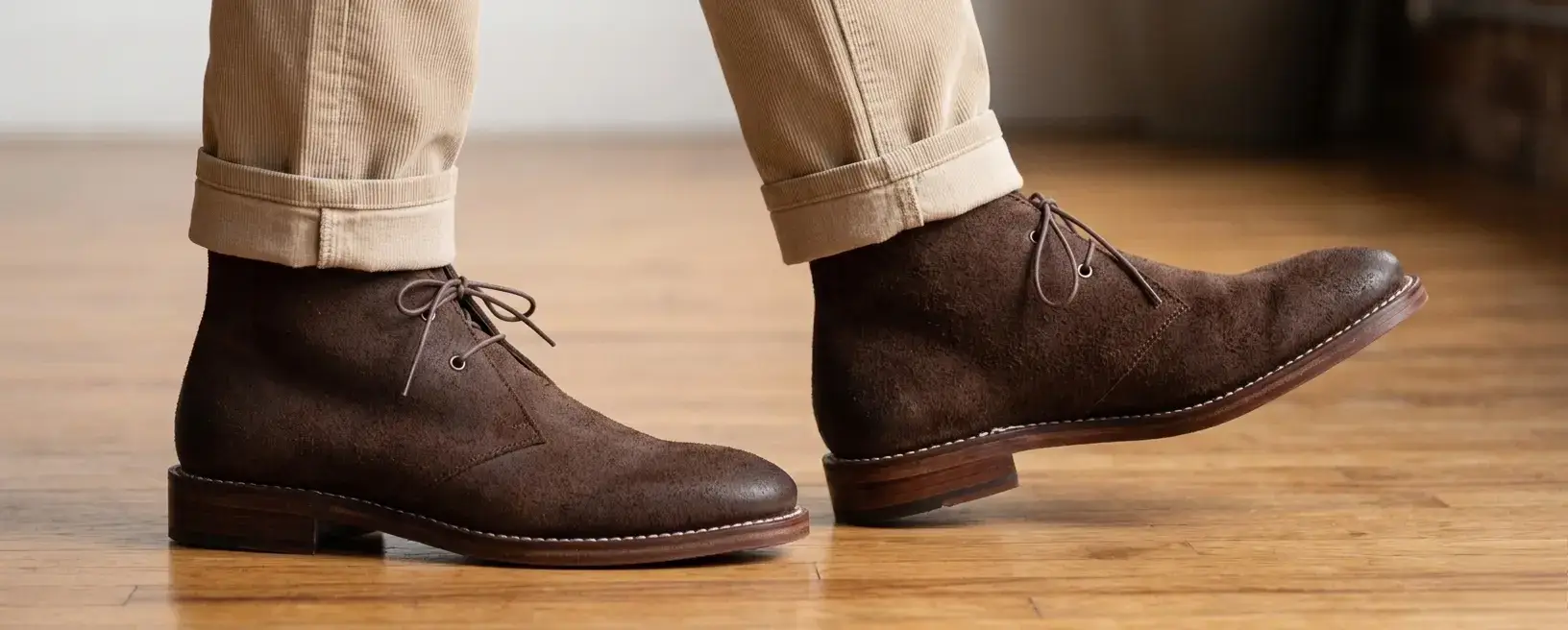
What is rough-out suede, anyway?
Leather beneath suede.
Think of a leather hide as a loaf of bread—starting from a crispy crust and transitioning into a glossy interior. It is very rare (and expensive) to get boots made using the whole depth of the animal skin.
The hide is split into an outer grain-rich layer (crispy crust) called leather and a corium-rich layer (glossy interior) called suede. This split maximises the potential of a hide, as most styles of footwear don’t need the strength of the whole hide.
The few bootmakers who opt for the strength of the whole skin use it in its biological order—tough leather side outwards and fibrous suede inwards.
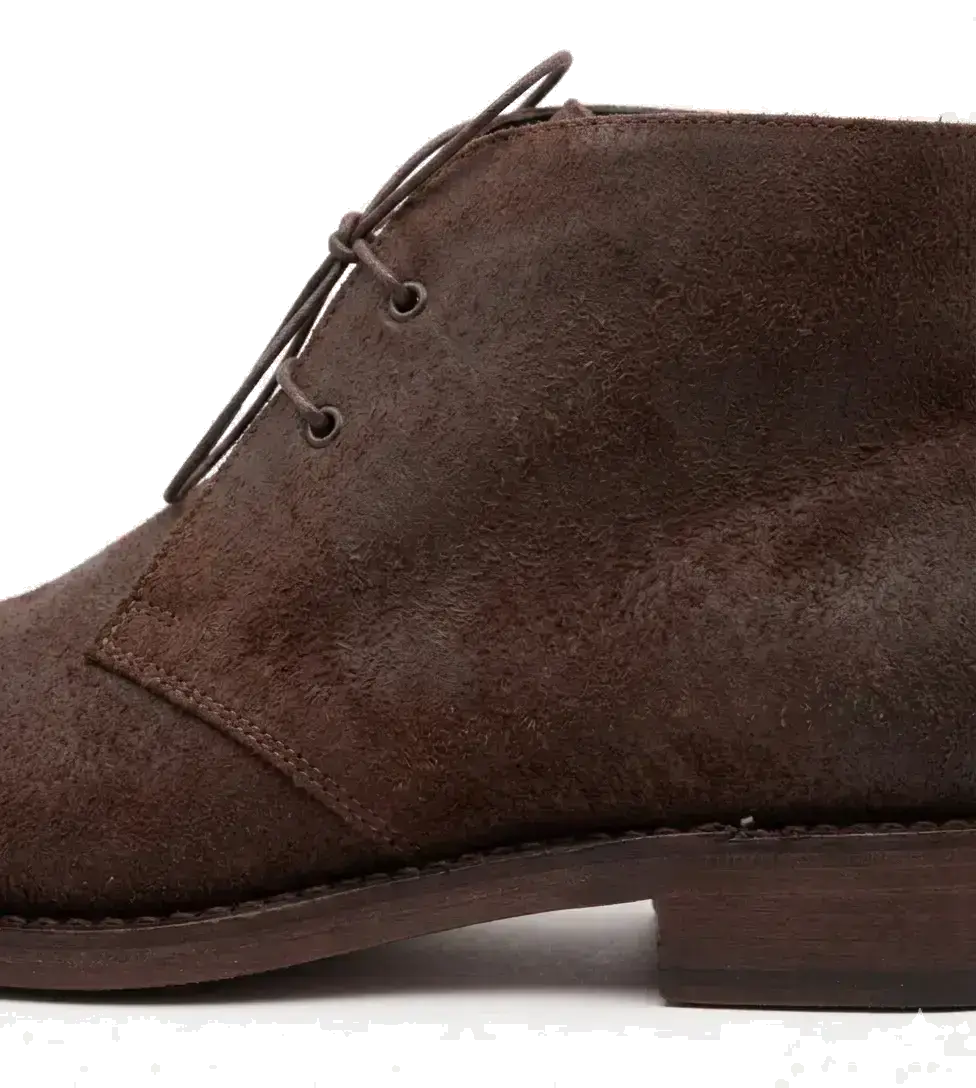
Flipping this order—exposing the inner suede—results in material more rich-looking than full-grain leather, more practical than split suede, and more interesting than smooth calf.
An early adopter of the stuff, Kozasko makes two models in rough-out. The one I have is the iconic Chukka style in dark brown, a classic round toe, and hand-welted nitrile outsole.
How is it better than suede or leather?
Because it retains the full thickness of the hide.
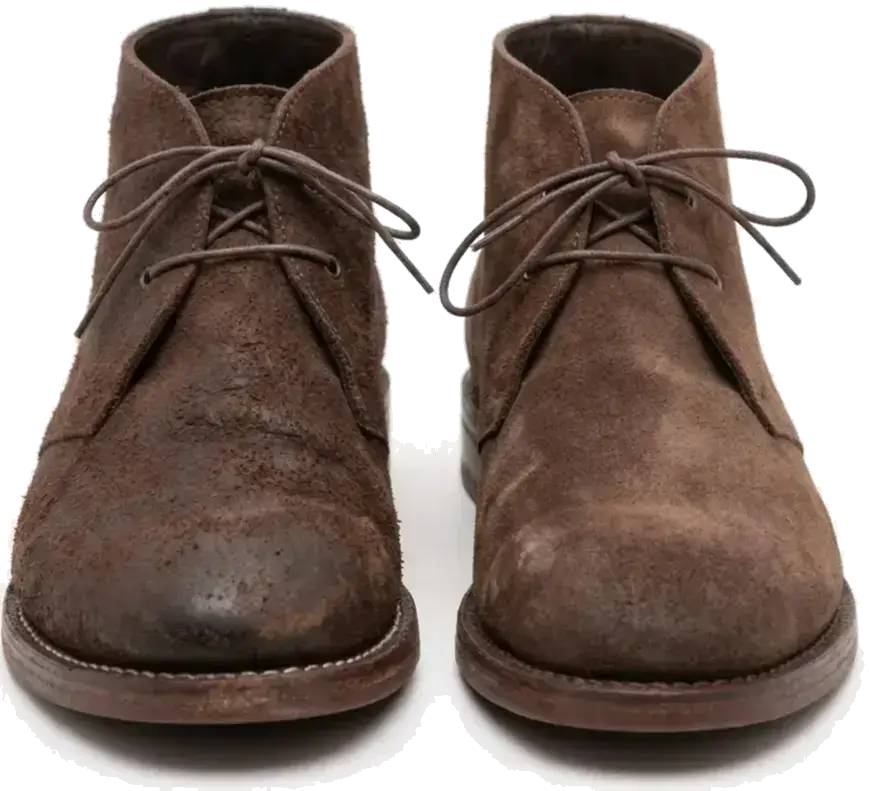
Very scratch and stain-resistant, the dense grain acts as a cohesive layer for the loose fibers, hiding cuts and flows a lot better. Take this arrangement as those loose fibers protecting the dense grain inside.
Thus, they might not be good to begin with, but they’ll look far better in the long run. Split suede is more porous, thus more breathable, and absorbs moisture deeper.
Whereas droplets will typically evaporate from the rough-out without leaving spots. With the nature of rough-out being a rugged, heavy-duty suede, we can be a little more liberal with the amount of water to wash the dirt away.
Along with water and scratch, the fibrous texture hides deep, distinct creases that develop into darker, stiffer lines than sharp, shiny cracks typical of smooth leather.
.02
The Construction
Hand-welted Nitrile soles, leather lining, and a two-year warranty show and give confidence.
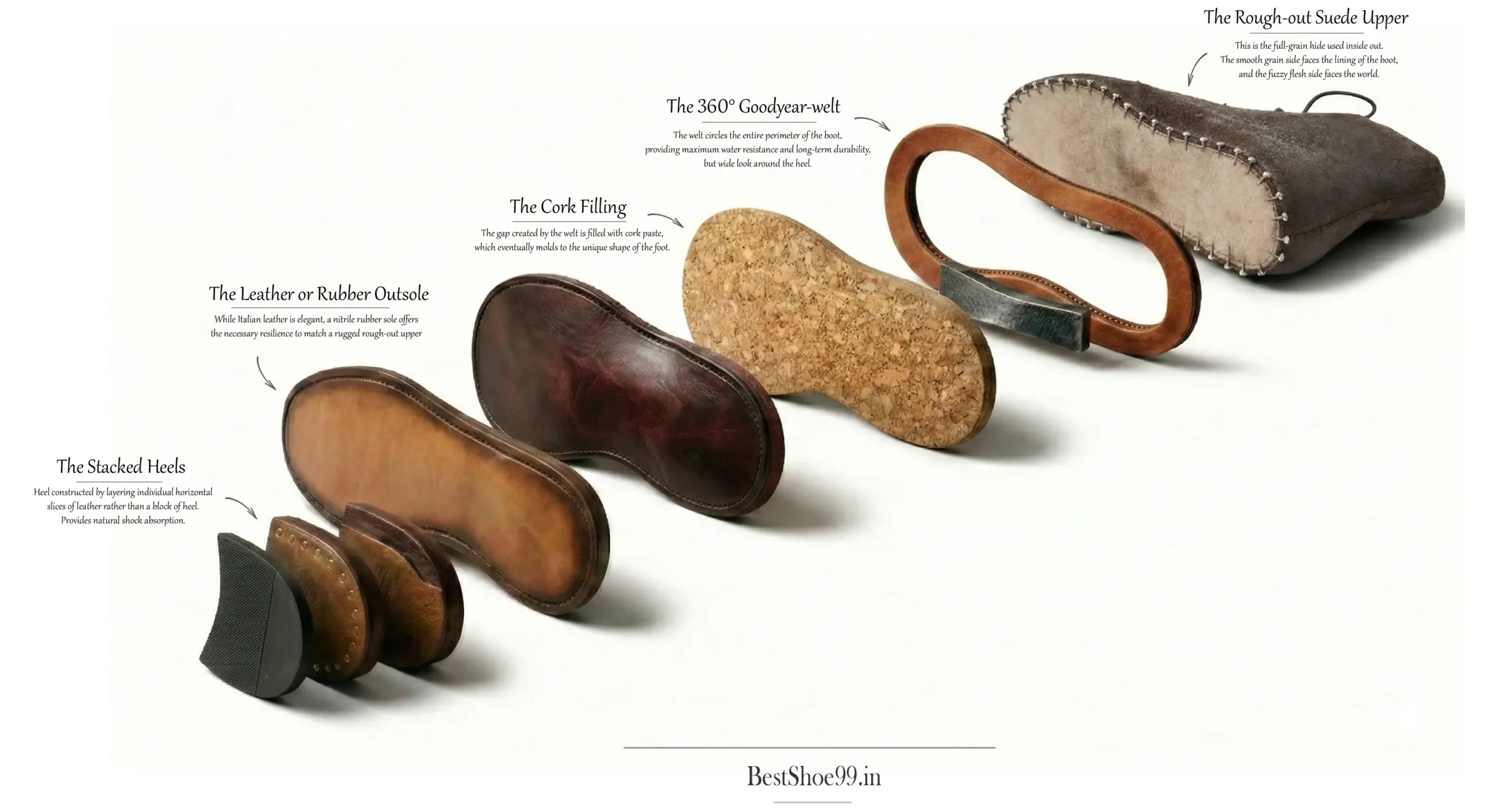
Most rough-out suede or leather boots are left unlined owing to their strength and structure. These Chukka boots, however, are lined using a veg-tanned drum-dyed leather. It is well-suited to moderate and cold conditions, as well as to those who seek greater structural integrity.
With the lining comes plastic stiffeners and glue that compromise the breathability of the boot, and, because it is veg-tanned, it takes a bit longer to break in compared to chrome-tanned leather. However, all these trade-offs and grinds fade into the background once this lining softens and takes the shape of the foot.
Hand-welting guarantees a much thicker insole, with no need for gluing a canvas rib, as the welt is sewn directly to the insole, leaving very little space to fill with cork, resulting in a relatively compact construction.
Those well-versed with welted footwear might admire the grounded feel and integrated structure; otherwise, it is tough to construct a defence for hand-welting because the benefits (it has over machine-welting) come to life after a very long time.
The pair I have features an Argentine leather outsole, which is good, but didn’t synergize with the functional halo that other elements comprise. Fortunately, the nitrile rubber outsole is now offered as an option.
A synthetic rubber obtained by combining acrylonitrile (for strength, oil, heat, and chemical resistance) and butadiene (for flexibility and cushioning). The peerless versatility of the Chukka style enables the use of solid construction and material to the max.
You Might Also Appreciate.
Clarks Desert Boot
According to StrideWise, “The world’s best-known desert boot is still well priced.”
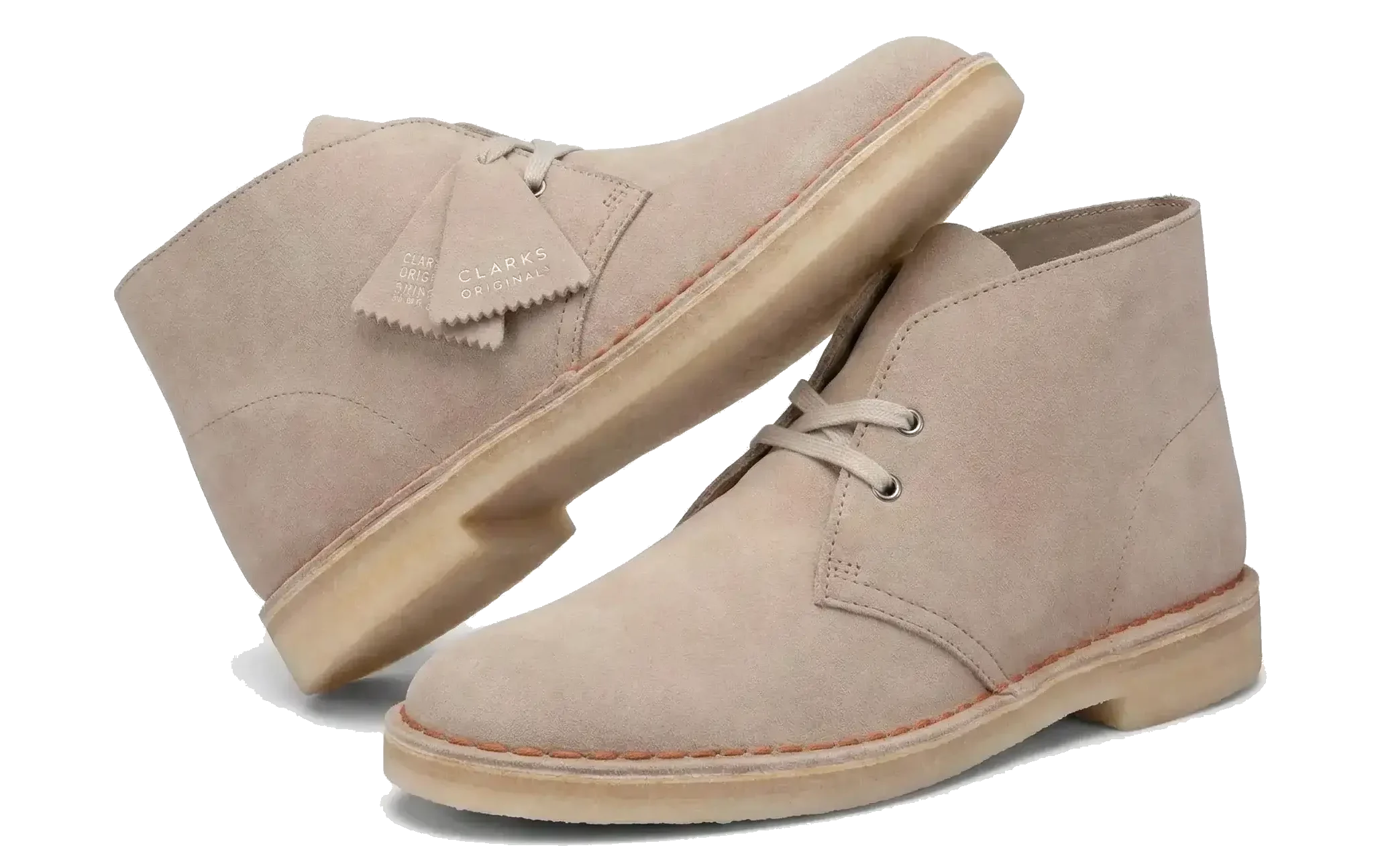
All the goods we read online are about the Clarks desert boots made in England or Italy. To be clear, the differences are in the quality of the material and not the make. Vietnam made Clarks features split suede, which has a shorter life and doesn’t hold its structure well.
The firm and durable Rough-out suede, used in the Italian and English-made pairs, is left unlined, and apart from some naunce upgrades, they are very similar.
Although the market is flooded with desert boots, Clarks’ distinctive character is immediately apparent. Buy them from the Clarks store.
BLKBRD Fenrir-X Chukka
If additional ₹3,000 feels reasonable for a more accomplished construction.
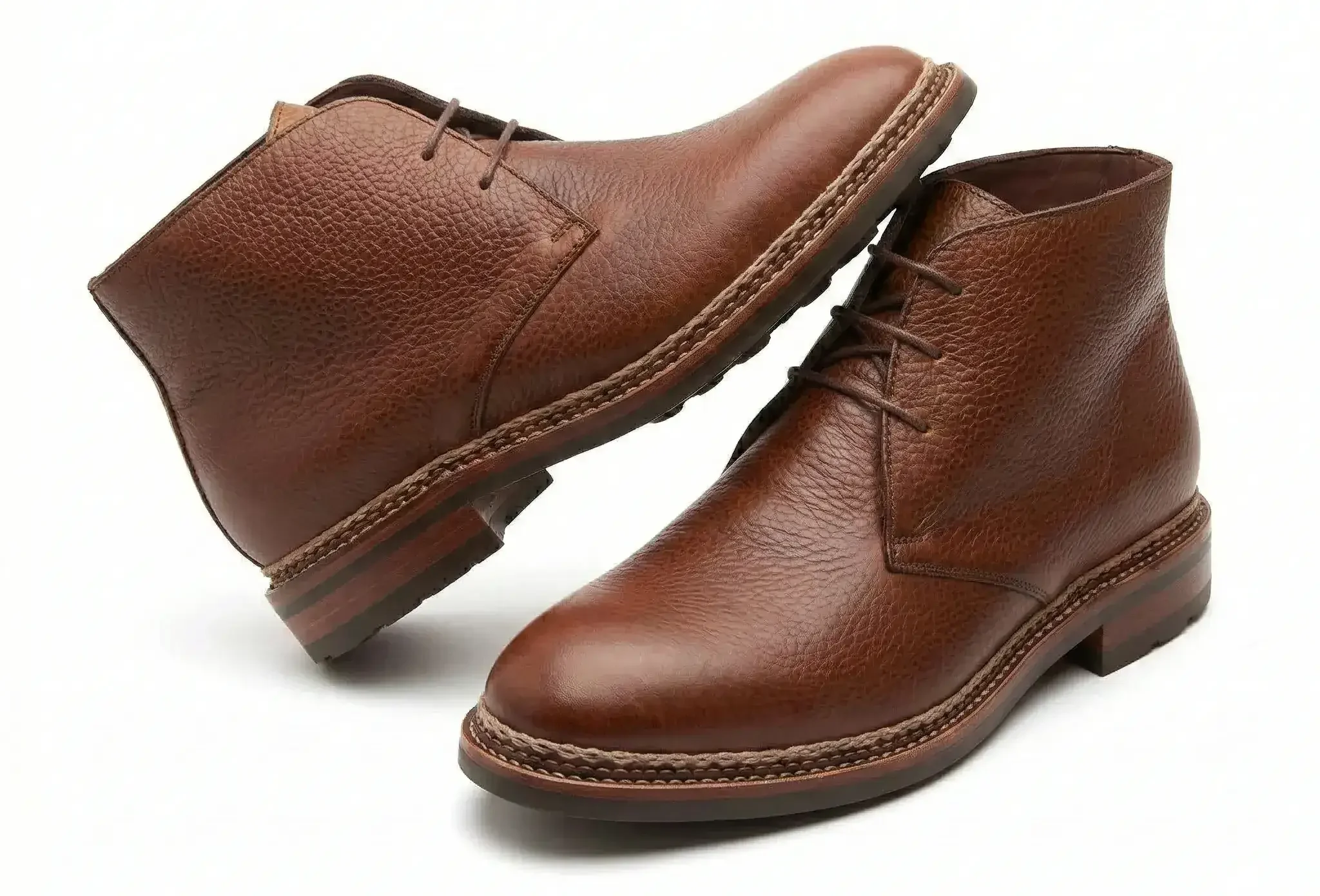
More stiff, rugged, and water-resistant than traditional Goodyear-welting, the Chukka from BLKBRD is underpinned by the Norwegian construction. Instead of tucking inwards, the upper is flipped outwards and stitched to the thick insole.
With this thoughtful tweak, each layer of the sole unit is fastened by a distinct seam. Not the easiest to resole but not the quickest to wear out either. Crafted from substantial Bison leather and paired with a nitrile outsole, this Chukka offers a level of robustness that surpasses the everyday requirements of many. Reflect on your intended use—and your wallet—before committing.
The Royale Peacock Robb Balmoral
The metaphorical power of a boot disbursed at a great price.
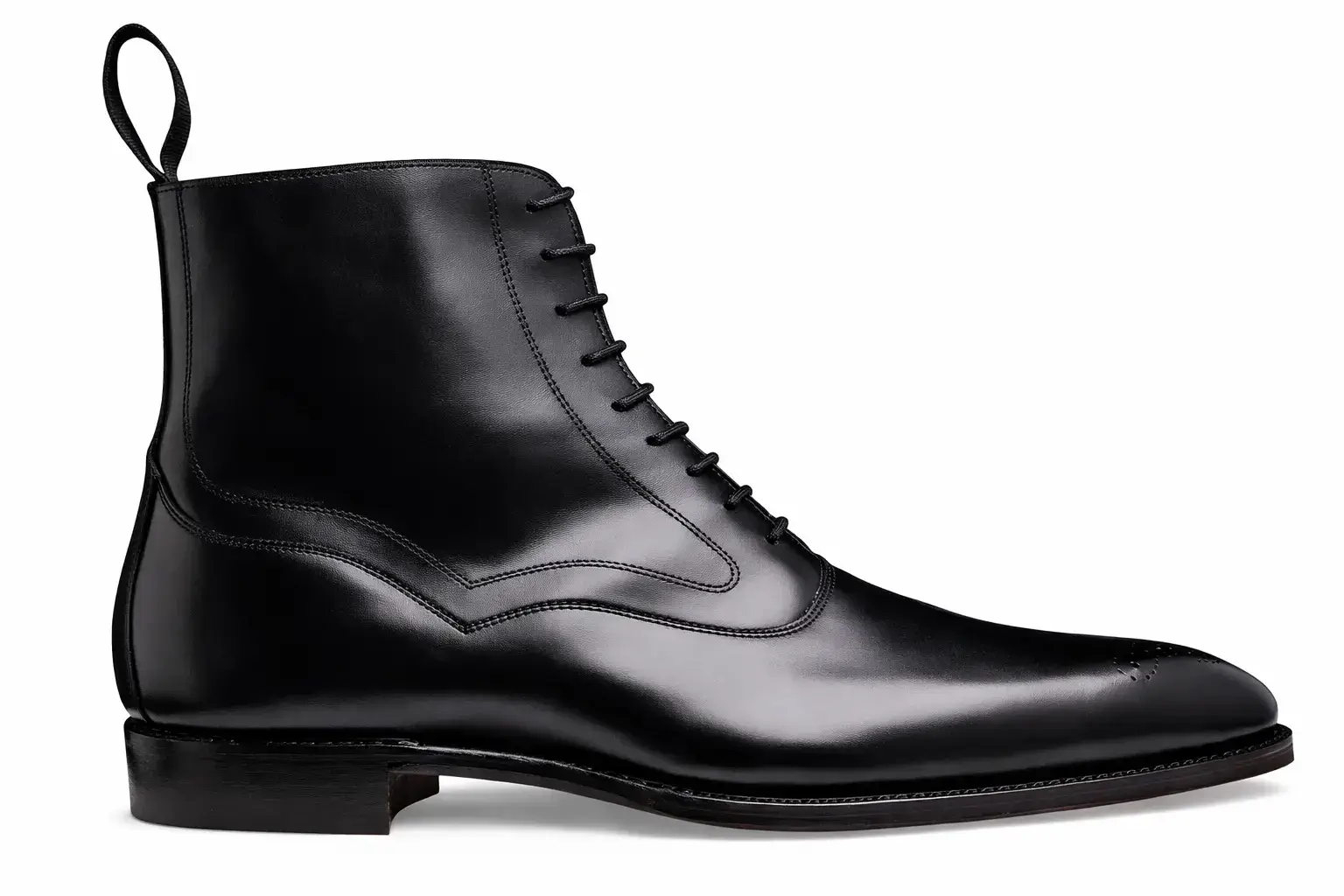
The goods
- Offers good value
- Recognisable and balanced design
- Goodyear-welted soles
The not-so-goods
- Requires expert upkeep
- Rough make
Surprisingly, they are the most accurate in translating the measurements I’ve communicated into a size. The smooth interior might ask (the narrow-foot wearer) a tight lace pull.
And it’s a lovely feeling that folds around the foot as you lace them up. If the heels are still slipping, that’s largely down to the stiff sole.
The boot is comfortable right away, but only after a decent wear (at least two weeks), it gains pliability as the sole becomes smoother.
The undyed upper leather is like a canvas; its patina and beauty depend on how expertly it is looked after.
At this sensible price point, one can scarcely object to the less durable leather outsoles.
Strength is the quintessence of boots; we look to this category for steadfast endurance in demanding conditions. Where most styles of boots illustrate power, Balmoral evokes it.
The clutch of the Balmoral’s close-lacing system perceptually fosters confidence and the feel of a sturdy boot to C-suiters who might never find the need to get involved with either of them.
A very respectable translation of The Royale Peacock into the revenue-driven realm of the welted boot market, this Balmoral is more classy than what its looks and roots of the maker suggest.
I’ve already written an article on this maker, which states why their boots are better than pairs (from better-known bootmakers) that might seem superior on paper. Read that if you are interested, but finding it hard to understand the Robb Balmoral through the compendiums below.
.01
The Make & Material
Don’t expect sophistication, and you’d adore them.
Heritage bootmakers instinctively display—and discuss—the material and craftsmanship behind their creations through their website or social media. This communication helps to discern makers and white-label brands.
When they project the image of vertical integration to disguise outsourced manufacturing, this astray outfit makes it difficult to seed trust in their quite nice pairs of boots. The Royale Peacock is one such episode.
In ingenious leathers, this Balmoral distills Agra’s renowned bootmaking expertise, an appeal that I don’t know why the brand isn’t more vocal about.
The Viable Material
Its outset might not look stunning, but it ages very well.
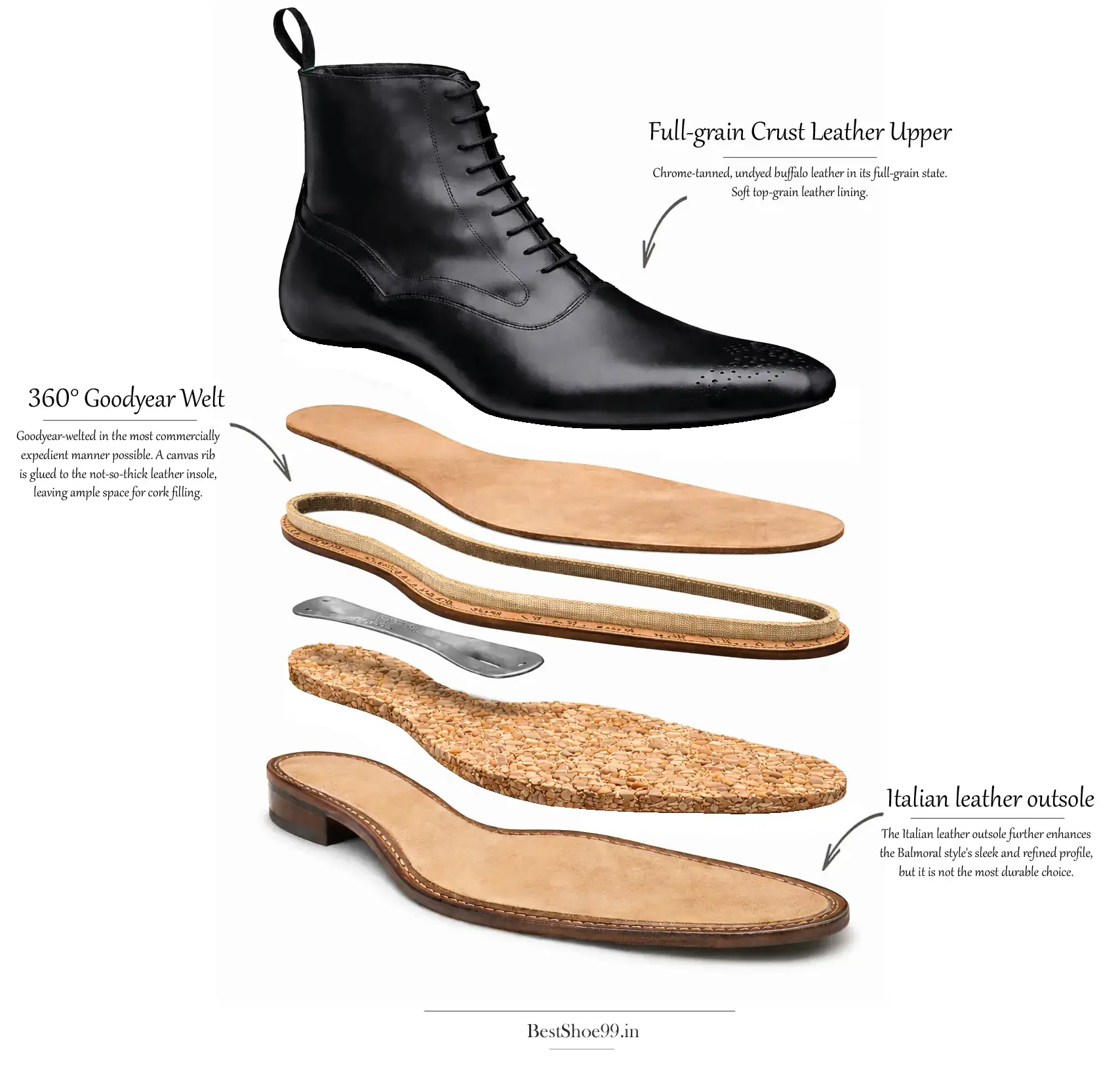
The upper is chrome-tanned, undyed buffalo leather in its full-grain state. In simple words, it is raw, high-grade, barely sanded leather before finishing.
Resilient, in its natural state, but not stiff because the pigments of the dye do not penetrate the skin.
The richness of its patina emerges through thoughtful maintenance. Otherwise, it appears rather muted and unremarkable in its early days.
The top-grain leather used to line these boots is characterized by its sanded surface—imperfections gently buffed away—but in the context of lining, that very sanding yields a welcome softness against the foot.
The Italian leather outsole further enhances the Balmoral style’s sleek and refined profile, but it is not the most durable choice.
Step over a sharp object and it’ll leave an impression. Thus, these boots are best kept for polished floors or antique rugs of the gentleman’s clubs.
The Goodyear-welt Make
Very sturdy, but no efforts to minimise the seams.
The soles are Goodyear-welted in the most commercially expedient manner possible. A canvas rib is glued to the not-so-thick leather insole, leaving ample space for cork filling.
Stacked leather heels, composed of three pieces and a rubber insert, might look nicer and more refined if the 360° Goodyear-welted construction is executed with a higher-stitch density or the sole is trimmed a bit closer to the upper.
I’m not aspiring the compactness of a hand-welted construction, but the resemblance is hard to ignore. It’s not brimming with nuances, but, honestly, many would live on this make and construction. That, in reality, is what everyone needs.
.02
The Design & Price
Best price for a style that inherently asserts authority.
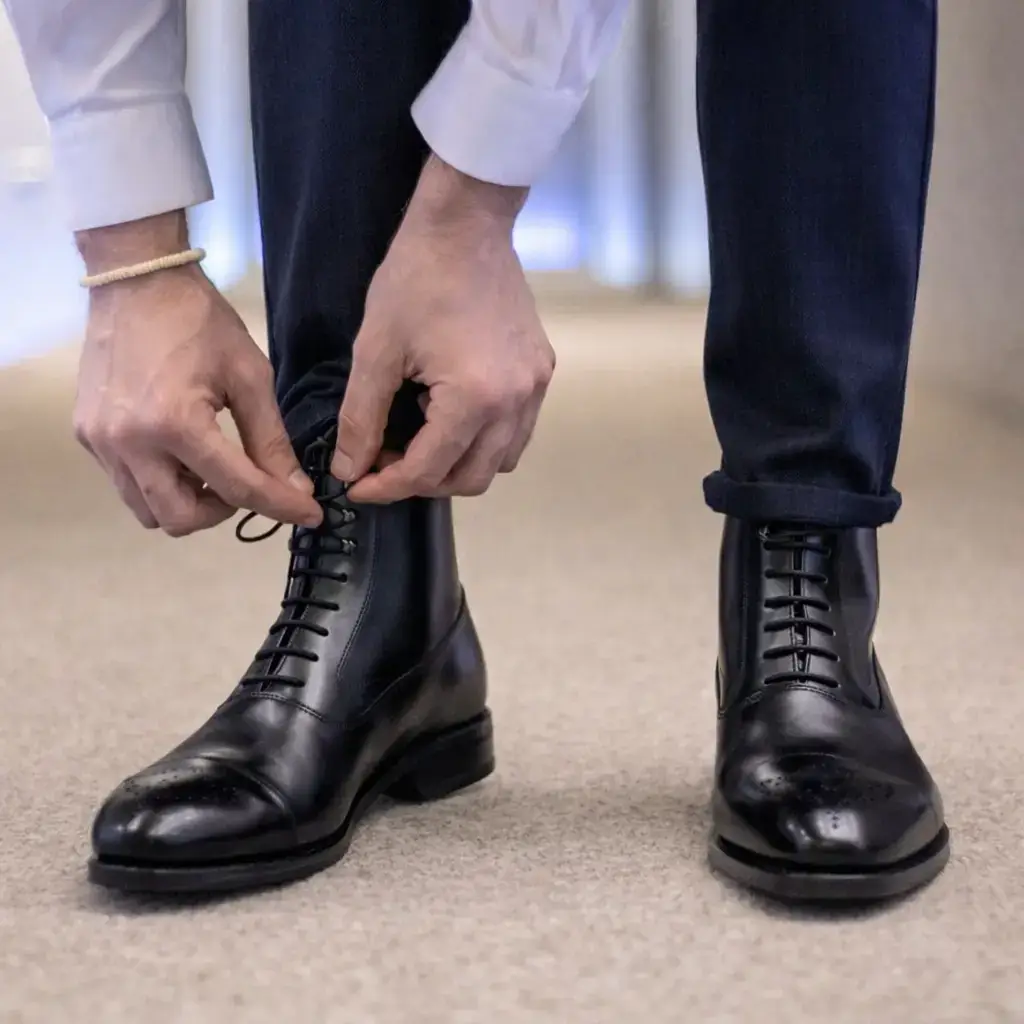
The reason why I (and many others) found Balmoral attractive is not a physical or material matter so much as a psychological one.
This classic style oozes power and sophistication with quiet restraint, compelling any bluntness in construction to fade into the background.
The form-fitting silhouette, the way its sleek lines flatter the wearer’s foot, the lovely feeling when real leather folds around the foot as the close-lacing system is drawn tight—these are sensations that neither words nor photographs can fully capture. It is a lot of boot for the money.
You Might Also Appreciate.
Bridlen Balmoral Boots
For those desiring superior materials and greater subtlety in craftsmanship.
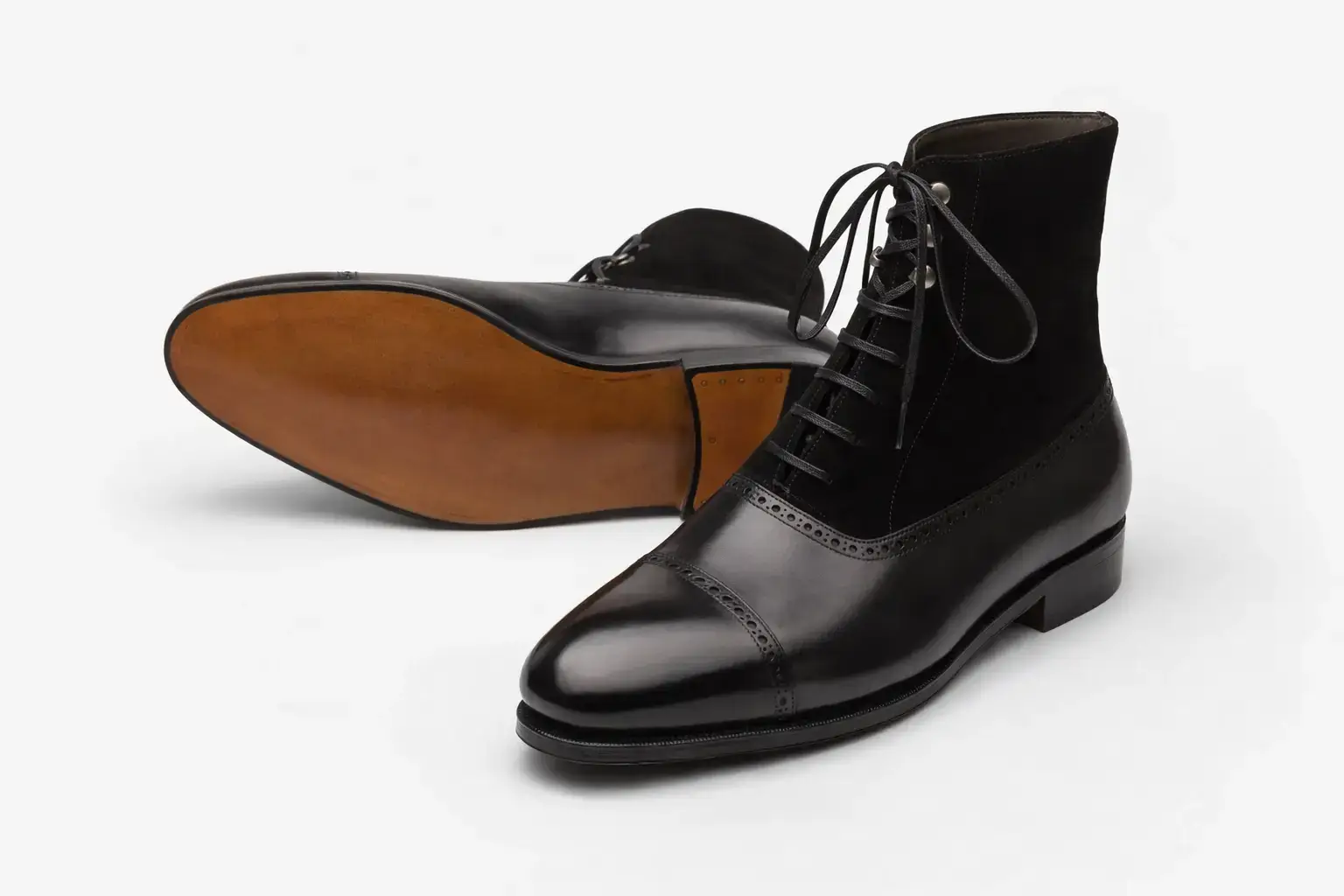
No other bootmaker can craft dress boots as well as Bridlen. Upgrade from chrome-tanned to vegetable-tanned leather, sourced from a tannery that has perfected its process and tanning ratios over more than a century of refinement.
Material that has the tensile strength to withstand Bridlen’s signature high-stitch density, hand-lasted shape, and tight waist. The outsoles are Goodyear-welted through channeled insoles. If you are willing to pay twice the price of The Royale Peacock’s Robb, Bridlen will craft a Balmoral that is impossible to go unnoticed.
Before Your Next Pair…

How can we improve BestShoe99? Got feedback?